

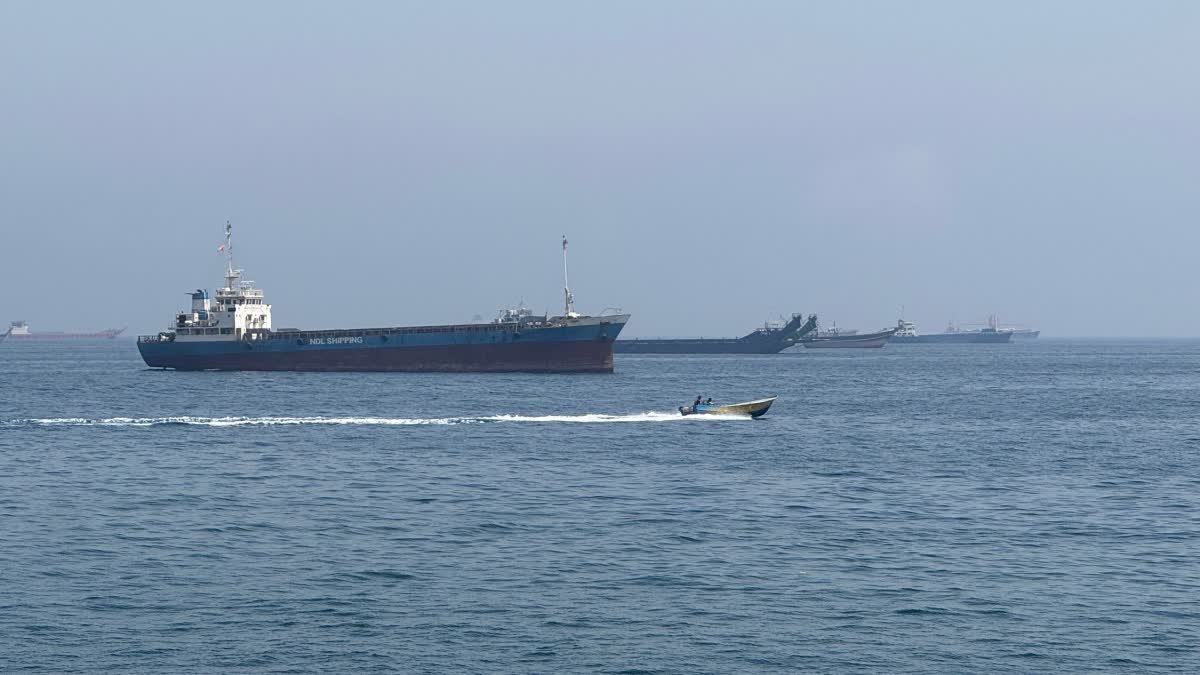

Washington, D.C. — The United States and Iran have reportedly agreed to temporarily halt military attacks, marking a significant diplomatic step toward reducing tensions in the Middle East. According to a senior U.S. official cited by Axios, both countries are expected to hold a crucial meeting in Doha, Qatar, on Tuesday to discuss the ongoing dispute over the Strait of Hormuz, one of the world’s most strategically important shipping routes.
A senior U.S. official said that both sides had decided to stop all kinetic military activity, referring to airstrikes and other military operations. Another official stated that both countries would “step back for now” while technical negotiations continue, allowing commercial vessels to pass through the Strait without interruption.
Multiple U.S. officials and additional sources familiar with the matter confirmed that the Doha meeting is intended to stabilize the fragile situation and prevent further escalation in the Gulf region.
However, the reported peace understanding remains uncertain after U.S. President Donald Trump warned that if Iran failed to honor the agreement, the United States would resume military action and “finish the job.” His remarks have raised concerns about the long-term durability of the ceasefire, which is only 11 days old.
Meanwhile, The Wall Street Journal reported that Iranian Foreign Minister Abbas Araghchi claimed that the initial peace agreement grants Iran a special role in managing traffic through the Strait of Hormuz. He rejected the U.S. position that the agreement does not give Tehran control over the international waterway and insisted that Iran has the authority to oversee maritime movement in the region.
The disagreement follows several days of tit-for-tat military exchanges after Iran allegedly targeted a vessel attempting to pass through the Strait near the coast of Oman. Tehran had earlier urged ships to follow an alternative route closer to the Iranian coastline and warned against using other navigation channels.
According to The Wall Street Journal, the agreement signed earlier this month reportedly states that Iran will make every effort to ensure the safe passage of commercial vessels. It also provides for future consultations between Iran and other regional stakeholders regarding the administration and maritime services of the Strait of Hormuz.
The upcoming Doha negotiations are expected to play a critical role in determining whether both sides can maintain the ceasefire and ensure the uninterrupted flow of global energy supplies through one of the world’s busiest maritime trade corridors. Any lasting agreement could help reduce regional tensions, improve shipping security, and bring greater stability to international oil markets.
Key Highlights:
- United States and Iran reportedly agreed to halt military attacks.
- Doha, Qatar, will host high-level talks on the Strait of Hormuz.
- Commercial shipping is expected to continue without disruption during negotiations.
- President Donald Trump warned military action could resume if Iran violates the agreement.
- Iran claims the deal gives it a key role in managing Hormuz maritime traffic.
- The outcome of the talks could significantly impact global energy security and Middle East stability.