
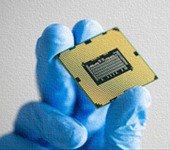

From Chips to AI: How India Is Building Technology Leadership Through Semiconductors, Computing and Indigenous AI
New Delhi : Semiconductors and artificial intelligence (AI) are rapidly becoming two of the most important pillars of the global technology economy. From smartphones, automobiles and satellites to advanced computing and AI systems, semiconductors provide the hardware foundation on which modern technologies operate.
At the same time, the rapid growth of AI is driving demand for advanced chips, specialised processors and high-performance computing infrastructure. Recognising the close relationship between these technologies, India is developing capabilities across the semiconductor and AI value chains—from chip design and fabrication to advanced packaging, computing infrastructure and indigenous AI models.
According to a Press Information Bureau (PIB) Backgrounder released on August 13, 2026, these initiatives are aimed at strengthening technological self-reliance, supply-chain resilience, innovation, entrepreneurship and high-value employment. (Press Information Bureau)
Semiconductors: The Foundation of India’s Technology Self-Reliance
India is working to develop domestic capabilities across the semiconductor value chain, including chip design, fabrication, advanced packaging, equipment, materials and skilled talent.
The objective is not limited to manufacturing chips. The broader strategy is to create an ecosystem in which Indian companies, startups, research institutions and skilled professionals can participate across multiple stages of semiconductor development.
Semicon 1.0 Laid the Foundation
The first phase of India’s semiconductor programme, referred to as Semicon 1.0, established the foundation of the country’s semiconductor ecosystem with a ₹76,000-crore budget.
The programme covers areas including:
- Chip design
- Semiconductor fabrication
- Packaging and testing
- Equipment
- Materials
- Skilled workforce
The next phase, Semicon India 2.0, is intended to take this foundation towards a globally competitive semiconductor ecosystem. The government approved a ₹1,27,500-crore budget for Semicon 2.0 in July 2026.
The programme is built around six strategic pillars:
- Chip design
- Machines and materials
- Fabrication plants
- ATMP/OSAT
- Research and development
- Talent development
According to the government, this integrated approach is designed to strengthen supply chains and increase domestic value addition. (Press Information Bureau)
12 Semiconductor Projects Approved Across Six States
India’s semiconductor programme is now moving from policy support towards actual manufacturing.
According to the PIB, 12 semiconductor projects have been approved across six states, involving an investment of more than ₹1.64 lakh crore.
These projects include:
- Silicon semiconductor fabs
- Compound semiconductor fabs
- Display fabrication facilities
- Advanced packaging facilities
Importantly, three facilities have already started commercial production, indicating a shift from semiconductor policy announcements towards actual manufacturing activity. (Press Information Bureau)
These facilities are expected to supply critical components to sectors such as:
Automobiles, telecommunications, aerospace, power electronics and consumer electronics.
What Do Semiconductor Facilities Actually Do?
A semiconductor fabrication plant, or fab, converts raw silicon wafers into functional integrated circuits and microchips.
Display fabrication facilities manufacture flat and flexible displays used in smartphones, automobiles and other electronic devices.
Meanwhile, advanced packaging technologies protect, connect and shield sensitive semiconductor chips. Advanced packaging can also improve chip performance and durability.
Together, these capabilities form an important part of the semiconductor value chain. (Press Information Bureau)
India Builds Indigenous Chip-Design Capabilities
Manufacturing is only one part of the semiconductor industry. Chip design and intellectual property are equally important.
Through initiatives such as the Chips to Startup (C2S) programme, the government is expanding access to semiconductor design tools and training.
According to PIB:
- 320 academic institutions have been provided access to Electronic Design Automation tools.
- More than 68,000 students have been trained.
- 24 semiconductor design projects have received financial support under the Design Linked Incentive (DLI) scheme.
- 105 startups/MSMEs have received support for EDA tools. (Press Information Bureau)
This is intended to create a larger domestic talent pool capable of designing advanced chips and electronic systems.
Why EDA Tools Matter
Electronic Design Automation (EDA) tools are specialised software platforms used to design, simulate, verify and optimise semiconductor chips.
They help engineers identify design problems before manufacturing and improve:
- Performance
- Power efficiency
- Reliability
- Design accuracy
By reducing development time, cost and manufacturing risks, EDA tools are essential for developing sophisticated semiconductor products.
By April 2026, 75 institutions had completed tape-outs of 211 chip designs, according to the government.
Furthermore, seven chips had been successfully manufactured across different process nodes, including an advanced 12-nanometre node. (Press Information Bureau)
The next phase of Semicon 2.0 is expected to further strengthen semiconductor IP, chip and system design, supporting India’s ambition to become a major global semiconductor design hub.
Global Partnerships Strengthen India’s Semiconductor Ambitions
India is also using international partnerships to accelerate its semiconductor ecosystem.
The country is working with technology partners and governments in:
- United States
- Japan
- Singapore
- Netherlands
- Germany
- European Union
At Semicon India 2025, more than 350 exhibitors and participants from 48 countries and regions took part.
The event recorded:
- 35,000 registrations
- 30,000 physical attendees
- 25,000 online viewers
The event also saw the announcement of 12 MoUs focused on areas such as product development, services and semiconductor skill development. (Press Information Bureau)
These partnerships are intended to connect Indian companies with the global semiconductor value chain and accelerate domestic capabilities.
IndiaAI Mission: Building India’s Own AI Ecosystem
Alongside semiconductors, India is rapidly expanding its AI capabilities.
The IndiaAI Mission, approved with an overall financial outlay of approximately ₹10,372 crore, aims to build AI capabilities that are safe, inclusive and aligned with Indian requirements.
Its broader objective is to make AI a strategic capability for:
- Innovation
- Economic growth
- Public-service delivery
- Research
- Entrepreneurship
The government is simultaneously working on AI computing infrastructure, foundational models, datasets, applications, talent and responsible AI. (Press Information Bureau)
India Expands AI Computing Capacity to More Than 45,000 GPUs
Access to computing power is one of the biggest requirements for developing modern AI models.
According to PIB, by June 2026, the IndiaAI Mission had expanded shared computing capacity to more than 45,000 GPUs.
By August 2026, 237 projects had benefited from subsidised AI computing, involving 93.18 lakh GPU hours.
This provides researchers, startups and innovators with more affordable access to high-performance computing for:
- AI model development
- Training
- Testing
- Research
What Is a GPU?
A Graphics Processing Unit (GPU) is a specialised processor designed to handle large numbers of calculations simultaneously.
Although GPUs were originally developed primarily for graphics and image processing, they are now essential for AI training, machine learning and high-performance computing.
India Selects 20 Indigenous Foundation AI Model Proposals
India is also working towards developing its own foundation AI models.
The government selected 20 indigenous foundation-model proposals from 506 applications.
These include:
- 12 large multimodal models
- 8 small language models
The objective is to develop AI systems that can better understand and respond to Indian languages, requirements and contexts. (Press Information Bureau)
This could become particularly important for India’s multilingual population and for AI applications designed specifically for Indian public services and businesses.
AI Datasets and Models Expand
The digital foundation supporting AI development is also growing.
By July 2026, the AIKosh platform had more than:
- 14,000 datasets
- 331 AI models
These resources can support researchers, developers and innovators in building and deploying AI solutions. (Press Information Bureau)
From AI Laboratories to Real-World Applications
India’s AI programme is increasingly moving beyond research and experimentation.
By August 2026:
- 62 AI prototypes had been developed under IndiaAI initiatives.
- 20 AI solutions had been implemented in public-sector institutions.
- 11 national-level hackathons and innovation challenges had been conducted.
This indicates a push to move AI solutions from laboratories and startups into real-world government and public-service applications. (Press Information Bureau)
58 AI Centres of Excellence Approved
India is also developing a network of Artificial Intelligence Centres of Excellence (AI CoEs).
As of August 2026, 58 AI CoEs had been approved across different states and Union Territories.
Work had already begun on 22 CoEs across 13 states/UTs.
These centres are expected to strengthen research, innovation and application development in specialised areas of AI. (Press Information Bureau)
Building Talent and a Deep-Tech Ecosystem
India’s AI strategy also extends to emerging technologies such as robotics, cybersecurity and quantum technology.
The National Mission on Interdisciplinary Cyber-Physical Systems (NM-ICPS) has established 25 Technology Innovation Hubs at leading academic institutions.
These centres support:
- Research
- Skill development
- Startups
- Technology transfer
- AI
- Robotics
- Cybersecurity
- Quantum technologies
Responsible AI Gets Greater Attention
As AI adoption accelerates, India is also focusing on safe and trustworthy AI.
By July 2026, the government had approved 13 responsible AI projects under the safe and trusted AI pillar of the IndiaAI Mission.
These projects address issues including:
- AI bias
- Machine unlearning
- Deepfake detection
- Privacy-preserving AI
- Explainability
- AI risk assessment
This reflects an effort to balance rapid AI adoption with responsible AI governance. (Press Information Bureau)
Data Centres Expand to Support India’s AI Infrastructure
AI requires massive computing and storage infrastructure, making data centres another critical component of India’s technology ecosystem.
Major data-centre locations include:
Mumbai, Navi Mumbai, Chennai, Hyderabad, Bengaluru, Delhi-NCR and Gujarat.
Installed data-centre capacity has increased from around 375 MW in 2020 to approximately 1,575 MW, according to the PIB.
The industry is also expanding into emerging investment destinations including:
- Andhra Pradesh
- Madhya Pradesh
- Chhattisgarh
- West Bengal
India’s Growing Global AI Footprint
India’s AI ecosystem is also gaining international recognition.
The Stanford Global AI Vibrancy Report 2025 ranked India third globally in AI competitiveness and ecosystem vibrancy, according to the PIB backgrounder.
In 2025, India was also the second-largest contributor to AI projects on GitHub, highlighting the strength of its developer and innovation community. (Press Information Bureau)
IndiaAI Impact Summit 2026
The India AI Impact Summit 2026, held in February 2026, brought together delegations from more than 100 countries and 20 international organisations.
According to the government, 92 countries and organisations adopted the summit declaration.
India also joined the Pax Silica coalition at the summit, aimed at strengthening global silicon supply chains through cooperation with the United States and other partner countries.
The initiative complements India’s domestic efforts to build a self-reliant, inclusive and globally competitive AI ecosystem. (Press Information Bureau)
Semiconductors + AI: Why the Combination Matters
The semiconductor and AI strategies are closely connected.
AI requires powerful processors, GPUs, memory and advanced computing infrastructure. At the same time, semiconductor technology increasingly incorporates AI capabilities into smartphones, vehicles, industrial systems, defence platforms and other products.
This creates an interconnected technology chain:
Chip Design → Semiconductor Manufacturing → Advanced Packaging → Computing Infrastructure → AI Models → AI Applications
India’s strategy is increasingly focused on developing capabilities across this entire chain rather than concentrating on a single segment.
What Comes Next for India?
India’s semiconductor programme is moving beyond approvals and design support towards commercial production.
The next phase, Semicon 2.0, places greater emphasis on:
Equipment + Materials + Advanced Packaging + Research + Indigenous IP + Skills
At the same time, the IndiaAI Mission is expanding shared computing capacity and supporting collaboration between the government, industry, academia and startups.
The combination could create opportunities across manufacturing, deep-tech startups, semiconductor design, AI research, data centres and specialised technology services. (Press Information Bureau)
Conclusion: Building the Foundation for Viksit Bharat
India’s technology ambitions are increasingly moving from policy announcements to physical infrastructure, commercial production, indigenous chip design and AI deployment.
The semiconductor programme is building the hardware foundation, while the IndiaAI Mission is developing the computing, models, datasets, talent and applications needed for an AI-driven economy.
The government’s strategy is therefore not simply about making chips or developing AI models. It is about creating an integrated technology ecosystem that can strengthen self-reliance, supply-chain resilience, innovation and global competitiveness.
As India approaches its 80th Independence Day, the development of capabilities across semiconductors, AI, advanced computing and deep-tech innovation could become an important component of the country’s journey towards Viksit Bharat and greater global technology leadership. (Press Information Bureau)
Source: Press Information Bureau (PIB), Government of India, “Semiconductor and AI Revolution: Empowering the Future,” published August 13, 2026. Read the official PIB Backgrounder