


Bilaspur, Chhattisgarh |: While governments across India continue to promote initiatives aimed at improving access to quality education, a troubling situation has emerged from Ghutku village in Takhatpur Assembly Constituency of Bilaspur district, where students at a Government Primary School have been forced to attend classes under a tree due to the absence of a functional school building.
The incident has once again highlighted the gap between official claims of strengthening public education and the ground reality faced by children in rural India.
Students Left Without a Proper School Building
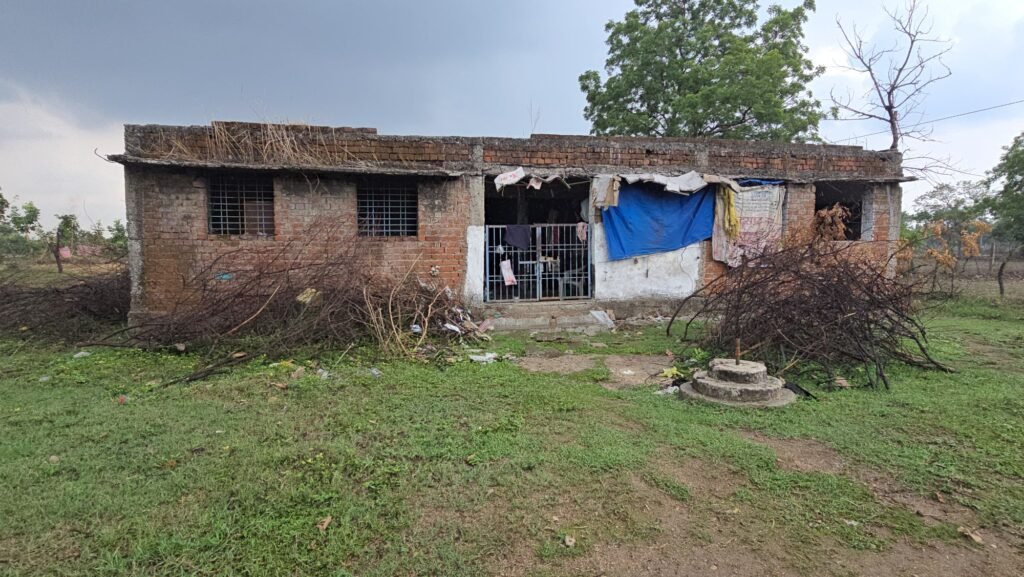
According to local residents, the original school building was constructed years ago in the middle of agricultural fields, making it difficult and unsafe for young children to reach. The route lacked a proper road, and students reportedly had to cross railway tracks while navigating muddy fields during the rainy season.
Over time, the building became structurally unsafe and was declared unusable.
School Operated from a Private House for Five Years
After the original building deteriorated, the school functioned free of cost from the private residence of a member of the School Management Committee for nearly five years. However, as the homeowner’s family expanded, the property was reclaimed for personal use, leaving the school without a classroom.
With no immediate alternative arranged, teachers and students had no choice but to continue classes outdoors.
Children Studying Under a Tree
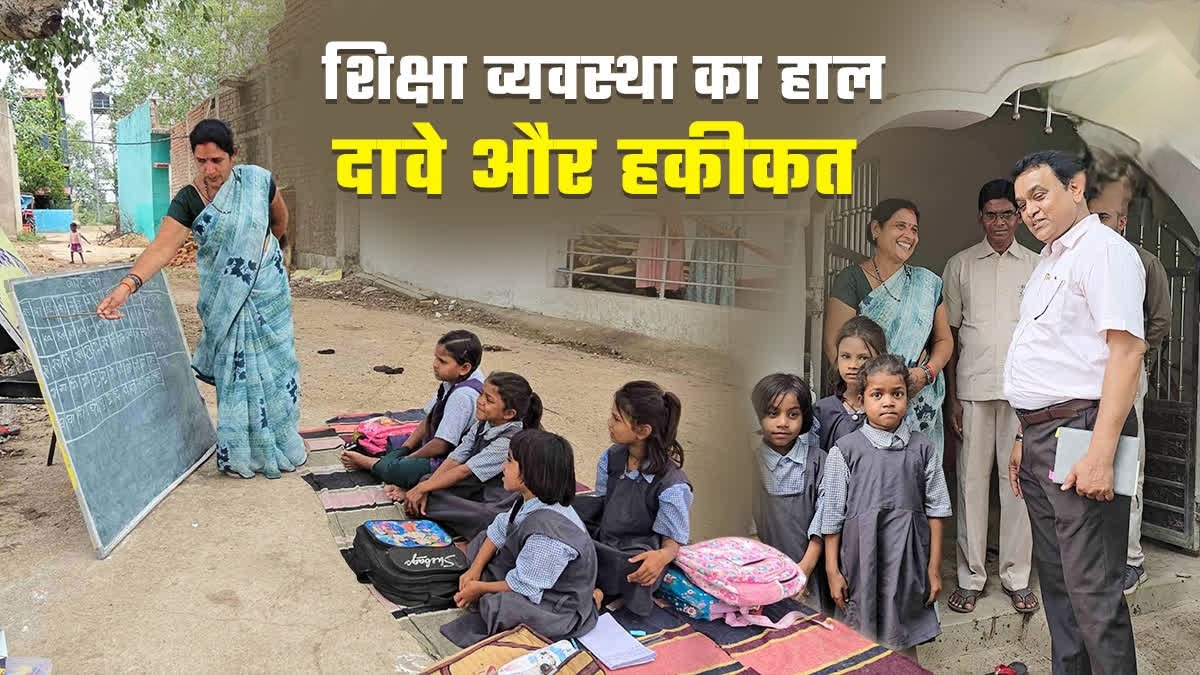
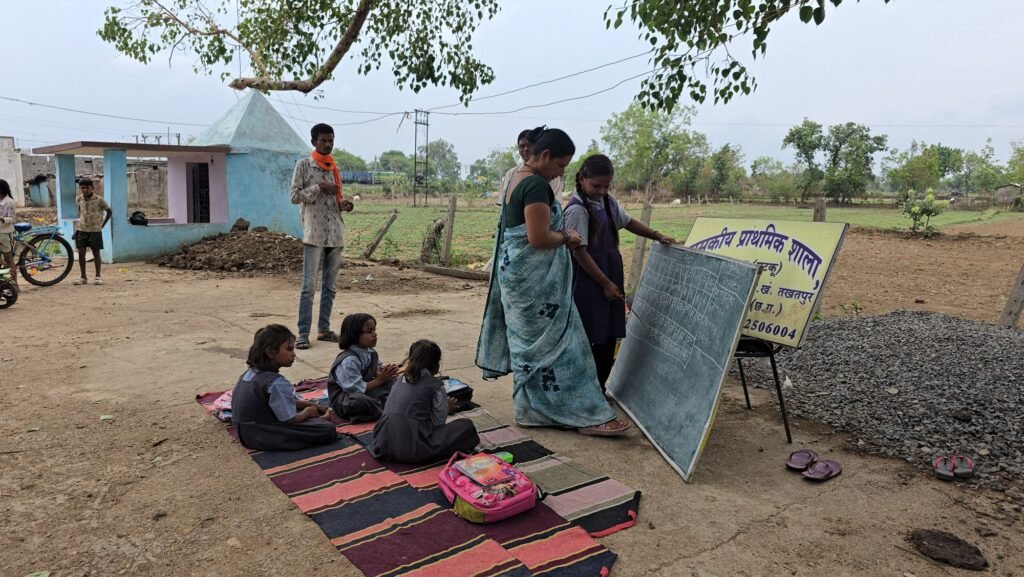
For several days, students from Grades 1 through 5 attended classes beneath a tree along the roadside. Children sat on floor mats while teachers conducted lessons in the open.
The arrangement exposed students to extreme heat, rain, insects, and other safety risks, raising serious concerns about their learning environment and overall well-being.
Currently, the school has only 10 enrolled students, and there are reportedly no students in Grades 1 and 2, reflecting declining enrollment.
Parents Consider Withdrawing Their Children
Parents expressed frustration over the lack of basic educational infrastructure. Several reportedly approached the school seeking Transfer Certificates (TCs) so they could enroll their children elsewhere, citing unsafe and unsuitable learning conditions.
Residents questioned why a permanent solution had not been implemented despite the school operating from temporary arrangements for years.
Officials Visit the Site After Ground Report
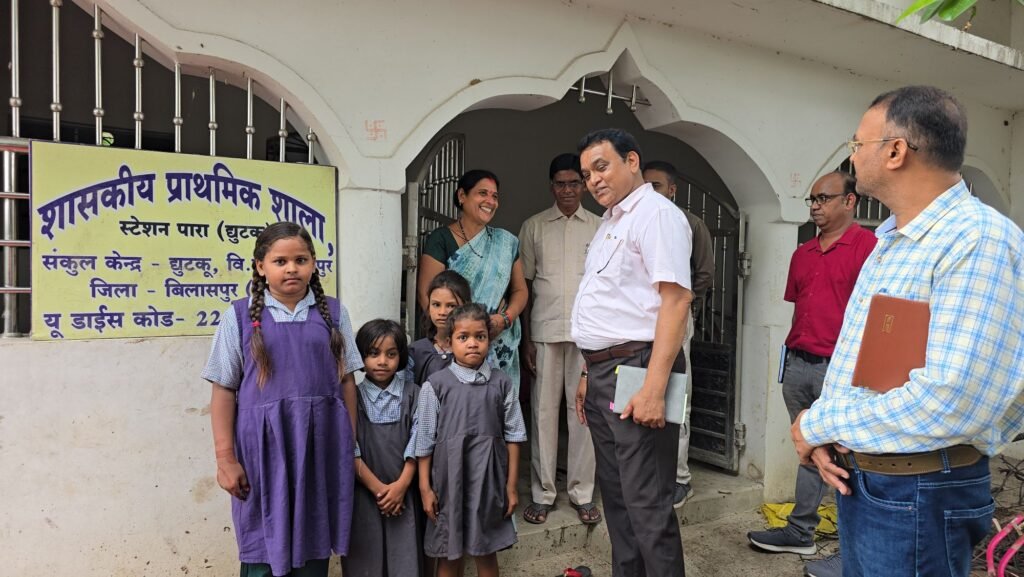
Following media coverage of children studying under a tree, officials, including District Education Officer Rameshwar Jaiswal, visited the village to assess the situation.
Authorities immediately arranged a temporary alternative building within the village to resume classroom teaching and assured residents that construction of a new school building would begin without further delay.
Construction Approved but Delayed Due to Land Issues
According to the Education Department, funding of ₹1.148 million (₹11.48 lakh) has already been approved for the construction of a new school building.
Officials said the funds were released on June 12, but the project was delayed because authorities had difficulty identifying suitable land. Since the previous location required children to cross railway tracks and pass through waterlogged fields, officials stated that selecting a safer site became a priority.
The district administration has now announced that construction work has officially begun and will be completed as quickly as possible.
Officials’ Response
District Education Officer Rameshwar Jaiswal said the building had been approved nearly six months ago, but land-related challenges delayed the project. He confirmed that temporary arrangements have now been made and construction has commenced.
District Panchayat CEO Satyavrat Tiwari stated that authorities carefully evaluated available land because of the nearby railway line and the safety of young children. He assured residents that any remaining obstacles would be addressed to complete the school at the earliest.
Questions Still Remain
Despite the government’s continued emphasis on expanding educational access, the situation in Ghutku village raises several critical questions:
- Why was a permanent school building not constructed during the five years the school operated from a private house?
- Why were children forced to study under a tree before an alternative arrangement was made?
- Why was the original school built in an inaccessible and unsafe location?
- When will the new school building be fully completed and ready for students?
The case serves as a reminder that while education policies and enrollment campaigns continue nationwide, safe classrooms, reliable infrastructure, and timely implementation remain essential to ensuring every child receives the quality education they deserve.