

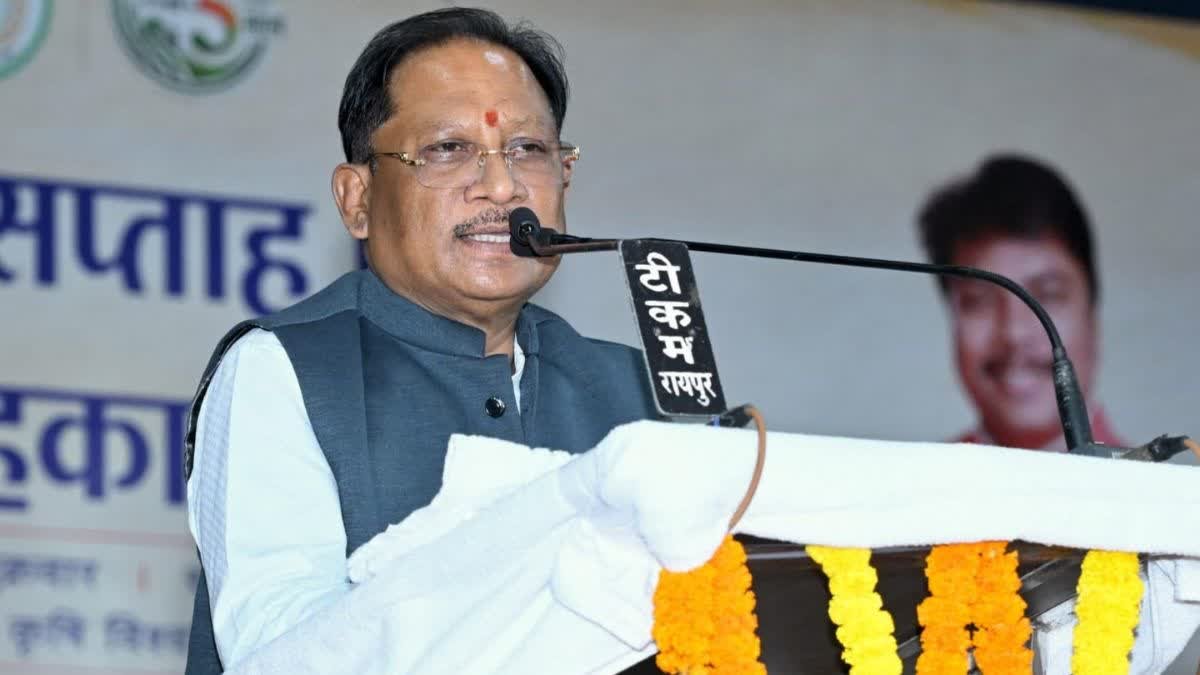
Raipur, Chhattisgarh: Marking the fifth anniversary of India’s Ministry of Cooperation, Chhattisgarh Chief Minister Vishnu Deo Sai said that expanding the cooperative movement is central to increasing farmers’ incomes, strengthening rural livelihoods, and laying the foundation for a “Developed Chhattisgarh.” The Chief Minister was addressing a State-Level Cooperative Conference and Cooperative Week event held at Indira Gandhi Agricultural University in Raipur.
Speaking at the event, Sai described the creation of the Ministry of Cooperation under Prime Minister Narendra Modi as a historic reform that has transformed the vision of “Prosperity through Cooperation” into a nationwide development strategy.
“I am the son of a farmer, and I have shared a deep connection with the cooperative movement since childhood. I always believed that cooperatives have immense potential. Today, under Prime Minister Narendra Modi’s leadership, that vision is becoming a reality,” Sai said.
Cooperatives Driving Rural Growth
The Chief Minister emphasized that the double-engine government is using the cooperative model to improve the economic condition of farmers, tribal communities, women’s self-help groups, and rural families across Chhattisgarh.
According to Sai, the Union Government has expanded the scope of agricultural development by renaming the ministry as the Ministry of Agriculture and Farmers’ Welfare, reflecting a broader commitment to farmers’ overall well-being.
He said that cooperatives are emerging as one of the most effective tools for increasing farm income, strengthening the rural economy, and promoting self-reliance.
Support Beyond Agriculture
Sai highlighted that the Central Government is also strengthening cooperatives in sectors such as animal husbandry, dairy production, fisheries, forest produce, and rural entrepreneurship.
He noted that collaboration with the National Dairy Development Board (NDDB) has begun delivering significant improvements in milk production across Chhattisgarh, while the state government continues to promote livestock development.
Interest-Free Loans Benefit Farmers
The Chief Minister pointed out that farmers once had to borrow agricultural loans at interest rates ranging from 16% to 18%, placing a heavy financial burden on them.
He said that through the cooperative credit system and the Kisan Credit Card (KCC) scheme, eligible farmers are now receiving interest-free agricultural loans.
Key highlights include:
- More than 1.5 million farmers received agricultural credit this year.
- The total loan disbursement exceeded ₹80 billion (₹8,000 crore).
- The initiative has improved farmers’ access to affordable finance and strengthened their financial stability.
Cooperation Minister Highlights Progress
Chhattisgarh Cooperation Minister Kedar Kashyap said that the completion of five years of the Ministry of Cooperation is a matter of national pride.
He announced that Cooperative Week, observed from June 29 to July 6, includes a series of programs promoting awareness and participation in the cooperative movement.
According to Kashyap, Chhattisgarh has witnessed remarkable progress in the cooperative sector over the past two years, which will play a critical role in building a Developed Chhattisgarh by reinforcing the rural economy.
Digital Cooperative Portal Launched
During the event, Chief Minister Sai inaugurated the Cooperation Department’s Online Portal, designed to make farmer registration fully digital, transparent, and time-bound.
The platform is expected to simplify administrative procedures while improving service delivery for farmers.
The Chief Minister also presented the Cooperative Inspiration Awards to outstanding cooperative societies.
₹1.62 Billion Incentive Released for Tendu Leaf Collectors
In another major announcement, Sai launched the distribution of over ₹1.62 billion (₹162 crore) in incentive payments to approximately 714,000 tendu leaf collectors for the 2023 collection season.
The financial assistance aims to recognize the contribution of forest produce collectors and strengthen the livelihoods of tribal and forest-dependent communities across the state.
Key Takeaway
The Chhattisgarh government says it is placing cooperatives at the center of its rural development strategy, combining interest-free farm credit, digital governance, dairy development, tribal welfare, and financial incentives to boost agricultural productivity and improve livelihoods. Officials believe the cooperative model will play a pivotal role in achieving the state’s long-term goal of becoming a Developed Chhattisgarh while enhancing economic opportunities for millions of rural residents.