


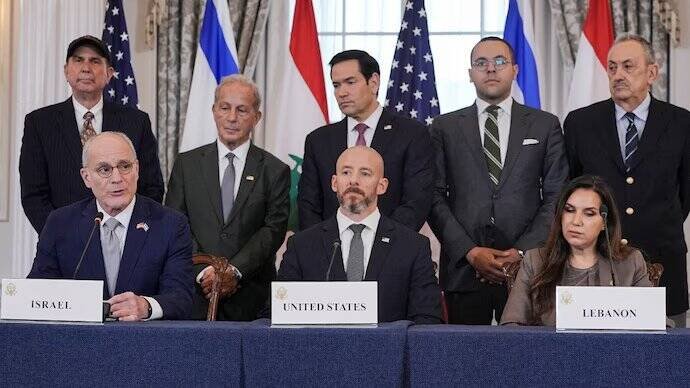

WASHINGTON, D.C. — The United States, Israel, and Lebanon have signed a trilateral framework agreement after four days of high-level negotiations in Washington, D.C., marking a significant diplomatic effort aimed at reducing tensions and improving cooperation between the neighboring countries.
The agreement was officially announced by US Secretary of State Marco Rubio, who described it as an important step toward promoting regional stability, security, and continued diplomatic engagement in the Middle East.
According to US officials, the framework agreement establishes a roadmap for future cooperation and outlines commitments that all three parties are expected to implement. While the full details of the agreement have not yet been made public, officials indicated that it is intended to encourage dialogue and build confidence between Israel and Lebanon, two countries that have experienced decades of conflict and border tensions.
Speaking after the announcement, Israeli Ambassador to the United States Yechiel Leiter described the agreement as “performance-based,” meaning that progress under the framework will depend on how successfully both Israel and Lebanon fulfill their respective commitments. He emphasized that future cooperation will be measured by concrete actions rather than promises alone.
Diplomatic observers say the agreement could provide a structured mechanism for addressing long-standing issues, including border security, regional stability, and other areas of mutual concern. However, they also noted that the success of the framework will depend on continued political commitment and the effective implementation of agreed measures.
The United States has positioned itself as a key mediator in the negotiations, reaffirming its commitment to supporting peaceful dialogue and reducing tensions across the Middle East. Officials expressed hope that the new framework will help prevent future conflicts and create opportunities for broader regional cooperation.
While the agreement represents an important diplomatic milestone, analysts caution that its long-term success will ultimately be determined by the willingness of Israel and Lebanon to carry out their obligations and maintain constructive engagement in the months ahead.