
More than 36,000 Saplings Planted Across 14.52 Hectares; Reclaimed Mining Land Transformed into a Growing Green Ecosystem
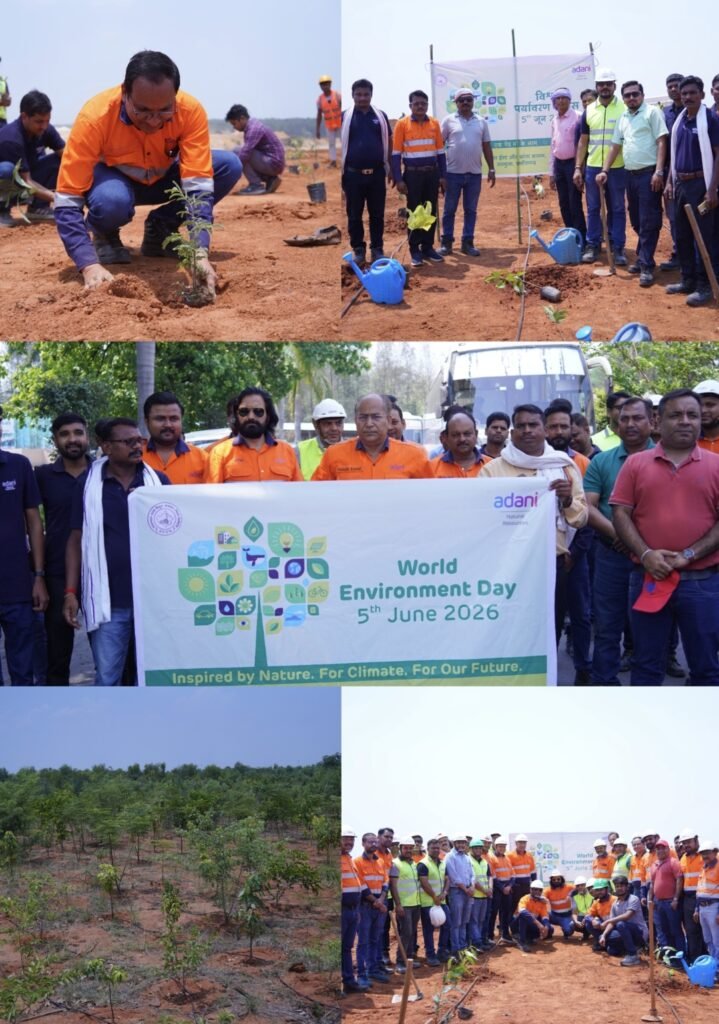
Ambikapur, Chhattisgarh |Marking World Environment Day 2026, the Parsa East and Kente Basan (PEKB) and Parsa Coal Block (PCB) mining projects of Rajasthan Rajya Vidyut Utpadan Nigam Limited (RRVUNL) launched a series of environmental conservation and community development initiatives in the Udaipur Block of Surguja district, Chhattisgarh.
The projects have emerged as a significant example of post-mining land reclamation and ecological restoration, with more than 1.8 million saplings planted to date across reclaimed mining areas. These efforts are gradually transforming previously mined land into a thriving man-made green forest ecosystem, demonstrating how responsible mining can contribute to long-term environmental sustainability.
36,315 Saplings Planted Across 14.52 Hectares
As part of the 2026 plantation drive, the PEKB project carried out plantation activities near the Hariharpur dump area, covering 12.48 hectares and planting 31,215 saplings. Meanwhile, the Parsa Coal Block project planted 5,100 saplings over 2.04 hectares.
Together, both projects achieved plantation over 14.52 hectares, with a total of 36,315 saplings planted, representing a substantial increase from 2025, when 27,220 saplings were planted across the two mining projects.
The plantation program forms a key component of the projects’ broader strategy to enhance biodiversity, improve green cover, and accelerate the ecological recovery of reclaimed mining landscapes.
Environmental Awareness Campaign and Green Pledge
To promote environmental stewardship among employees and stakeholders, awareness marches were organized within the PEKB and PCB project premises. During the events, project officials, employees, contractors, and representatives of partner agencies participated in a collective environmental protection pledge, reaffirming their commitment to sustainable development and conservation.
The activities were conducted under the guidance of the project and cluster management teams, emphasizing the importance of integrating environmental responsibility into daily operations.
Guava Orchard Established to Support Rural Livelihoods
Beyond environmental restoration, the projects also focused on strengthening local livelihoods through Corporate Social Responsibility (CSR) initiatives.
Under an Adani Group CSR program, a fruit-bearing guava orchard was established in Parsa village, consisting of 100 guava saplings of the VNR V1 variety, a high-yield cultivar known for producing fruit within approximately six months of planting.
The initiative is expected to generate additional income opportunities for rural households, while also promoting sustainable agriculture and long-term community development.
Strong Community Participation
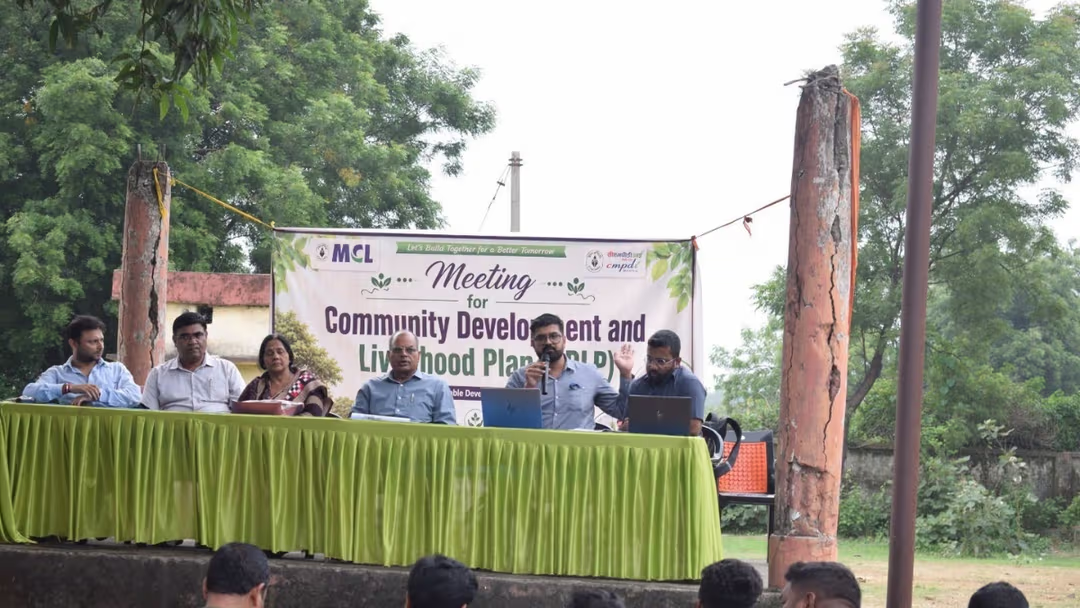
The event witnessed active participation from the Parsa village sarpanch, local elected representatives, members of women’s self-help groups (SHGs), and villagers. Community members welcomed the initiative, recognizing its potential to enhance rural livelihoods and improve environmental conditions in the region.
Participants also pledged to support the maintenance and protection of the newly established orchard and plantation sites.
Senior project officials, including the Cluster Head and representatives from the Environment and CSR Departments, were present during the program.
5,000 Fruit Saplings Distributed in Nearby Villages
As part of the broader environmental outreach campaign, the CSR team distributed 5,000 fruit-bearing saplings in surrounding villages on June 3 and 4, 2026.
The distribution drive aimed to:
- Encourage household-level plantation activities
- Improve nutritional security
- Promote community participation in environmental conservation
- Create long-term livelihood opportunities through horticulture
The initiative aligns with broader efforts to integrate environmental sustainability with rural economic development.
Scientific Planning for Long-Term Sustainability
Project officials stated that the plantation campaign was carefully designed considering the region’s climatic conditions, soil characteristics, and long-term ecological requirements. Tree species were selected based on their survivability, environmental suitability, and contribution to restoring local ecosystems.
The campaign was implemented through coordinated efforts involving the Environment, CSR, Horticulture, Mining, and Administrative Departments, reflecting a comprehensive and integrated approach to sustainable mine management.
Commitment to Sustainable Mining
With over 1.8 million trees planted, large-scale reclamation efforts underway, and community-focused livelihood initiatives gaining momentum, the PEKB and Parsa Coal Block projects continue to demonstrate how environmental restoration, community engagement, and responsible mining practices can work together to create lasting ecological and social benefits.
Project management expressed gratitude to all participating departments, local representatives, and community members for their support in making the World Environment Day 2026 campaign a success.