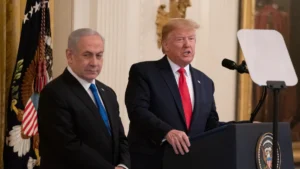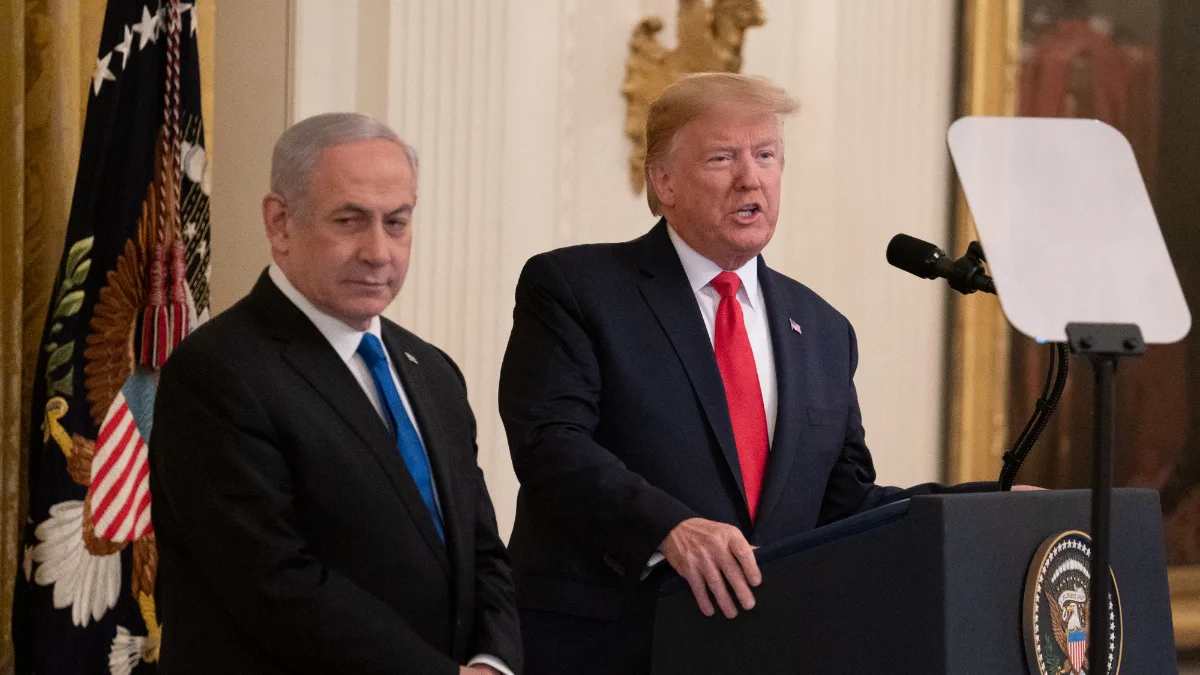


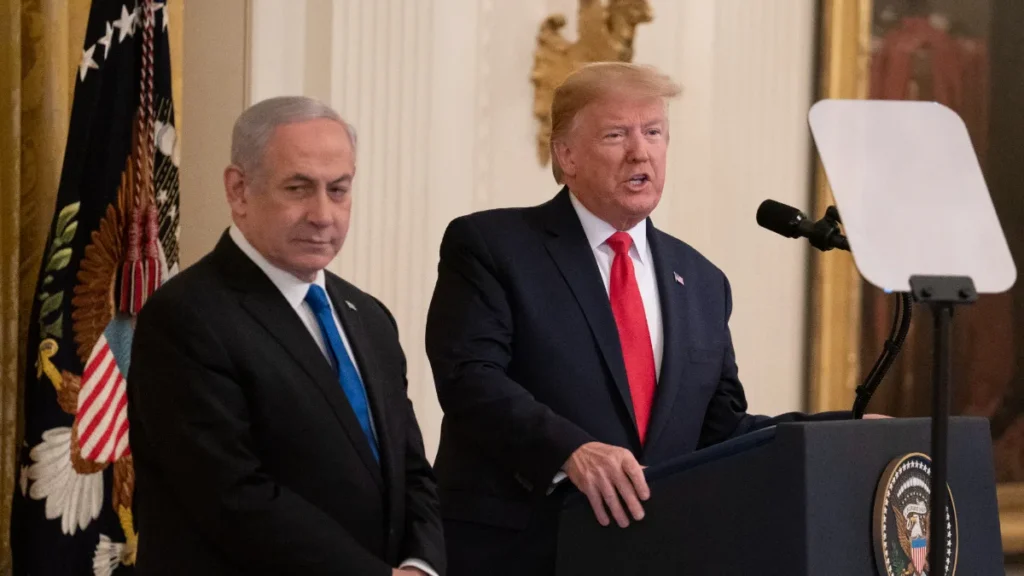
Washington, D.C. | A significant policy difference has emerged between U.S. President Donald Trump and Israeli Prime Minister Benjamin Netanyahu after Trump dismissed Israeli concerns over a potential sale of F-35 stealth fighter jets to Turkey.
Speaking to reporters aboard Air Force One before Netanyahu’s arrival in Washington, Trump emphasized that the United States alone will determine its defense export policies, rejecting the notion that any foreign government should influence American arms sales.
“Nobody tells me what we should be selling,” Trump said.
The comments came ahead of high-level White House talks expected to focus on Iran, regional security, Lebanon, and the expansion of the Abraham Accords.
Trump Signals Openness to F-35 Sale
Trump described Turkey as “a tremendous ally” and praised Ankara’s relationship with Washington.
He indicated that his administration is considering allowing Turkey to purchase the F-35 Lightning II, one of the world’s most advanced fifth-generation stealth fighter aircraft.
Trump also suggested that his administration could lift sanctions imposed after Turkey acquired the Russian-made S-400 air defense system, a move that previously resulted in Ankara’s removal from the F-35 program.
Calling the aircraft “the best plane by far,” Trump said the proposed sale is “certainly something we will consider.”
No final decision has been announced.
Netanyahu Voices Strong Opposition
Prime Minister Benjamin Netanyahu has repeatedly argued against providing F-35 fighter jets to Turkey, warning that such a move could alter the military balance in the Middle East.
According to his public remarks, Netanyahu expressed concern about the policies of Turkish President Recep Tayyip Erdoğan, arguing that Ankara’s regional positions raise security concerns for Israel.
Netanyahu said he had personally urged President Trump not to approve the sale, emphasizing that maintaining Israel’s qualitative military edge remains a critical national security priority.
He also argued that supplying advanced fighter aircraft to Turkey could have long-term strategic consequences for regional stability.
Iran Expected to Dominate White House Talks
Before departing for Washington, Netanyahu said that Iran would be the primary topic during his meeting with President Trump.
He stated that Israel’s objectives include strengthening national security while expanding regional peace initiatives.
“Our goal is to safeguard our security and also to expand the circle of peace around us,” Netanyahu said.
The Israeli leader described the visit as his eighth face-to-face meeting with Trump since the U.S. President began his second term, calling it both “a great privilege” and “a great responsibility.”
Broader Middle East Agenda
White House officials indicated that discussions between the two leaders are expected to include:
- Iran’s nuclear and regional activities
- Security developments in Lebanon
- Expansion of the Abraham Accords
- Wider Middle East diplomacy
- Regional defense cooperation
Trump also acknowledged publicly that he and Netanyahu do not fully agree on every issue, particularly regarding policy toward Iran.
Separate Meeting Planned with Ukraine
In addition to the meeting with Netanyahu, President Trump is also expected to hold separate talks with Volodymyr Zelenskyy at the White House, with discussions likely to focus on the ongoing conflict in Ukraine and broader international security issues.
Reaction from Two Americans
Dr. Michael Reynolds, an American defense and security analyst based in Washington, D.C., said the debate reflects the complex balance between strategic partnerships and regional security.
“The F-35 is one of America’s most advanced military platforms. Any decision regarding its export involves careful consideration of alliance commitments, regional stability, and long-term strategic interests.”
Meanwhile, Jennifer Collins, an American foreign policy researcher from Boston, Massachusetts, noted that differences between close allies are not unusual.
“The United States and Israel share a strong strategic relationship, but allies can hold different views on specific defense policies. High-level dialogue is essential to managing those differences while maintaining broader cooperation.”
Looking Ahead
The Washington meeting between President Donald Trump and Prime Minister Benjamin Netanyahu is expected to shape discussions on several of the Middle East’s most pressing issues, including Iran, regional security, and future diplomatic initiatives. While the two leaders continue to maintain a close strategic partnership, Trump’s comments on a possible F-35 sale to Turkey highlight that policy differences remain on key regional security matters. Any final decision regarding the proposed aircraft sale is expected to attract close attention from allies, defense analysts, and governments across the region.