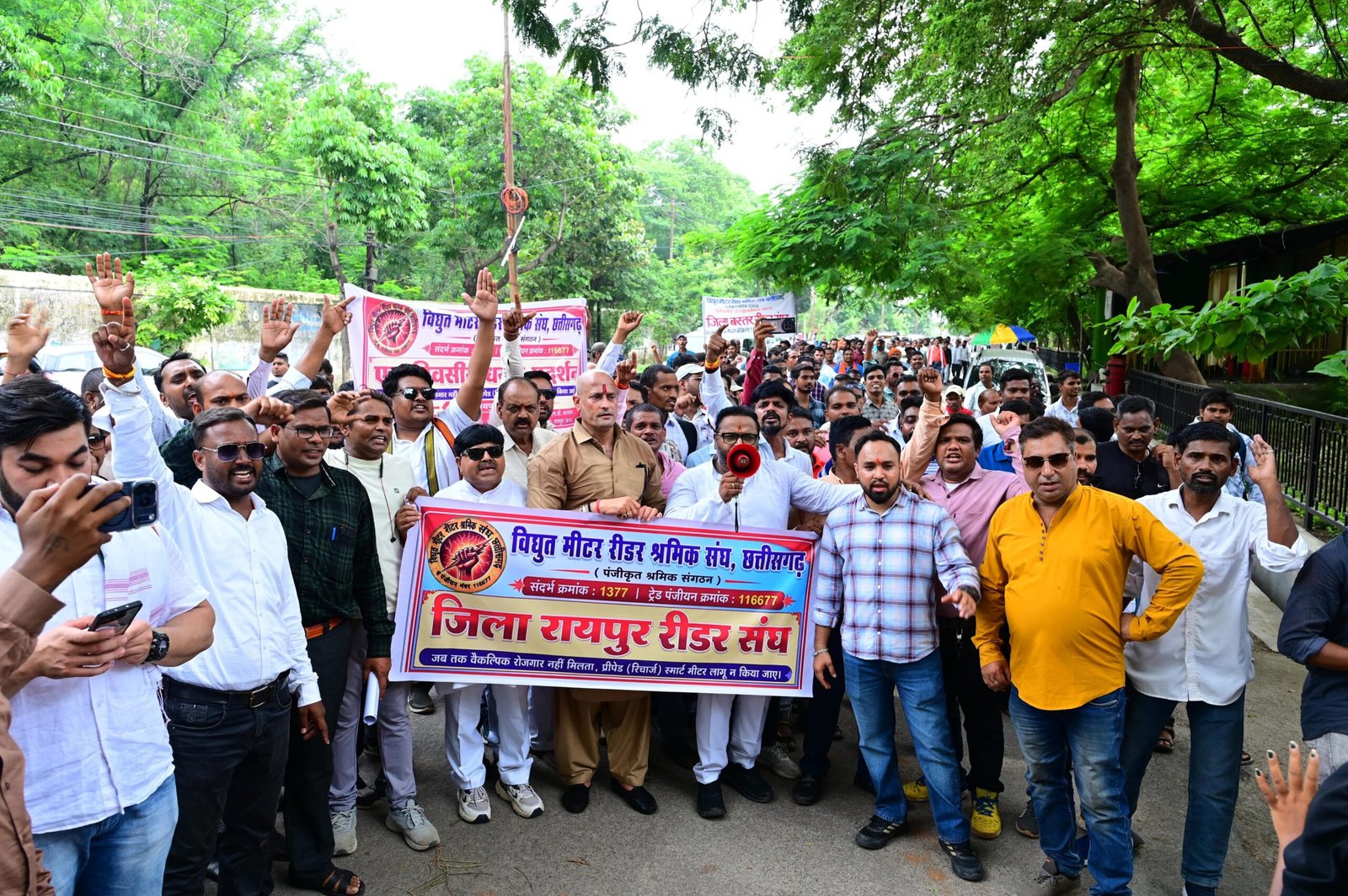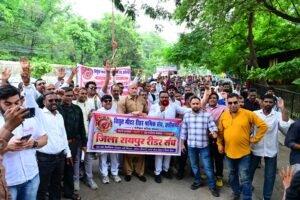

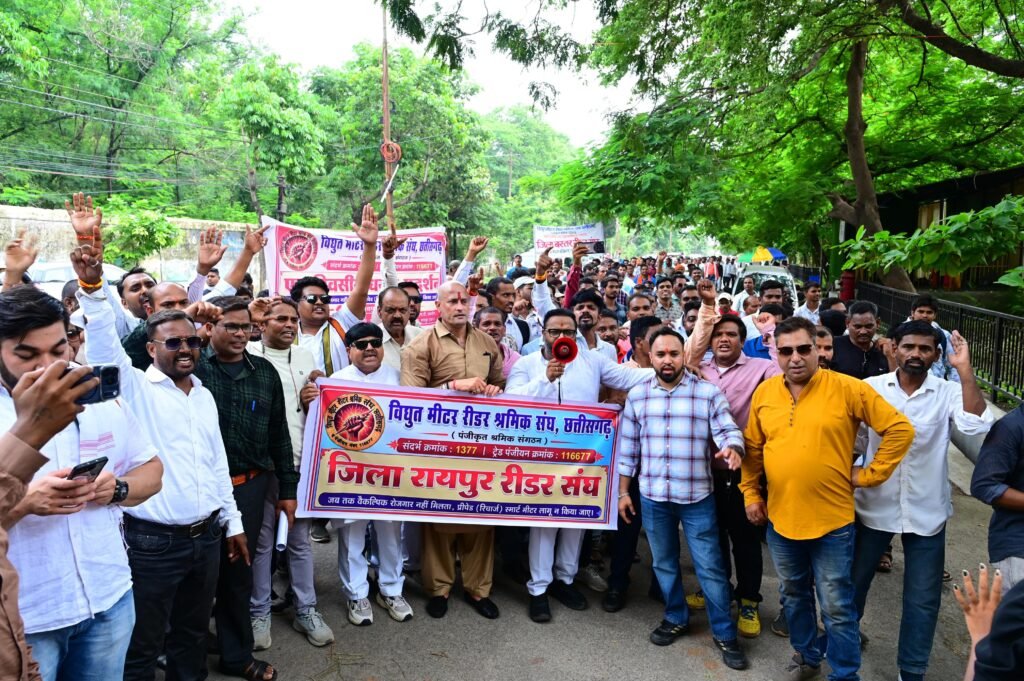
Raipur, Chhattisgarh | Thousands of electricity meter readers gathered in Raipur, the capital of Chhattisgarh, to protest against the implementation of smart prepaid electricity meters, expressing fears that the new system could threaten the livelihoods of thousands of workers. The demonstration was organized by the Electricity Meter Reader Workers’ Union, Chhattisgarh, and received support from senior Congress leaders, including former Chief Minister Bhupesh Baghel.
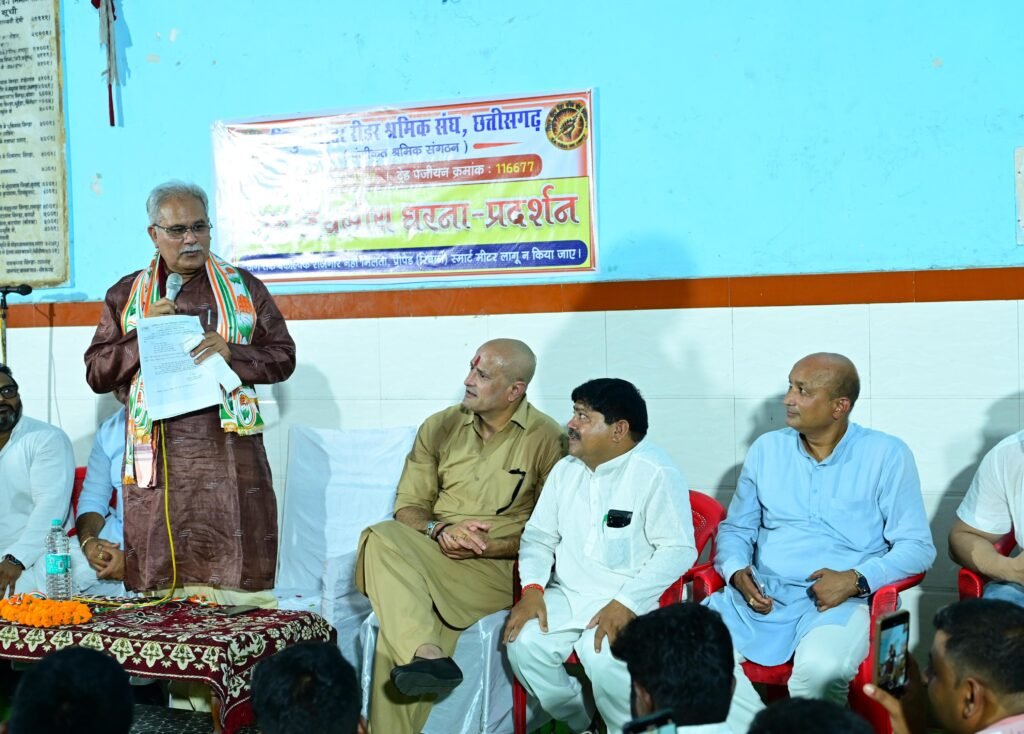
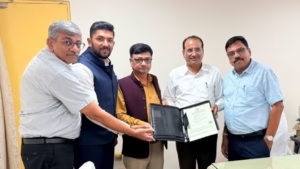
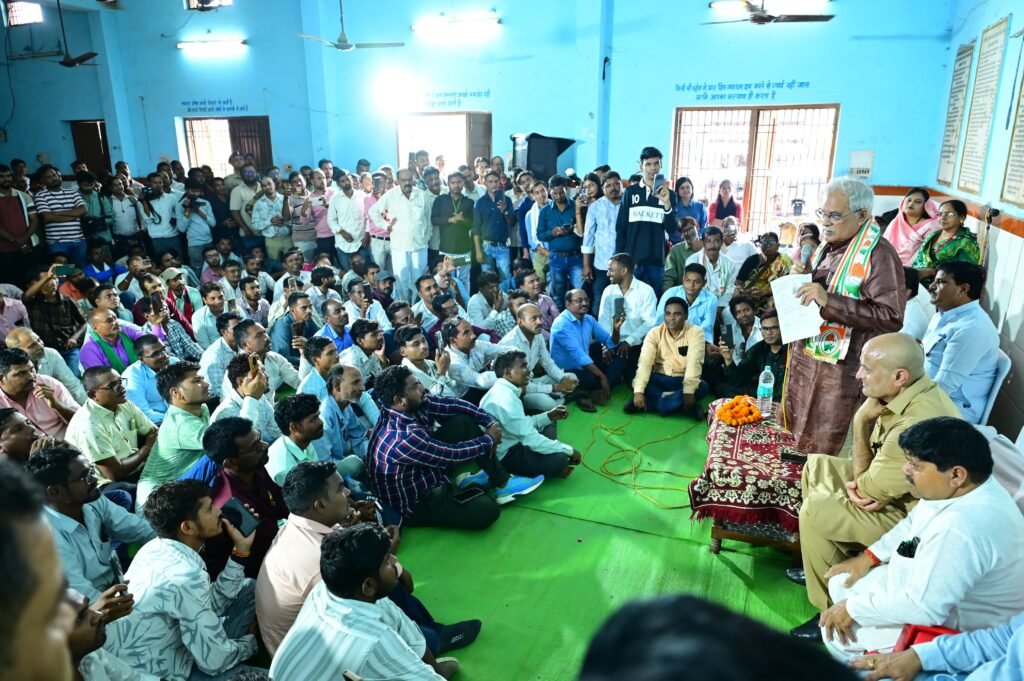
The meeting was held at the Kalar Samaj Bhavan in Danganiya, after which workers and Congress leaders marched to the Danganiya Electricity Office, where they staged a protest and submitted a memorandum to officials outlining their demands.
Workers Raise Concerns Over Smart Meter Rollout
During the meeting, representatives of the workers’ union said the introduction of smart prepaid electricity meters could eliminate the need for manual meter reading, putting the jobs of nearly 5,000 meter readers across Chhattisgarh at risk.
Union members urged the government to formulate a clear rehabilitation and employment policy before implementing the new technology. They argued that modernization should not come at the expense of workers who have served the electricity distribution system for years.
Union patron Sushil Sunny Agrawal said the government should ensure that every affected worker is provided with alternative employment or proper adjustment before any large-scale transition to prepaid smart meters.
Congress Extends Support to Protesters
Addressing the gathering, Bhupesh Baghel expressed solidarity with the workers and criticized the state government’s approach toward the smart meter project.
Congress leaders alleged that the government had failed to consider the social and economic consequences of the transition and demanded greater transparency regarding the objectives of the smart meter initiative.
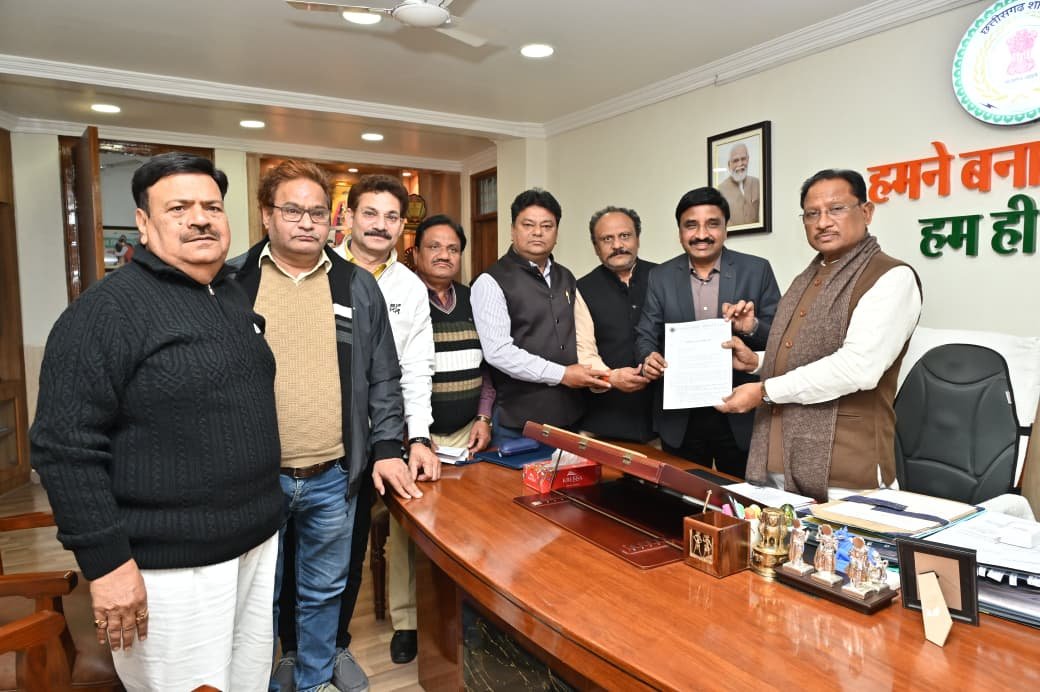
Following the meeting, protesters led by former MLA Vikas Upadhyay and senior Congress leaders surrounded the electricity office in Danganiya and submitted a memorandum demanding immediate action on the workers’ concerns.
Allegations of Rising Electricity Bills
Congress leaders also claimed that public dissatisfaction over smart electricity meters has been increasing across the state.
According to the opposition, consumers who previously received monthly electricity bills of around ₹300 to ₹400 are now allegedly receiving bills ranging between ₹5,000 and ₹10,000 after smart meter installations. The leaders called on the government to explain the reasons behind these reported increases and clarify whether consumers are genuinely benefiting from the project.
They also questioned whether the smart meter program primarily serves public interests or disproportionately benefits large private corporations.
Key Demands of the Meter Readers’ Union
The protesting workers presented three major demands to the government:
- Immediately suspend the implementation of the smart prepaid meter system until a comprehensive rehabilitation policy is prepared.
- Guarantee alternative employment and job security for all affected meter readers before introducing prepaid smart meters statewide.
- Hold discussions with representatives of approximately 5,000 meter readers to develop a permanent solution to their employment concerns.
Congress Criticizes State Government
Congress leaders accused the Bharatiya Janata Party (BJP)-led state government of ignoring both workers and consumers despite repeated concerns over employment security and electricity billing.
The party stated that it would continue supporting the workers’ movement and fight for their rights until adequate employment protection measures are introduced.
Reaction from Two Americans
Michael Thompson, an American labor policy expert based in Chicago, said technological modernization should always include protections for affected employees.
“Automation can improve efficiency, but governments must ensure that workers are retrained, reassigned, or compensated fairly during the transition.”
Meanwhile, Jennifer Adams, an American energy policy researcher from Washington, D.C., emphasized that public confidence depends on transparency.
“Smart metering can provide long-term benefits, but success depends on clear communication, accurate billing, and strong safeguards for both consumers and employees.”
Looking Ahead
The protest highlights growing debate in Chhattisgarh over the balance between technological modernization, consumer interests, and employment security. While the state government has promoted smart meters as a step toward improving the electricity distribution system, workers’ organizations and opposition leaders are demanding assurances that jobs, livelihoods, and consumer rights will not be compromised during the transition.
The government’s response to the memorandum and the workers’ demands is expected to play a significant role in determining whether the protests escalate further in the coming weeks.