

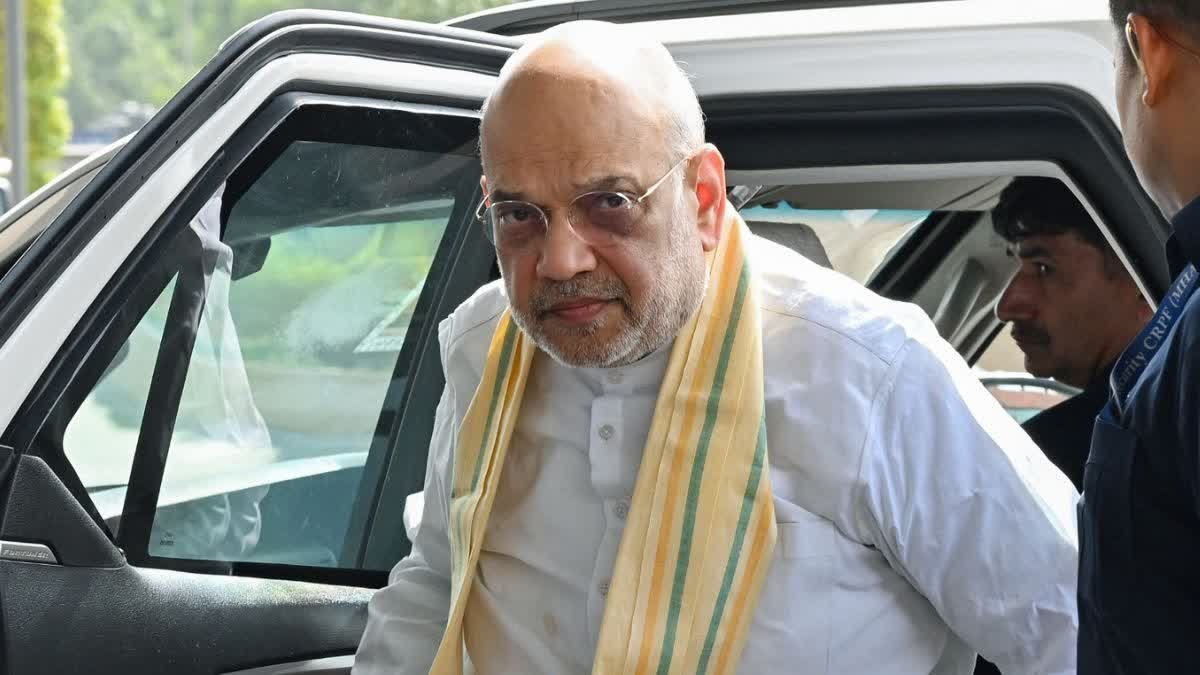

New Delhi |: India’s High-Level Committee on Demographic Change has briefed Union Home Minister Amit Shah on its roadmap for conducting a nationwide assessment of demographic trends, with Shah urging the panel to submit its recommendations at the earliest.
The committee, constituted by the Government of India, is tasked with carrying out a scientific study of demographic changes across the country, including those linked to illegal immigration, migration patterns, fertility trends, and other socio-economic factors.
Committee Briefs Home Minister
During a meeting held in New Delhi on Wednesday, the committee informed Amit Shah that it plans to visit various Indian states and Union Territories to gather firsthand information from local authorities and stakeholders.
The panel also shared its strategy to consult multiple Central Government Ministries to collect expert feedback on issues related to demographic change, enabling a comprehensive understanding of the challenges and policy requirements.
To make these visits more productive, the committee has prepared a detailed questionnaire that will be sent to states and Union Territories in advance. Officials believe this will help local administrations provide relevant data and facilitate more meaningful discussions during the committee’s field visits.
Shah Calls for Timely Recommendations
Home Minister Amit Shah appreciated the committee’s action plan and instructed Home Secretary Govind Mohan to provide the panel with all necessary administrative and logistical support during its daily operations and nationwide visits.
Shah also emphasized the importance of completing the study promptly and encouraged the committee to submit its policy recommendations as early as possible.
Committee Formed to Study Demographic Changes
The High-Level Committee was established by the Central Government in May 2026 to examine demographic changes occurring across India, particularly those allegedly associated with illegal immigration and other contributing factors.
The committee is chaired by Justice Prakash Prabhakar Naolekar (Retired), a former judge of the Supreme Court of India.
Other members include:
- Durga Shankar Mishra, former IAS officer
- Balaji Srivastava, former IPS officer
- Dr. Shamika Ravi, Member of the Prime Minister’s Economic Advisory Council (PMEAC)
- The Registrar General and Census Commissioner of India
Objectives of the Committee
The committee has been assigned the responsibility of conducting a scientific assessment of demographic changes across different regions of India and identifying their underlying causes.
Its mandate includes examining factors such as:
- Illegal immigration
- Cross-border migration
- Economic migration
- Fertility rate changes
- Social and environmental influences
- Population shifts among religious and social communities, particularly in regions where demographic trends differ significantly from national patterns.
Based on its findings, the committee will recommend policy, legislative, and administrative measures to address demographic challenges.
Focus on Illegal Immigration
One of the committee’s primary responsibilities is to propose a structured and sustainable operational framework for the legal identification, detention, and deportation, where applicable under Indian law, of individuals found to be residing in the country illegally.
The panel is also expected to recommend measures that improve coordination between the Central Government and state governments on issues related to illegal immigration and demographic management.
Background
Prime Minister Narendra Modi had announced the formation of such a committee during his Independence Day address in 2025, expressing concerns over what he described as demographic changes caused by illegal infiltration.
He stated that unlawful immigration could pose challenges to national security, alter demographic patterns in certain regions, and place additional pressure on employment opportunities and public resources.
The committee’s findings are expected to help the government formulate a comprehensive national policy based on data-driven research and administrative consultation regarding demographic trends across India.