


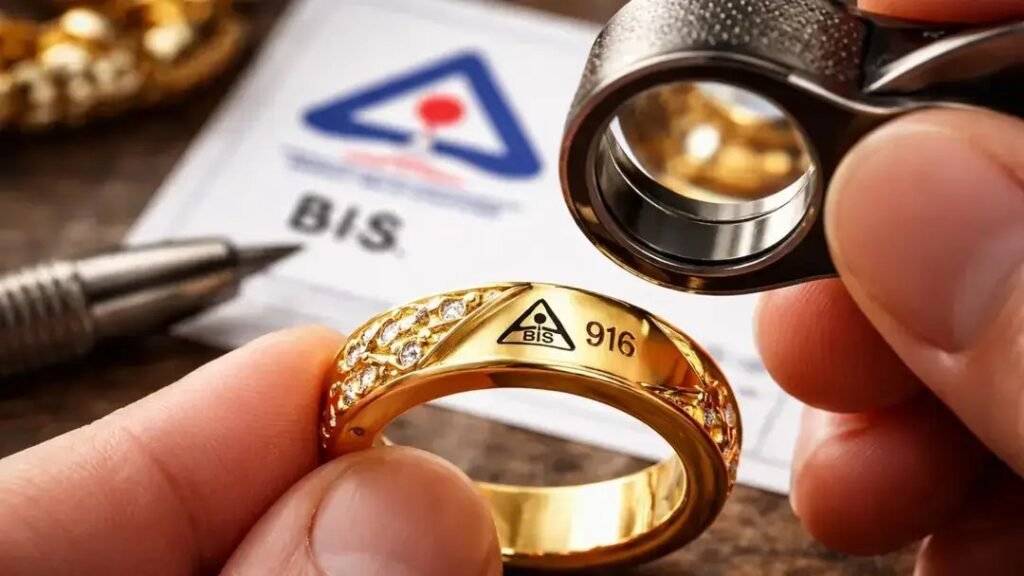
When buying gold jewellery, many customers notice tiny numbers engraved inside rings, necklaces, bangles, or earrings. These markings are not random — they indicate the purity of the gold used in the jewellery piece.
In India and several international markets, these numbers serve as a standard hallmark system that helps buyers identify how much pure gold is present in an item.
Understanding Gold Purity Numbers
The most commonly seen gold markings are 916, 750, 585, and 999. Each number represents the percentage of pure gold mixed into the jewellery alloy.
- 916 Gold
The number 916 means the jewellery contains 91.6% pure gold, which is equivalent to 22-karat gold. This is the most popular purity level for traditional jewellery in India because it offers a balance between purity and durability. - 750 Gold
A 750 stamp indicates 75% pure gold, commonly known as 18-karat gold. The remaining 25% consists of other metals such as silver, copper, or zinc, making the jewellery stronger and ideal for modern designer pieces and diamond jewellery. - 585 Gold
Jewellery marked with 585 contains 58.5% pure gold, or 14-karat gold. This type is more durable and scratch-resistant, making it widely popular in countries like the United States for everyday wear. - 999 Gold
The number 999 represents 99.9% pure gold, also called 24-karat gold. This is considered the purest form of gold available commercially and is mainly used for coins, bars, and investment purposes rather than regular jewellery because it is softer and bends easily.
Why Gold is Mixed with Other Metals
Pure gold is naturally soft, which makes it unsuitable for heavy daily use in jewellery. To improve strength and durability, jewellers mix gold with metals like copper, nickel, silver, or palladium.
This process creates different karat values:
- 24K = 99.9% pure gold
- 22K = 91.6% pure gold
- 18K = 75% pure gold
- 14K = 58.5% pure gold
The lower the purity, the stronger and more durable the jewellery becomes.
Importance of Hallmarking
Hallmark numbers help protect consumers from fraud and ensure transparency in the jewellery market. In India, gold jewellery is certified by the Bureau of Indian Standards under the BIS hallmarking system.
A genuine hallmark generally includes:
- BIS logo
- Purity number (916, 750, etc.)
- Jeweller’s identification mark
- Hallmarking center code
Experts advise buyers to always check these markings before purchasing gold jewellery.
Global Preferences in Gold Jewellery
Gold purity preferences vary across countries:
- India and the Middle East commonly prefer 22K jewellery.
- The United States and Europe widely use 14K and 18K gold for fashion and engagement jewellery.
- Investment-grade gold bars usually come in 24K purity.
Rising Awareness Among Buyers
With gold prices remaining high globally, consumers are becoming more aware of purity certifications and hallmark standards. Jewellery experts say understanding these small engraved numbers can help buyers make smarter purchasing decisions and avoid counterfeit products.
As gold continues to be viewed both as a fashion statement and a financial investment, purity markings like 916, 750, and 585 remain essential indicators of authenticity and value.