


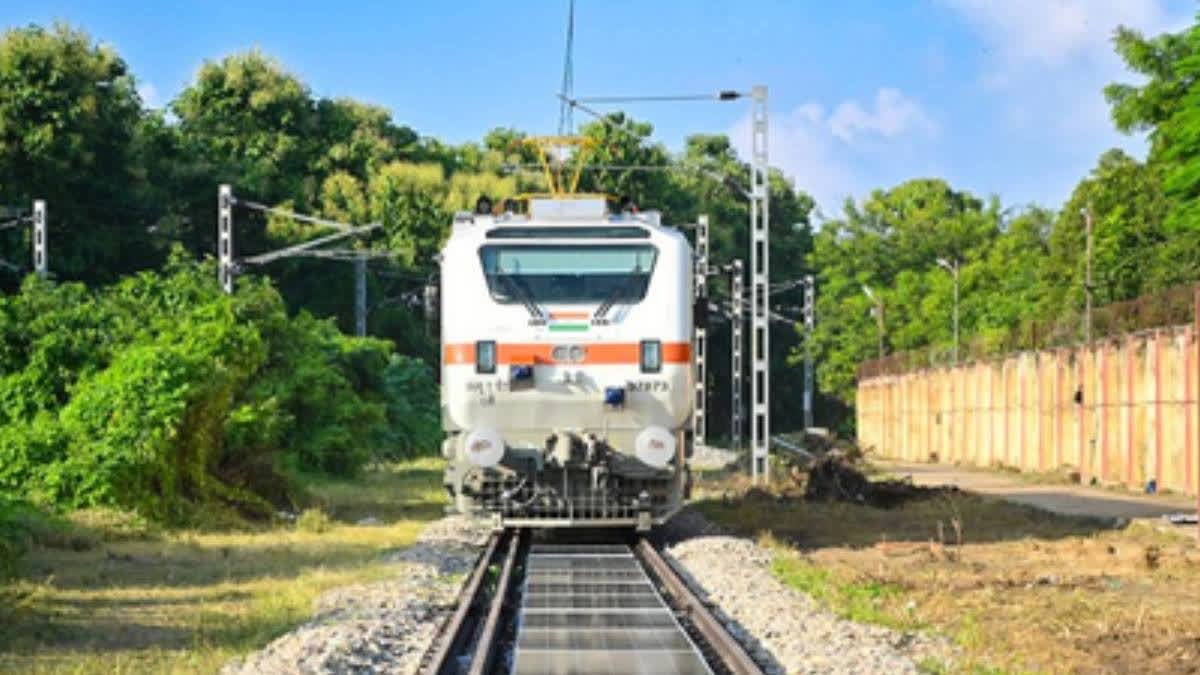

New Delhi |In the wake of the recent Signal Passed at Danger (SPAD) incident at Ayodhya Cantt Railway Station, Indian Railways has introduced a series of enhanced safety measures aimed at strengthening train operations, improving crew preparedness, and minimizing the risk of similar incidents in the future.
The new directives focus on yard learning updates, signal visibility improvements, Fog Safe Device (FSD) programming, and stricter operational compliance by Loco Pilots (LPs) and Assistant Loco Pilots (ALPs).
Why the New Measures Were Introduced
A SPAD incident occurs when a train passes a red signal without authorization, posing a significant safety risk. Following the Ayodhya Cantt case, railway authorities conducted a detailed analysis and identified several operational and infrastructure-related issues that contributed to the incident.
The findings have prompted Indian Railways to reinforce existing safety protocols and implement additional preventive measures across the network.
Major Safety Directives Issued by Indian Railways
According to the latest instructions:
- Loco Pilots who do not regularly operate on all railway lines must undergo yard learning updates every six months to maintain route familiarity.
- Signal Sighting Committees will now identify and report even minor issues affecting signal visibility, instead of relying solely on the minimum standards prescribed in the Signal Manual.
- While the current manual specifies a minimum signal sighting distance of 200 meters, railway officials have emphasized efforts to achieve a 400-meter visibility target wherever feasible.
- Fog Safe Device (FSD) programming will be reviewed and verified, especially in multiple-line yards, to ensure accurate guidance for all departure signals.
What Investigators Found in the Ayodhya Cantt Incident
Railway officials identified several factors that likely contributed to the SPAD event:
- The freight train was operating on Line No. 5, a route that is rarely used for freight movement.
- The Loco Pilot had not operated on that particular line for more than one year, resulting in inadequate familiarity with the yard.
- The section includes a 3-degree curve, reducing signal visibility.
- Unlike standard layouts where the starter signal is positioned near the end of the platform, the signal in this case was located approximately 100 meters beyond the platform.
- The crew reportedly failed to identify the starter signal in time.
- The Assistant Loco Pilot (ALP) had approximately 250 meters of signal visibility, while the Loco Pilot’s view was limited to around 50 meters due to the Coach Display Unit (CDU).
- The ALP was also unable to operate the RS valve in time.
- The Fog Safe Device had been programmed for the main line starter signal, which was located 100 meters ahead of the starter signal for Line No. 5.
Role of the ‘Kavach’ Safety System
Indian Railways highlighted the importance of Kavach, India’s indigenous Automatic Train Protection (ATP) system, in preventing accidents.
Kavach continuously monitors train speed, automatically applies brakes whenever necessary, prevents SPAD incidents and potential collisions, and allows trains to operate safely at authorized speeds. The system is particularly valuable during dense fog and other conditions where visibility is severely reduced.
Railways described Kavach as an intelligent safety shield designed to improve passenger confidence and make train operations more reliable across the country.
Loco Pilots Emphasize Operational Challenges
Speaking on the issue, Ram Sharan, Central President of the All India Loco Running Staff Association, stressed that safe railway operations depend on the strict adherence to signaling rules and speed restrictions.
He stated that Loco Pilots must remain vigilant while observing every signal and ensure complete compliance with operational procedures to safeguard both passengers and railway operations.
Meanwhile, a Loco Pilot, speaking anonymously, pointed to increasing work-related stress as a major concern. According to him, excessive workload and staff shortages can sometimes lead to missed signals, increasing the risk of SPAD incidents. He suggested that filling vacant positions and improving working conditions would significantly enhance operational safety.
Safe Driving Practices Remain Critical
Railway officials reiterated that technology alone cannot guarantee safety. The expertise and alertness of the train crew remain equally important.
Loco Pilots are expected to:
- Strictly follow signal indications and speed regulations.
- Control train speed appropriately after receiving yellow signals.
- Ensure timely braking before red signals, especially on gradients.
- Follow all temporary speed restrictions and operational caution orders.
- Apply proper braking techniques based on the train type, load, and operating conditions.
Counseling Before Every Journey
Before taking charge of a train, Loco Pilots undergo mandatory counseling sessions during the sign-on process.
These briefings cover safe driving practices, operational updates, safety instructions, and compliance with established railway procedures to ensure crew members are fully prepared before every trip.
Railways Continue Safety Awareness Campaigns
Indian Railways regularly conducts safety awareness campaigns involving Loco Pilots, Assistant Loco Pilots, and Tower Wagon Operators.
The objective is to standardize safety practices across all operational staff and reinforce a strong culture of safety throughout the railway network.
Conclusion
The latest safety measures introduced after the Ayodhya Cantt SPAD incident reflect Indian Railways’ renewed focus on preventing human errors through better route familiarization, enhanced signal visibility, technology upgrades, and continuous crew training. Combined with the nationwide rollout of Kavach and ongoing operational reforms, the new directives aim to make India’s railway network safer, more reliable, and better prepared to prevent future SPAD incidents.