

Online food delivery has become an essential part of daily life for millions of Indians. However, the rising cost of ordering food through apps has once again sparked debate after a woman highlighted a massive price difference between a restaurant’s offline bill and the amount shown on Zomato.
The issue came to light when a user on X (formerly Twitter), @NalinisKitchen, shared a post on January 10, questioning why a meal costing ₹320 at a restaurant was listed at ₹655 on Zomato. The post quickly went viral, reigniting discussions around “inflated pricing” on food delivery platforms.
₹320 at the Restaurant vs ₹655 on Zomato
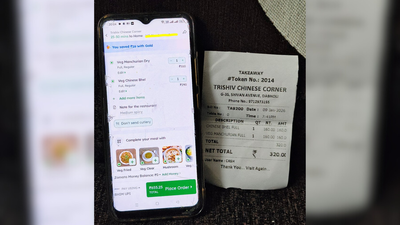
The viral post included two images:
- A physical takeaway bill dated January 9, 2026
- A screenshot of the same order listed on the Zomato app
The restaurant in question is Trishiv Chinese Corner. According to the original bill:
- Chinese Bhel (Full): ₹160
- Veg Manchurian (Full): ₹160
- Total: ₹320
However, when the same items were searched on Zomato, each dish was listed at nearly double the restaurant price. Even after applying discounts, the final payable amount crossed ₹550, while the original listed price touched ₹655.
This stark difference left users shocked, with many calling it “daylight robbery” and warning others to think twice before clicking the “Order Now” button.
Zomato’s Response: Who Decides the Price?
Responding to the viral post, Zomato clarified that the platform does not independently decide menu prices. According to the company:
- Restaurants set their own prices on the app
- Prices are often higher to offset platform commissions, delivery costs, packaging expenses, and promotional charges
- Zomato only provides the technology and delivery infrastructure
The company emphasized that restaurants may choose to price items differently online compared to dine-in or takeaway orders to manage operational costs.
Why Online Food Costs More
Industry experts explain that online food delivery involves multiple added expenses:
- Platform commission (often 18–30%)
- Delivery partner fees
- Packaging costs
- GST and service charges
- Promotional discounts funded by restaurants
To cover these, many restaurants increase their menu prices on delivery apps.
Public Reaction
The post triggered widespread reactions on social media. While some users criticized food delivery apps for lack of transparency, others blamed restaurants for passing operational costs onto customers. Many users shared similar experiences and advised checking prices before ordering.
The Bigger Picture
The incident has once again highlighted the growing gap between offline and online food pricing. As food delivery apps continue to dominate the market, consumers are becoming more cautious and price-aware.
The next time you’re about to tap “Order Now,” this viral example might just make your hand pause — and your wallet breathe a sigh of relief.