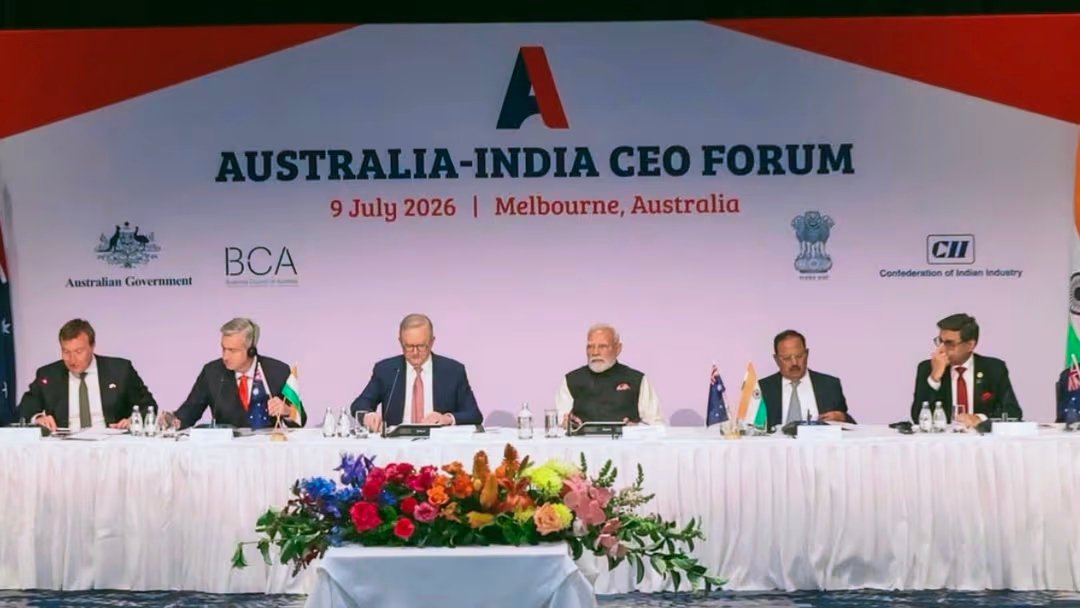



Washington, D.C. : An Indian delegation concluded a series of high-level meetings with U.S. officials from April 20 to 23, 2026, advancing negotiations on a proposed India–United States Bilateral Trade Agreement (BTA), according to a statement released by the Press Information Bureau.
The discussions mark a significant step forward in strengthening economic ties between India and the United States, following both countries’ earlier commitment to deepen bilateral trade cooperation.
Background: Interim Trade Framework
The latest round of talks builds on a joint statement issued on February 7, 2026, in which India and the United States agreed to establish a framework for an Interim Trade Agreement.
This framework is designed to lay the groundwork for a comprehensive Bilateral Trade Agreement, emphasizing reciprocal, balanced, and mutually beneficial trade relations while accelerating negotiations on a long-term pact.
Key Areas of Negotiation
During the meetings in Washington, D.C., both sides engaged in detailed and wide-ranging discussions covering several critical areas:
- Market access expansion
- Reduction of non-tariff barriers
- Addressing technical barriers to trade
- Customs and trade facilitation measures
- Investment promotion and protection
- Economic security cooperation
- Development of digital trade frameworks
Officials described the discussions as constructive and forward-looking, with tangible progress reported across multiple negotiation tracks.
Positive Momentum in Bilateral Engagement
According to officials, the talks were held in a cooperative and solution-oriented environment, reflecting growing alignment between the two countries on trade priorities.
The meetings in Washington, D.C.—a central hub for global economic diplomacy—highlight the increasing strategic importance of India–U.S. economic relations.
Both sides have agreed to continue engagement in the coming weeks to sustain momentum and work toward finalizing the interim agreement.
Outlook for India–US Trade Relations
The ongoing negotiations are widely seen as a crucial step toward expanding bilateral trade and investment flows between India and the United States.
Key focus areas such as digital trade, resilient supply chains, and cross-border investments are expected to play a central role in shaping the future partnership.
Once finalized, the interim agreement is likely to serve as a foundation for a broader and more comprehensive trade deal, strengthening long-term economic cooperation between the world’s two major democracies.