


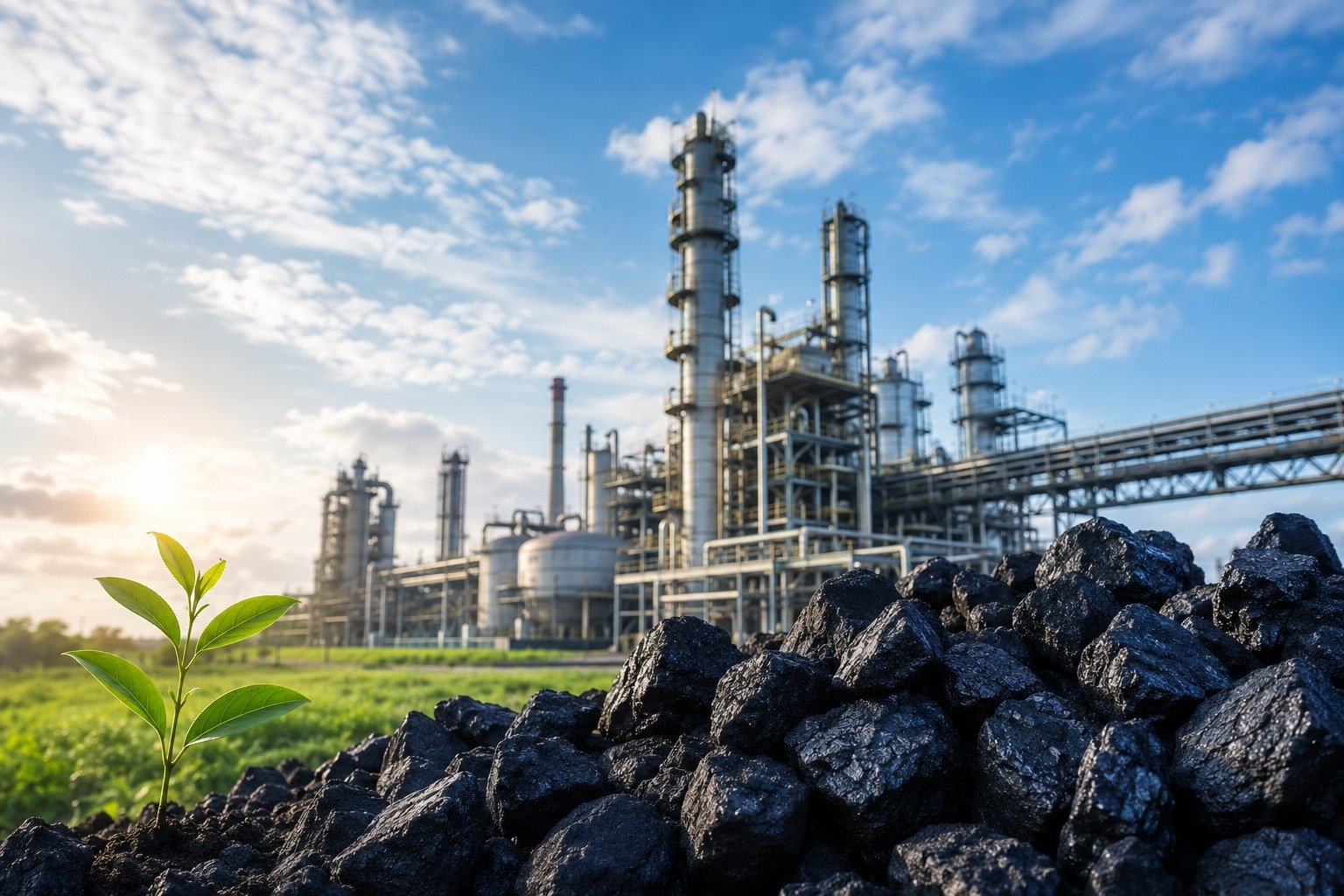

India has taken a major step toward strengthening its long-term energy security after the Union Cabinet, chaired by Prime Minister Narendra Modi, approved a massive ₹37,500 crore incentive scheme to promote surface coal and lignite gasification projects across the country.
The ambitious initiative is aimed at accelerating India’s national target of achieving 100 million tonnes of coal gasification by 2030, while reducing dependence on imported fuels and industrial feedstock such as LNG, ammonia, methanol, and urea.
Major Boost for India’s Energy Transition
Under the newly approved plan, the Government of India aims to develop nearly 75 million tonnes of coal and lignite gasification capacity. The scheme will provide financial incentives of up to 20 percent of plant and machinery costs for eligible projects.
Officials said projects will be selected through a transparent and competitive bidding process to encourage private and public sector participation while ensuring efficient deployment of funds.
The policy is being viewed as a strategic move to strengthen India’s energy independence and support industrial growth through cleaner and more efficient utilization of domestic coal resources.
SECL Exploring Coal Gasification Potential
The momentum created by the central government’s policy is already influencing major coal-producing companies across India, including South Eastern Coalfields Limited.
SECL has begun studying coal gasification possibilities at the Mahamaya Mine located in the Bhatgaon Area. Preliminary assessments and technical evaluations are currently underway to determine the feasibility of future gasification-based projects.
The initiative could play an important role in promoting cleaner coal utilization technologies in India’s mining regions while creating new industrial opportunities.
What Is Coal Gasification?
Coal gasification is a process that converts coal into “synthesis gas” or syngas — a mixture primarily composed of hydrogen, carbon monoxide, and other gases.
Syngas can be used to manufacture:
- Fertilizers
- Methanol
- Chemicals
- Synthetic fuels
- Industrial feedstock
- Hydrogen-based energy products
Experts say the technology can help India reduce imports of critical industrial raw materials while increasing domestic value addition and manufacturing capacity.
Economic Impact and Investment Potential
According to government estimates, the scheme could attract investments worth ₹2.5 lakh crore to ₹3 lakh crore over the coming years.
The initiative is also expected to generate nearly 50,000 direct and indirect jobs, especially in coal-producing states and industrial regions. Increased economic activity around mining belts may further support infrastructure growth and regional development.
India’s Vast Coal Reserves
India possesses approximately:
- 401 billion tonnes of coal reserves
- 47 billion tonnes of lignite reserves
With such abundant domestic resources, policymakers see coal gasification as a critical component of the country’s broader strategy to achieve:
- Energy security
- Industrial self-reliance
- Reduced import dependence
- “Make in India” manufacturing expansion
The government believes the new initiative could position India among the leading nations adopting advanced coal conversion technologies while balancing economic growth and energy demands.