


As global health agencies continue monitoring infectious disease outbreaks, experts are once again highlighting the major differences between Ebola and COVID-19 — two dangerous viral illnesses that have triggered international public health emergencies in recent years.
According to the World Health Organization, both diseases are caused by viruses and can spread rapidly, but they differ significantly in transmission methods, symptoms, fatality rates, and public health risks.
How Ebola and COVID-19 Spread
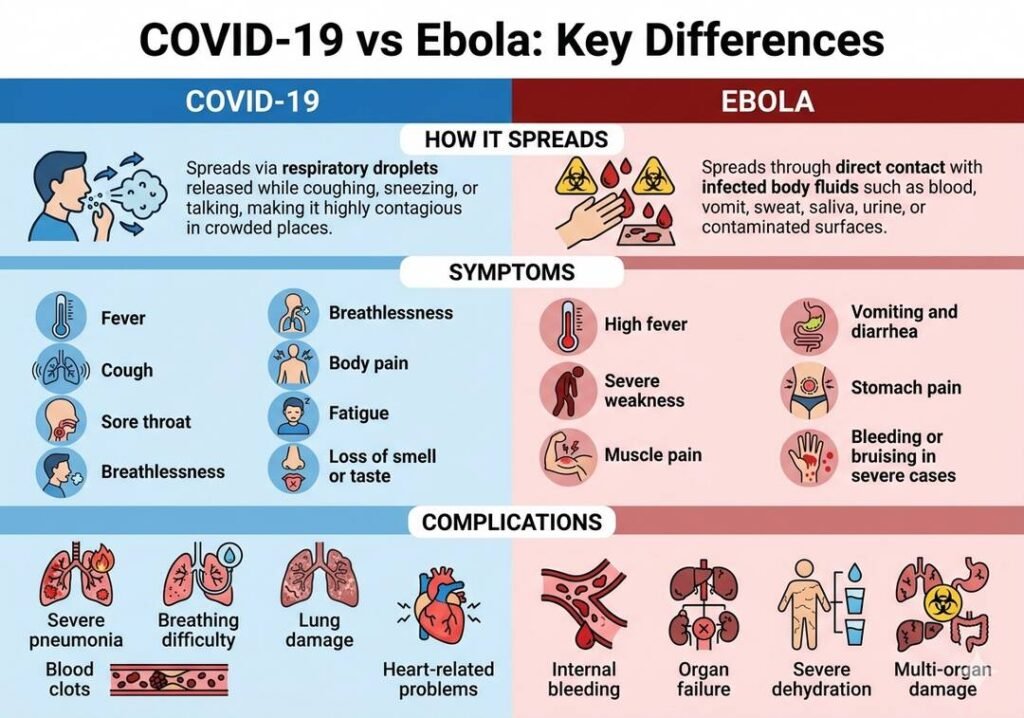
Health experts say Ebola spreads primarily through direct physical contact with the bodily fluids of an infected person. These fluids include blood, vomit, saliva, sweat, urine, feces, and semen. People can also contract Ebola by touching contaminated surfaces, medical equipment, or infected animals.
COVID-19, caused by the SARS-CoV-2 virus, spreads much more easily through respiratory droplets and airborne particles released when infected individuals cough, sneeze, speak, or breathe in close spaces. This airborne transmission made COVID-19 far more contagious globally.
Doctors note that Ebola outbreaks are usually more localized because transmission requires close contact, while COVID-19 spread rapidly worldwide due to easier human-to-human airborne transmission.
Symptoms: Ebola vs COVID-19
Medical experts say the early symptoms of both illnesses can initially appear similar, particularly fever and fatigue. However, the diseases progress differently.
Ebola Symptoms
- High fever
- Severe weakness
- Vomiting
- Diarrhea
- Muscle pain
- Internal and external bleeding in severe cases
COVID-19 Symptoms
- Fever
- Dry cough
- Shortness of breath
- Loss of smell or taste
- Sore throat
- Body aches
- Fatigue
Experts say Ebola often attacks multiple organs and can lead to severe dehydration and hemorrhagic complications, while COVID-19 mainly affects the respiratory system, though severe cases can damage the lungs, heart, and brain.
Fatality Rate and Severity
One of the biggest differences between the two diseases is the mortality rate.
According to infectious disease specialists, Ebola has a significantly higher fatality rate, with some outbreaks killing between 25% and 90% of infected patients depending on the virus strain and healthcare access.
COVID-19, while highly contagious, generally has a much lower fatality rate. However, because it infected hundreds of millions of people globally, the total number of deaths became enormous during the pandemic.
Vaccines and Treatment
Scientists developed vaccines for both diseases, but their availability and usage differ.
For Ebola, targeted vaccines have been deployed mainly in outbreak zones in parts of Africa. Treatment usually focuses on supportive care, including hydration, oxygen support, and managing complications.
For COVID-19, multiple vaccines were rapidly developed and distributed worldwide during the pandemic. Antiviral drugs, oxygen therapy, and intensive care treatment also became widely available.
Public Health Concerns
Global health authorities continue to closely monitor Ebola outbreaks, especially in parts of Central and East Africa, due to the virus’s high death rate and potential for regional spread.
Meanwhile, COVID-19 remains a continuing global health concern as new variants continue to emerge, although vaccination and immunity have reduced severe illness in many countries.
Experts stress that awareness, hygiene, vaccination, rapid testing, and early medical intervention remain critical tools in preventing both diseases from spreading further.
The Centers for Disease Control and Prevention says international cooperation and stronger healthcare systems are essential to responding quickly to future outbreaks and preventing another global health crisis.