


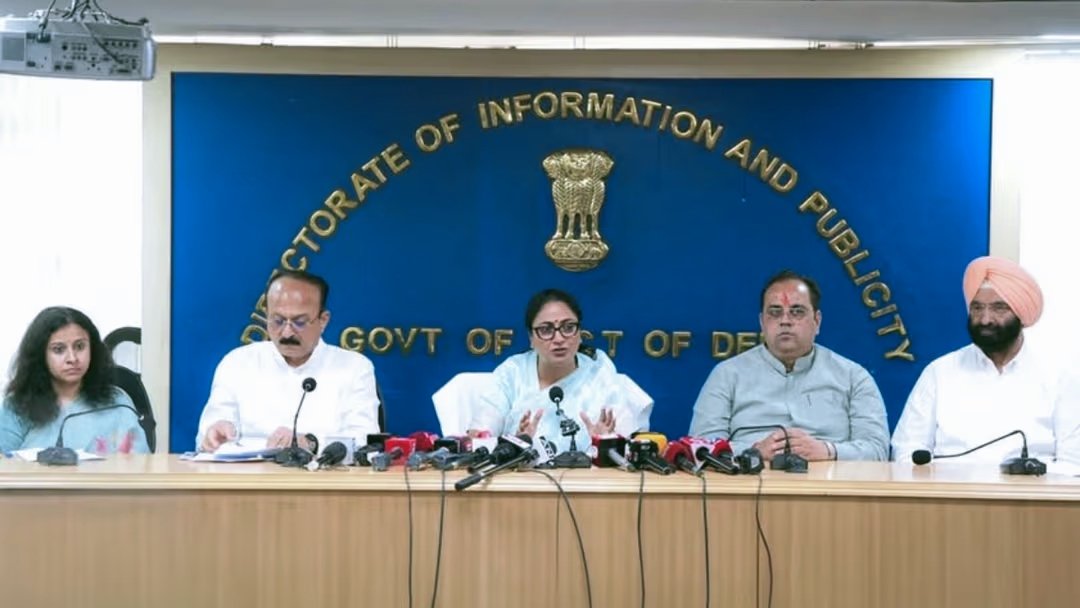

New Delhi, India: In one of the country’s most ambitious clean transportation initiatives, the Delhi government has approved the Delhi Electric Vehicle (EV) Policy 2026, committing ₹15,000 crore (approximately $1.75 billion) over the next four years to accelerate the transition toward zero-emission transportation.
The policy, approved by the Delhi Cabinet under the leadership of Chief Minister Rekha Gupta, will officially take effect on July 1, 2026, with the ultimate goal of making Delhi’s public and private transportation system completely zero-emission by March 31, 2030.
Speaking after the Cabinet meeting, Chief Minister Rekha Gupta described the policy as a major step toward improving public health and tackling the city’s long-standing air pollution crisis.
“This policy focuses entirely on electric, zero-emission vehicles. Our objective is to gradually transform Delhi into a pollution-free city for the benefit of every resident,” Gupta said.
Major Highlights of the EV Policy
- Total Investment: ₹15,000 crore (around $1.75 billion)
- Implementation Begins: July 1, 2026
- Duration: Four-year phased rollout
- Target: 100% zero-emission transit by March 31, 2030
- Coverage: Electric two-wheelers, three-wheelers, passenger cars, buses, commercial vehicles, and charging infrastructure
- Priority Areas: Public transportation electrification and last-mile connectivity
Strong Focus on Cleaner Air
Delhi has long struggled with some of the world’s highest levels of urban air pollution, particularly during the winter season. Road transportation remains one of the city’s largest sources of harmful emissions.
The government believes widespread adoption of electric vehicles (EVs) will significantly reduce carbon emissions, improve air quality, lower dependence on fossil fuels, and create a healthier environment for millions of residents.
Financial Incentives and Infrastructure
According to government officials, the policy will include several measures designed to encourage EV adoption, including:
- Purchase incentives for electric vehicles
- Subsidies for installing charging stations
- Scrappage benefits for replacing older, high-polluting vehicles
- Expansion of public EV charging infrastructure
- Additional support for electric buses and other forms of public transport
Officials say the phased implementation will provide consumers, businesses, and transport operators sufficient time to transition smoothly to electric mobility.
Economic Benefits
Beyond environmental gains, the government expects the policy to generate significant economic opportunities, including:
- Creation of new jobs in EV manufacturing
- Growth in the battery production sector
- Expansion of the charging infrastructure industry
- Lower long-term fuel and maintenance costs for vehicle owners
- Increased investment in clean technology and sustainable transportation
Delhi’s Leadership in India’s EV Transition
Several Indian states have introduced policies promoting electric mobility, but Delhi’s ₹15,000 crore investment and legally defined 2030 zero-emission target place it among the most comprehensive EV programs in the country.
The government hopes the initiative will position Delhi as a national leader in sustainable urban transportation while helping India meet its broader climate and clean-energy goals.
Conclusion
The approval of the Delhi Electric Vehicle Policy 2026 represents a landmark moment in the city’s environmental strategy. Backed by a ₹15,000 crore investment, a clear implementation roadmap, and a commitment to 100% zero-emission transportation by 2030, the policy aims to reshape how millions of people travel across the national capital. If successfully implemented, it could significantly improve air quality, reduce greenhouse gas emissions, stimulate economic growth, and serve as a model for other cities pursuing a cleaner and more sustainable future.