


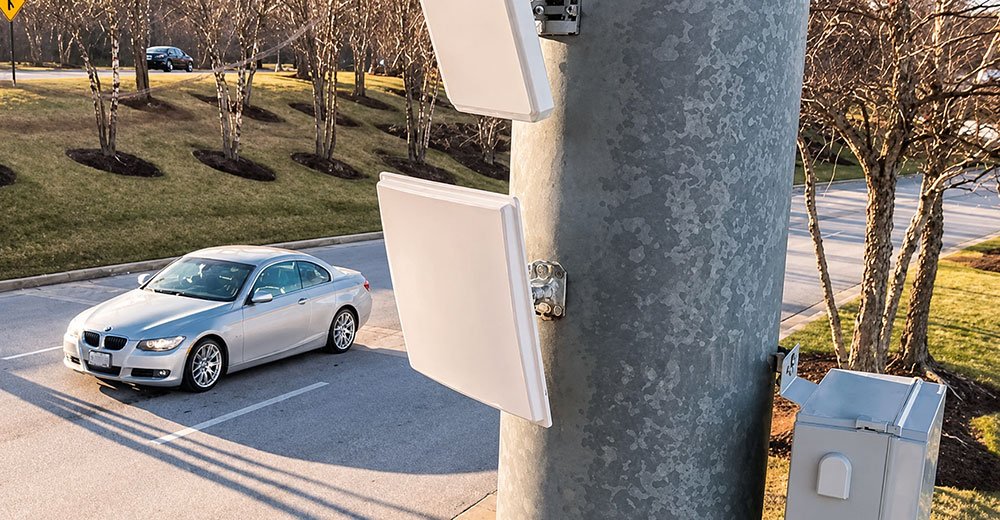

Rome / United States: Leonardo, the Italian aerospace, defense, and security technology company, has introduced a new upgrade for its Automatic License Plate Reader (ALPR) network that significantly expands surveillance capabilities by detecting and correlating electronic signals emitted by nearby smart devices.
The new feature, called SignalTrace, is designed to work with Leonardo’s existing ALPR infrastructure already deployed across the United States. Beyond simply capturing vehicle license plates, the technology can identify and associate electronic identifiers broadcast by smartphones, smartwatches, Bluetooth earbuds, vehicle infotainment systems, tire pressure sensors, employee access badges, and other wireless-enabled devices.
According to the company, SignalTrace creates a unique “electronic fingerprint” by analyzing publicly broadcast radio frequency signals surrounding a vehicle. By linking multiple devices that consistently travel with the same vehicle, investigators can build a detailed profile even if a suspect changes license plates or switches vehicles.
How SignalTrace Works
Unlike conventional ALPR systems that rely solely on license plate recognition, SignalTrace continuously detects nearby wireless identifiers and correlates them with:
- Vehicle license plates
- Time-stamped location data
- Patterns of repeated travel
- Associated electronic devices
Leonardo says this allows investigators to identify vehicles based on the collection of devices moving with them rather than relying only on license plates, making it more difficult for criminals to evade detection.
Potential Benefits for Law Enforcement
Security experts say combining multiple data sources can strengthen criminal investigations.
Chris Boehm, Chief Technology Officer at Zero Networks, said that a single identifier rarely provides the complete picture. Correlating a vehicle with nearby electronic devices can help investigators establish whether the same individual is repeatedly associated with a specific vehicle.
According to Boehm, the technology could prove valuable in investigations involving:
- Organized crime
- Human trafficking
- Serial burglaries
- Vehicle theft
- Criminals using stolen or swapped license plates
Supporters argue that additional context can improve investigative accuracy when used responsibly and within legal limits.
Growing Privacy Concerns
Privacy advocates, however, warn that the technology raises significant constitutional and civil liberties concerns.
Critics argue that continuously collecting electronic identifiers could allow authorities to track individuals’ movements over extended periods without obtaining a judicial warrant.
Some legal experts contend that purchasing surveillance data collected by private companies may not eliminate constitutional protections against unreasonable searches, raising questions under the Fourth Amendment of the U.S. Constitution.
Cybersecurity Risks
Cybersecurity researchers also caution that collecting large volumes of device identifiers introduces new security vulnerabilities.
Experts warn that if surveillance systems were compromised by cybercriminals, attackers could potentially:
- Track individuals carrying specific devices
- Target victims for phishing or spear-phishing attacks
- Monitor physical access credentials
- Exploit connected IoT devices
Researchers further warn that hackers gaining administrative access to surveillance infrastructure could potentially transform passive monitoring systems into platforms for distributing malware or exploiting connected devices.
Possibility of False Identifications
Another concern involves the reliability of wireless identifiers.
Security specialists note that Bluetooth and other wireless hardware addresses can be spoofed or intentionally copied by malicious actors. Criminals could broadcast another person’s device identifiers to disguise their own movements or falsely associate innocent individuals with criminal activity.
Experts also warn that wireless signals naturally extend beyond vehicles. Devices carried by pedestrians, cyclists, nearby drivers, or passengers may be unintentionally captured, increasing the possibility of inaccurate associations and false investigative leads.
Calls for Stronger Oversight
Technology and privacy experts say the deployment of advanced surveillance systems like SignalTrace should be accompanied by:
- Clear legal safeguards
- Public transparency
- Independent oversight
- Strict cybersecurity protections
- Responsible data governance
Many believe that as surveillance technology becomes increasingly sophisticated, governments must balance public safety with the protection of individual privacy and constitutional rights.
Bottom Line
The introduction of Leonardo’s SignalTrace represents a significant evolution in surveillance technology by combining license plate recognition with wireless device detection. While supporters view it as a powerful investigative tool capable of helping law enforcement solve complex crimes, critics warn that it could expand government surveillance, create cybersecurity risks, and challenge long-standing privacy protections if not carefully regulated.