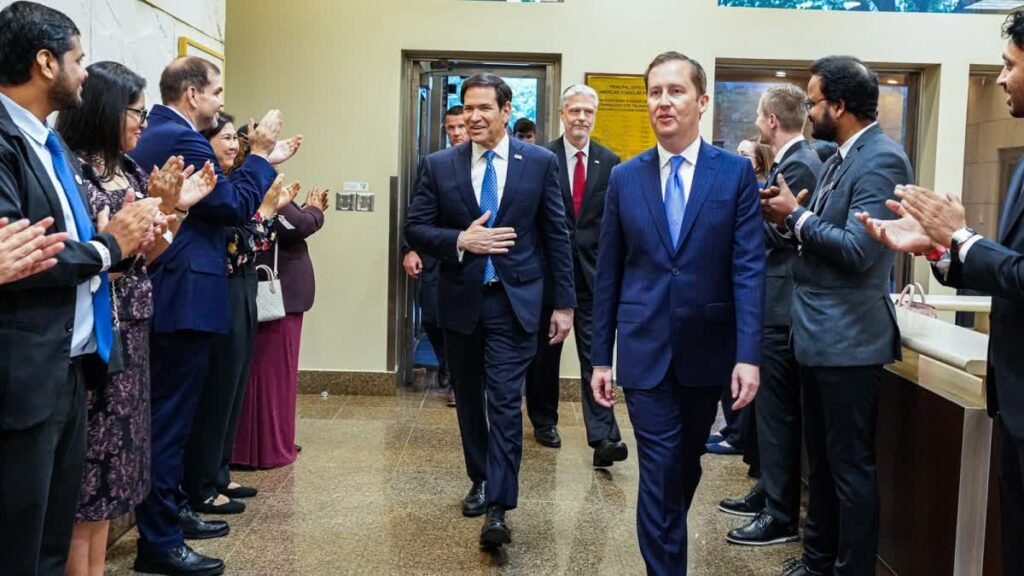


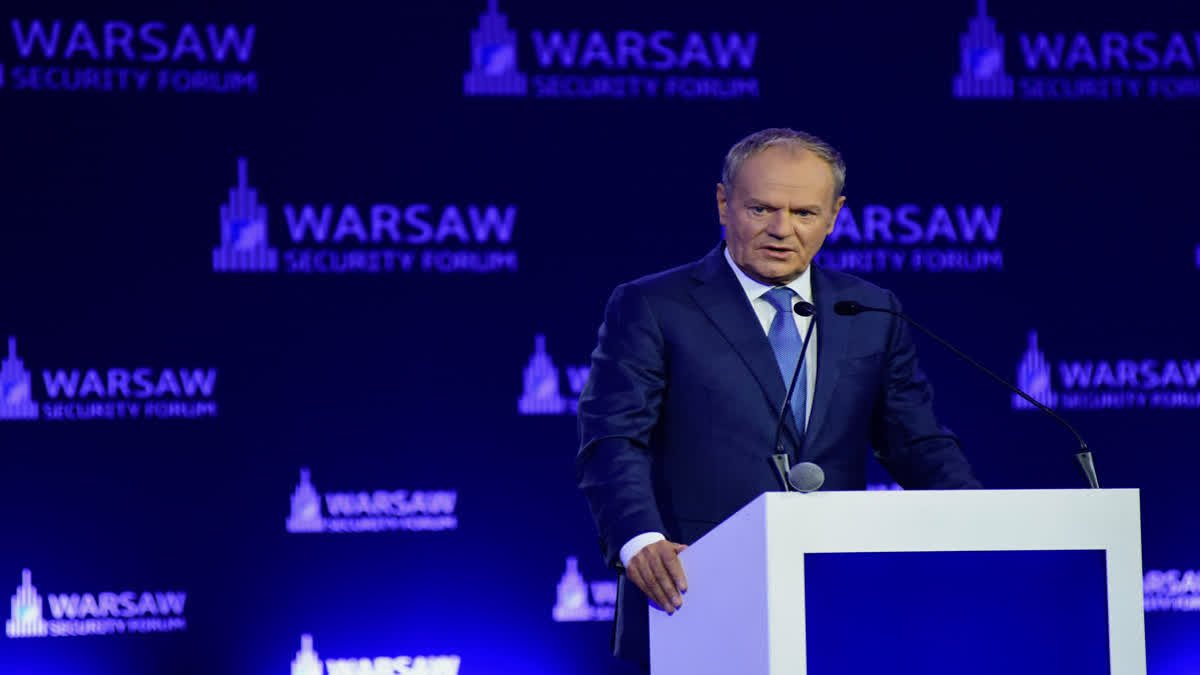

Donald Tusk is in India from October 21 to 23 for talks with Prime Minister Narendra Modi. The visit aims to expand cooperation in trade, investment, defence, emerging technologies, renewable energy and the broader India-European Union relationship.
New Delhi: Polish Prime Minister Donald Tusk is visiting India from October 21 to 23 at the invitation of Prime Minister Narendra Modi, with both countries looking to translate their strategic partnership into stronger economic, technological and security cooperation.
Tusk arrived in New Delhi ahead of his scheduled bilateral talks with Modi on October 22. He will also travel to Bengaluru to meet business representatives, particularly from the information technology and space sectors. India-Poland Business Forums are scheduled in New Delhi on October 22 and Bengaluru on October 23.
According to India’s Ministry of External Affairs, the visit will provide an opportunity to review the full range of bilateral relations and discuss regional and global developments of mutual interest. The two countries elevated their relationship to a strategic partnership during Modi’s visit to Poland in August 2024. Source: DD India.
A Key Step in Implementing the 2024 Strategic Partnership
Tusk’s visit comes more than two years after Modi’s historic trip to Poland on August 21–22, 2024. It was the first visit by an Indian prime minister to Poland in 45 years and coincided with the 70th anniversary of diplomatic relations between the two countries.
The elevation of bilateral ties to a strategic partnership reflected a shared ambition to move beyond traditional diplomatic engagement and commercial exchanges towards broader cooperation.
In 2024, India and Poland adopted a five-year action plan covering the period from 2024 to 2028. The roadmap identifies political dialogue, security, defence, trade and investment, agriculture, energy, green technology, infrastructure, pharmaceuticals, mining and digitalisation as priority areas.
It also envisages stronger cooperation in cybersecurity and regular institutional consultations.
The current visit offers an opportunity to assess progress under the action plan, identify areas requiring further attention and establish priorities for the remaining period.
The key question is whether the political momentum generated by high-level meetings can translate into measurable outcomes, including investment commitments, industrial partnerships, technology cooperation and sustained engagement between government agencies and businesses.
Business Delegation to Explore New Opportunities
Tusk is accompanied by Poland’s Minister of Finance and Economy, Andrzej Domanski, along with a large business delegation. Their participation highlights the economic dimension of the visit.
The two business forums are expected to provide platforms for companies from both countries to explore opportunities across manufacturing, engineering, pharmaceuticals, agriculture, food technology, information technology and industrial services.
The broader agenda also includes defence, emerging technologies, renewable energy, education, culture and people-to-people ties.
Business forums are most effective when discussions lead to concrete outcomes, such as joint ventures, investment agreements, technology partnerships and continuing cooperation between industry associations.
For India and Poland, the challenge will be to turn the opportunities identified during the visit into commercially viable projects.
India-Poland Trade and Investment on the Rise
Bilateral trade provides a foundation for expanding economic engagement.
According to figures cited in the source material, trade in goods between India and Poland increased from approximately $5.80 billion in 2024 to $6.36 billion in 2025.
India exports textiles and garments, pharmaceuticals, chemicals, engineering goods, electronic machinery, vehicles and other manufactured products to Poland. Indian companies also have a presence in Poland’s industrial and services sectors.
Poland, in turn, supplies machinery, mechanical and electrical equipment, chemicals, metals, mineral products and specialised industrial goods to India.
These complementary strengths create opportunities to develop manufacturing partnerships and more resilient supply chains.
However, both countries will need to broaden the range of products and services traded and address barriers that may limit market access.
Manufacturing and Engineering
Poland’s industrial expertise could support India’s efforts to expand domestic manufacturing, while Indian companies could use Poland as a base for partnerships with European manufacturers and suppliers.
Potential areas of cooperation include engineering components, industrial machinery, specialised equipment and production technologies.
Pharmaceuticals and Healthcare
Indian pharmaceutical companies could explore opportunities to expand market access, establish distribution partnerships, undertake contract manufacturing and pursue research collaboration.
Polish companies could also benefit from partnerships with Indian manufacturers and healthcare businesses.
Agriculture and Food Technology
Agricultural machinery, food processing, storage and supply-chain management offer further opportunities for cooperation.
Sharing technology and industrial expertise in these areas could support productivity improvements and create new commercial opportunities.
Mining and Industrial Equipment
Poland’s capabilities in specialised machinery, engineering and industrial processing could complement India’s infrastructure and manufacturing requirements.
Joint projects and technology partnerships could help businesses in both countries explore new markets.
Information Technology and Business Services
Indian IT companies could expand their presence in Poland, while Polish technology firms could seek Indian customers, business partners and access to the country’s technology ecosystem.
Tusk’s planned engagements with IT and space-sector representatives in Bengaluru are particularly relevant to this part of the agenda.
The European Union Dimension
One of the wider strategic implications of the visit is its potential to strengthen India’s engagement with the European Union.
Poland’s position within the EU and its industrial base in Central and Eastern Europe make it an important partner for India as New Delhi seeks to diversify and deepen its European relationships.
The European Commission announced on January 27, 2026, that negotiations for the India-EU Free Trade Agreement had concluded. However, the agreement still requires the relevant legal and institutional steps before it can enter into force. It should therefore not be treated as an already operational trade arrangement. Source: European Commission.
The wider India-EU economic relationship could create opportunities for companies looking to expand trade, investment and industrial cooperation. Stronger India-Poland ties may help businesses explore these opportunities alongside the two countries’ bilateral initiatives.
Indian IT, pharmaceutical, automotive-component and engineering companies operating in Poland could consider further investment and production partnerships. Polish businesses, meanwhile, could explore India’s large domestic market and its expanding capabilities in digital services, electronics, clean energy and advanced manufacturing.
Poland cannot automatically serve as an unrestricted gateway to the entire European market. Businesses must still comply with relevant EU product standards, customs requirements, competition rules and other regulations.
The commercial benefits will ultimately depend on the competitiveness of individual projects and their ability to meet European requirements.
Defence and Security Cooperation
Defence cooperation is another important area in which the strategic partnership could become more practical and sustained.
India is pursuing defence modernisation, domestic manufacturing and reduced dependence on imported systems. Poland has experience in defence equipment, maintenance, modernisation and specialised manufacturing.
The two countries could explore opportunities in maintenance, repair and overhaul services, spare-parts production, equipment servicing and lifecycle support.
Other possible areas include:
- Joint research and development: Selective cooperation in electronics, sensors, communications, advanced materials and related technologies, subject to applicable security and export-control requirements.
- Manufacturing partnerships: Polish companies could explore production partnerships in India, while Indian defence manufacturers could assess opportunities to supply components or collaborate with Polish firms.
- Cybersecurity: Cooperation could focus on protecting defence networks, critical infrastructure and industrial supply chains.
- Military engagement: Regular consultations, professional exchanges and training could strengthen mutual understanding and identify practical areas for cooperation.
The broader security context is important. Poland is a member of NATO and faces security challenges on the alliance’s eastern flank amid Russia’s war against Ukraine. India, meanwhile, faces a different set of security concerns in South Asia and the wider Indo-Pacific.
Although their strategic environments and alliance commitments differ, the countries may still identify areas where their industrial and technological capabilities complement one another.
The success of defence cooperation will depend on commercial competitiveness, technology-transfer arrangements, procurement rules and the willingness of companies to commit resources to long-term partnerships.
Emerging Technologies and Renewable Energy
Beyond traditional trade and defence, emerging technologies and renewable energy offer opportunities for future cooperation.
India’s expanding digital ecosystem and Poland’s industrial and technology capabilities could provide a basis for collaboration in specialised technologies, research and development, and business services.
Renewable energy and green technology are also among the areas identified in the bilateral strategic agenda. Cooperation could include technology partnerships, industrial applications and investment opportunities, depending on the priorities agreed by businesses and governments.
Education, culture and people-to-people exchanges will remain important in supporting longer-term relations by strengthening institutional links and encouraging professional and academic collaboration.
High-Level Engagement Has Gathered Momentum in 2026
The visit follows a series of diplomatic and economic engagements between the two countries during 2026.
These include a meeting between Polish Foreign Minister Radosław Sikorski and India’s External Affairs Minister S. Jaishankar in September, discussions involving Polish officials on defence-related matters in August, and the seventh session of the India-Poland Joint Commission for Economic Cooperation in July, as described in the source material.
This continuing engagement suggests that the strategic partnership is being developed through multiple channels rather than relying solely on meetings between national leaders.
The Modi-Tusk talks and the business forums could provide political direction to these ongoing discussions and help identify areas where further coordination is required.
What to Watch for During the Visit
The significance of the visit will depend not only on the statements made by the two leaders but also on the practical steps that follow.
Key indicators will include whether the countries identify new investment opportunities, strengthen industrial and defence cooperation, expand technology partnerships and improve coordination between businesses and government agencies.
A broader and more diversified trading relationship could also make bilateral economic ties less vulnerable to fluctuations in individual sectors.
For India, closer engagement with Poland offers another route to expand its industrial and commercial links with Europe. For Poland, stronger ties with India provide opportunities to access a large market, attract investment and build relationships with one of the world’s major economies.
The visit is therefore an opportunity to move the India-Poland strategic partnership from political intent towards sustained economic, technological and security cooperation, while contributing to the wider India-EU relationship.