


BMW Motorrad has secured a design patent in India for its futuristic Vision CE electric scooter. However, the patent does not confirm an India launch.
Hyderabad: German motorcycle manufacturer BMW Motorrad has secured a design patent in India for its futuristic Vision CE electric scooter, bringing attention to a concept that looks very different from conventional two-wheelers. However, the patent protects the scooter’s design and does not necessarily indicate that BMW plans to launch it in the Indian market anytime soon.
The company first unveiled the Vision CE at the IAA Mobility show in Munich in 2025. BMW presented the concept as a potential solution to urban mobility challenges, with a distinctive design focused on rider protection and convenience.
A Protective Cage Designed Around the Rider
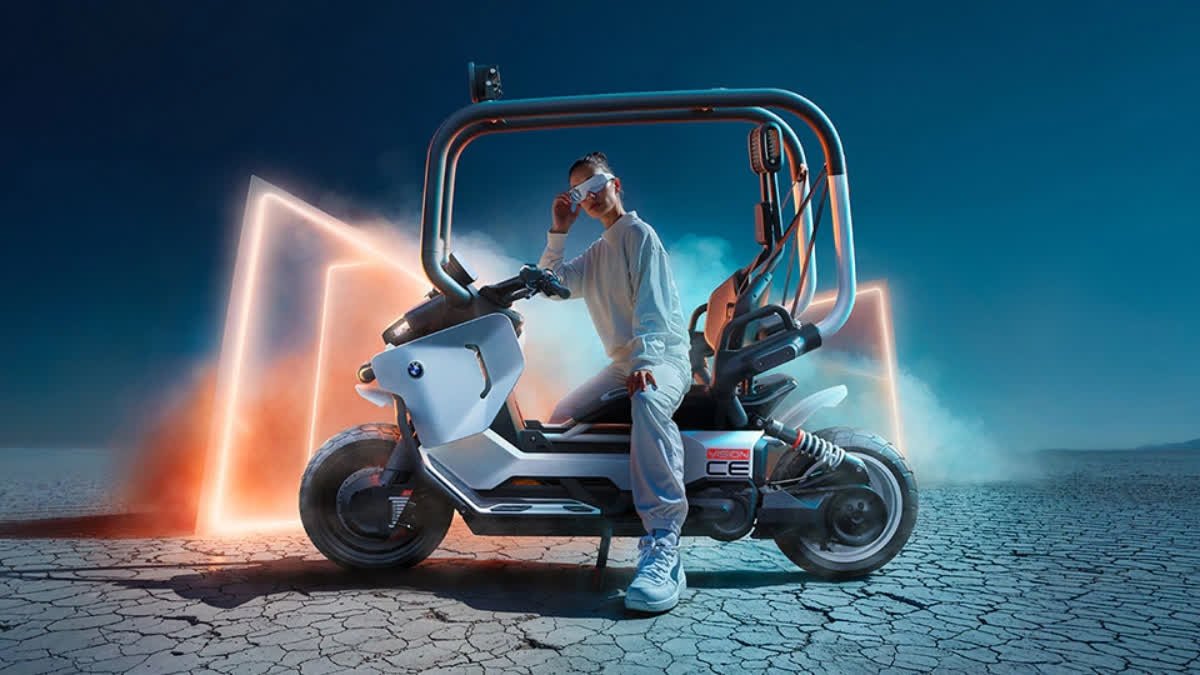
The Vision CE’s most striking feature is its tubular protective cage, which surrounds the rider from the front, above and on both sides. BMW’s concept suggests that this structure could provide an alternative approach to rider protection, potentially reducing the need for conventional protective equipment.
The concept has been presented with the possibility of riding without a helmet, gloves or a jacket. However, this should be understood as a concept-stage proposition, not confirmation that the scooter can legally or safely be ridden without protective gear. Any such arrangement would depend on the vehicle’s final design, safety certification and applicable road regulations.
The scooter also features a seat belt, adding another element to its unusual safety-focused design.
Self-Balancing Technology for Greater Convenience
Another notable feature is its self-balancing technology, which is designed to keep the scooter upright even when stationary. If implemented as intended in a production model, this could make stops and low-speed manoeuvres easier by reducing the need for the rider to place their feet on the ground.
Despite this technology, BMW has also provided a stand in the concept design.
The combination of a protective cage, seat belt and self-balancing system makes the Vision CE significantly different from conventional electric scooters.
Performance and Practicality: What We Know
The Vision CE concept is designed for a single rider, which could limit its practicality for people who regularly travel with a passenger.
The concept features disc brakes on both the front and rear wheels, along with a belt-drive system powered by a centrally positioned electric motor. BMW has not disclosed the Vision CE’s official power output, torque, top speed, battery capacity or riding range.
For comparison, BMW’s existing CE 04 electric scooter produces approximately 42 bhp and 62 Nm of torque. However, these figures belong to the CE 04 and should not be treated as the confirmed specifications of the Vision CE.
The Vision CE’s actual performance and suitability for everyday use will become clearer only if BMW develops it into a production vehicle and releases detailed specifications.
Will BMW Launch the Vision CE in India?
The design patent is an indication that BMW is protecting its intellectual property in India, but it is not a launch announcement.
The company has not announced an India launch date or a confirmed production timeline for the Vision CE. It also remains unclear whether the concept will reach production in its current form or undergo substantial changes before entering the market.
For now, the BMW Vision CE remains an unusual vision of future urban mobility. Its distinctive protective structure and self-balancing technology could make it stand out if it reaches production, but its commercial future and availability in India remain uncertain.
SEO Title: BMW Vision CE Electric Scooter Patented in India: Features and Launch
Meta Description: BMW Motorrad has patented the Vision CE electric scooter design in India. Explore its protective cage, self-balancing technology, expected performance and launch status.
Focus Keyword: BMW Vision CE electric scooter
URL Slug: bmw-vision-ce-electric-scooter-india-patent