

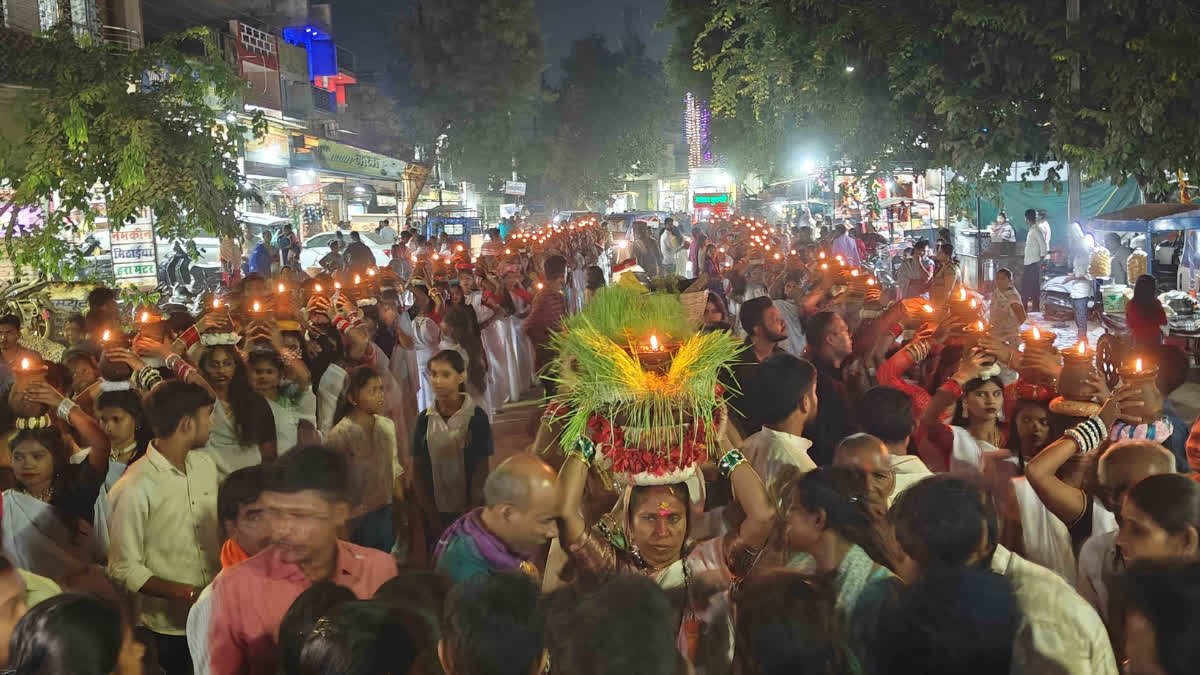

Dhamtari, Chhattisgarh: Faith and tradition came together in Dhamtari as devotees took part in the annual ‘Peela Dussehra’ celebrations, marking the immersion of jyot-jawara and kalash associated with Maa Mandar Mai Temple in the Marathapara area. The procession, rooted in a tradition believed to be around 200 years old, drew a large number of devotees.
Accompanied by devotional chants and traditional music, the procession featured women and young girls carrying sacred jyot kalash on their heads. Young devotees observing the traditional bana ritual were also a notable part of the event.
189 Manokamna Jyots Lit During Navratri
Around 189 manokamna jyots—sacred lamps lit as part of personal prayers and vows—were illuminated at the temple this year. Following religious rituals and prayers, the immersion procession began with 101 jyots.
The procession started from Maa Mandar Mai Temple in Marathapara, proceeded along Sadar Bazar Road and through Ganesh Chowk, and reached Sheetla Temple. Devotees then performed rituals at Mahimasagar Pond before immersing the kalash and jawara.
Women in White Sarees Lead the Procession
Women and young girls dressed in white sarees were among the main attractions of the procession. According to the temple’s tradition, women carrying jyot kalash are required to register in white attire, particularly white sarees.
Carrying the sacred kalash, devotees moved along the route chanting prayers in praise of the goddess. Residents of Marathapara and other localities welcomed the procession at various points, offering prayers and seeking blessings for the well-being and prosperity of their families.
Three Generations of Priests Have Served the Temple
Temple priest Rajkumar Dhruv said the worship of Maa Mandar Mai and the jyot-jawara immersion tradition had been passed down through generations. He said his family was now in its third generation of performing the temple’s religious duties.
Special prayers are conducted during Navratri, when devotees visit the temple to have jyots lit as part of their vows. According to the priest, people travel from different places with prayers and wishes, placing their faith in Maa Mandar Mai.
Youth Participate in the Traditional Bana Ritual
Young devotees observing the bana ritual also played an important role in the procession. Local resident Sitesh Pawar said he had been witnessing the tradition for nearly 18 years and that many young people had participated in the ritual this year to fulfil their religious vows.
According to Pawar, the practice is observed in the Marathapara area and along the route towards Vindhyavasini Temple. Some devotees also express their vows by lying on the ground as part of their religious observance. These practices are carried out in keeping with local customs and religious beliefs.
A Living Symbol of Dhamtari’s Cultural Heritage
Devotees participating in the procession said they had come with personal prayers and wishes. The sight of people carrying jyot kalash, combined with devotional chants and prayers offered by residents along the route, created a deeply religious atmosphere across the city.
The annual jyot-jawara immersion is more than a religious gathering for Dhamtari. The tradition associated with Maa Mandar Mai Temple remains an important part of the city’s cultural heritage, connecting younger generations with customs and beliefs observed for nearly two centuries.