



New Delhi: India’s potential to increase imports of Venezuelan crude oil is opening up fresh opportunities for the country’s refining industry, but it also raises important questions about costs, profitability and the risks of changing US energy policies.
US Secretary of State Marco Rubio has encouraged Indian refiners, particularly Reliance Industries, to process more Venezuelan crude and explore opportunities to revive oil production in the South American country. The proposal comes as Washington continues to push India to reduce its dependence on Russian oil.
However, industry experts caution that buying Venezuelan crude and investing in its oilfields are two very different decisions. While Indian refineries may benefit from access to discounted oil, long-term investments could expose companies to substantial financial and geopolitical risks if US policy changes again.
A report by the Global Trade Research Initiative (GTRI) has urged India to assess supply reliability, investment obligations, refining costs and commercial returns before making any fresh commitments.
Why Is the US Encouraging India to Buy Venezuelan Oil?
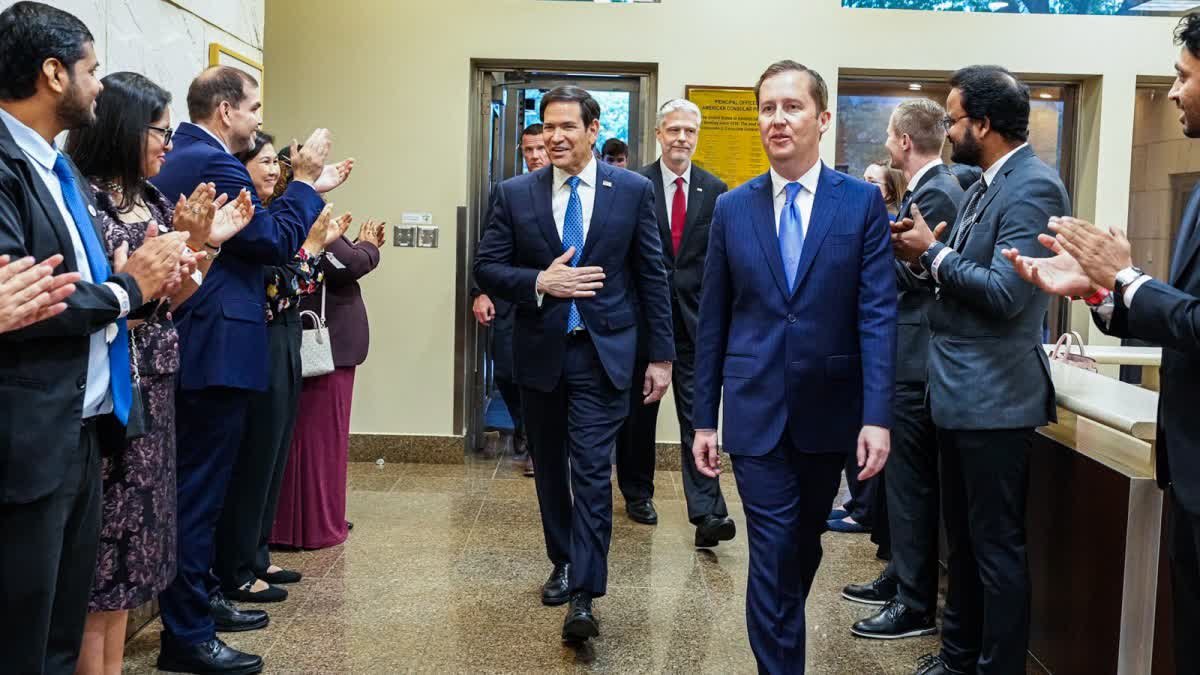
During his visit to Mumbai on October 20, Rubio said he would encourage Indian refineries, particularly Reliance Industries, to process more Venezuelan crude and examine opportunities to expand oil production there.
The proposal is intended to help India diversify its sources of energy supplies. But it also comes against the backdrop of Washington’s pressure on New Delhi to reduce Russian oil imports.
According to figures cited in the GTRI report, India’s crude oil imports from Venezuela rose from $255 million in FY2026 to approximately $3.6 billion during the first five months of FY2027, from April to August 2026.
Purchases from the United States also increased, rising from $405 million in July 2026 to $790 million in August.
Meanwhile, Russia remained India’s largest crude oil supplier, although imports declined from $7.3 billion in July to $5.4 billion in August. Russia’s share of India’s total crude oil imports fell from 51% to 45% over the same period.
These figures indicate that India has already been diversifying its oil supply basket. The central question is whether accepting Washington’s latest proposal would provide additional commercial benefits or create new obligations for Indian companies.
What Are the Potential Benefits of Venezuelan Crude?
One of the main attractions of Venezuelan crude is its relatively low purchase price.
Much of Venezuela’s oil is classified as extra-heavy crude. It is highly viscous and can resemble tar in consistency, making it more difficult to transport and process than lighter grades of oil.
According to the GTRI report, India paid an average of $821 per tonne for Saudi Arabian crude during April–August 2026, compared with $612 per tonne for Venezuelan crude.
The lower price could offer an advantage to Indian refiners capable of processing this type of crude. It could also give India another source of supply, reducing its dependence on a limited number of oil-producing countries.
However, the headline discount alone does not establish whether Venezuelan crude is more profitable. The final economics depend on the grade of oil, refinery configuration, processing costs and the value of the petroleum products produced.
Why Is Venezuelan Oil More Expensive to Process?
Venezuelan crude presents technical challenges because much of it is exceptionally heavy.
Before it can be transported and refined, certain grades require specialised diluents to reduce their viscosity. They may also require upgrading facilities and heated transport infrastructure.
Processing this crude can involve higher handling and refining costs. Its lower purchase price must therefore be weighed against the additional expenditure and the quantity and value of the products a refinery can produce.
M.K. Surana, former chairman and managing director of Hindustan Petroleum Corporation Limited (HPCL), told ETV Bharat that Venezuelan crude comes in different grades and not every refinery can process all of them.
Some refineries can handle only a limited proportion of such crude in their feedstock, while others can process a higher share.
Surana said Reliance Industries’ refining complex has the capability to process a higher proportion of Venezuelan crude. He added that including Venezuelan oil in India’s supply basket would not, by itself, adversely affect domestic fuel demand.
India’s advantage, therefore, lies not simply in purchasing cheaper oil, but in matching the right crude grades with refineries equipped to process them efficiently.
Why Is Reliance Industries Central to the Proposal?
Reliance Industries is particularly important because it already accounts for a substantial share of India’s Venezuelan crude imports.
According to the GTRI report, India imported $3.586 billion worth of Venezuelan crude between April and August 2026. Reliance accounted for approximately 74.3% of those imports.
The report breaks down the purchases as follows:
- Reliance’s Jamnagar SEZ refinery: $1.695 billion, or 47.3% of total imports.
- Reliance’s Sikka facility: $968.2 million, or 27%.
- Indian Oil Corporation’s Paradip facility: $421.3 million, or 11.7%.
- Mundra storage terminal, serving HPCL and other companies: $405.8 million, or 11.3%.
- Nayara Energy’s Vadinar facility: $95 million, or 2.7%.
These figures explain why Washington’s proposal places particular emphasis on Reliance. The company already has substantial exposure to Venezuelan crude and operates two refineries at its Jamnagar complex: one in a special economic zone oriented towards exports and another serving the domestic market.
Surana explained that petroleum products obtained from crude oil can ultimately be supplied to domestic consumers or exported, depending on the refinery, applicable government policy and commercial considerations.
This gives Indian refiners flexibility, but the profitability of any additional purchases would still depend on the economics of each crude grade and the products obtained from it.
What If Donald Trump Changes US Policy Again?
This is one of the most important concerns surrounding any long-term commitment to Venezuela.
US policy towards Venezuelan oil has changed repeatedly. Countries and companies that engage with the Venezuelan energy sector can face uncertainty if Washington introduces new sanctions or tightens existing restrictions.
GTRI founder Ajay Srivastava has warned that India’s earlier experience with Venezuelan oil investments should be considered before new commitments are made.
Between 2010 and 2020, Indian investments in Venezuela faced significant difficulties. US sanctions affected the operations of ONGC Videsh, while tighter restrictions on Venezuela’s state-owned oil company, PDVSA, disrupted trade and investment.
Following the 2019 oil restrictions, Indian refiners stopped purchasing Venezuelan crude to avoid exposure to US secondary sanctions, according to the report.
The consequences extended beyond immediate oil purchases. Indian dividend earnings worth hundreds of millions of dollars remained tied up in Venezuelan accounts, production associated with Indian equity investments was disrupted, and plans to develop oilfields and secure long-term supplies were put on hold.
This history highlights the difference between purchasing oil under available commercial arrangements and committing substantial capital to oil production.
If the US changes its policy again, a refinery may be able to adjust its purchases relatively quickly, depending on contractual and regulatory conditions. An investment in oilfields or specialised infrastructure, however, can take years to recover and cannot necessarily be redirected to another market.
Buying Oil and Investing in Oilfields Are Different Decisions
The GTRI report recommends that India evaluate three separate questions rather than treating Washington’s proposal as a single package.
First, should India increase imports of Venezuelan crude?
This depends on the discount available, the reliability of supplies, the compatibility of the crude with Indian refineries and the overall refining margin.
Second, should Indian companies invest in Venezuela’s damaged oil infrastructure?
Such investments could require substantial capital, time and operational commitments. They would also be exposed to political, regulatory and sanctions-related uncertainty.
Third, should India reduce its dependence on Russian oil?
That is a broader energy-security decision involving prices, supply reliability, international relations and the availability of alternative sources.
According to Srivastava, India should establish clear terms concerning the duration of US support, responsibility for investment costs, supply guarantees and expected commercial returns before accepting any new commitments.
A proposal to purchase additional crude should not automatically become an obligation to finance the revival of Venezuela’s oil production.
Questions Over Washington’s Approach to Russian Oil
The GTRI report also questions the consistency of US policy towards Russian oil.
While Washington has encouraged India to reduce its Russian crude purchases, the report points to a US arrangement dated October 9, 2026, aimed at increasing domestic diesel availability through Russian supplies. It says the arrangement provides sanctions relief until April 7, 2027.
The report argues that this raises questions about why Russian supplies may be considered acceptable for certain US energy requirements while other countries face pressure to reduce their dependence on them.
For India, the issue is not merely diplomatic. Changes in sanctions can affect prices, access to supplies, payment arrangements and the commercial viability of investments.
New Delhi therefore needs to assess whether the proposed shift towards Venezuelan crude offers durable benefits or depends too heavily on the continuation of current US policy.
Could a New Refinery Project Increase Reliance’s Financial Burden?
Reliance’s potential involvement in Venezuelan oilfield development must also be considered alongside its other investment commitments.
The supplied report refers to a proposed $300 billion refinery project in Brownsville, Texas, announced by US President Donald Trump on March 11, 2026, with Reliance among the companies mentioned in connection with the project.
If Reliance is also asked to commit capital to Venezuelan oilfields, its financial exposure and responsibilities could increase further.
Any such decision would require a separate commercial assessment. The potential benefits of access to discounted crude would need to be weighed against capital expenditure, the time required to restart production, infrastructure requirements and the possibility of future sanctions.
For Indian companies, the critical issue is whether the expected return justifies the risk over the entire investment period, not simply whether the project aligns with the current priorities of the US administration.
What Should India Do Next?
India has an established refining industry and access to crude from multiple international suppliers. Venezuelan oil could strengthen that diversity, particularly where Indian refineries can process the relevant grades efficiently.
But lower crude prices alone are not enough to guarantee higher profits. Heavy crude may require specialised equipment, additional processing and more expensive transport arrangements.
Before agreeing to expand purchases or finance production, India should seek clarity on:
- The long-term reliability and volume of Venezuelan crude supplies.
- The commercial terms and duration of any US-backed arrangements.
- The costs of processing, transporting and handling different crude grades.
- The capital requirements and expected returns of oilfield investments.
- Protection against potential sanctions changes and interruptions to payments.
- The extent to which any new commitment would limit India’s flexibility to purchase oil from other suppliers.
Conclusion: An Opportunity, but Not Without Risks
Venezuelan crude could offer Indian refiners an additional source of oil at a lower purchase price and help diversify the country’s energy supplies. Reliance Industries’ existing refining capabilities make it particularly well placed to assess the opportunity.
However, the commercial case for buying crude is different from the case for investing in Venezuela’s oilfields. The latter involves greater financial exposure and longer-term risks, particularly when international sanctions and US energy policies can change.
For India, the prudent approach is to evaluate each commitment on its own commercial merits, secure clarity on supply arrangements and avoid treating a temporary policy preference in Washington as a guarantee of long-term stability.
The ultimate test will be whether Venezuelan oil can deliver reliable supplies and sustainable profits for Indian companies—regardless of how US policy evolves in the future.