


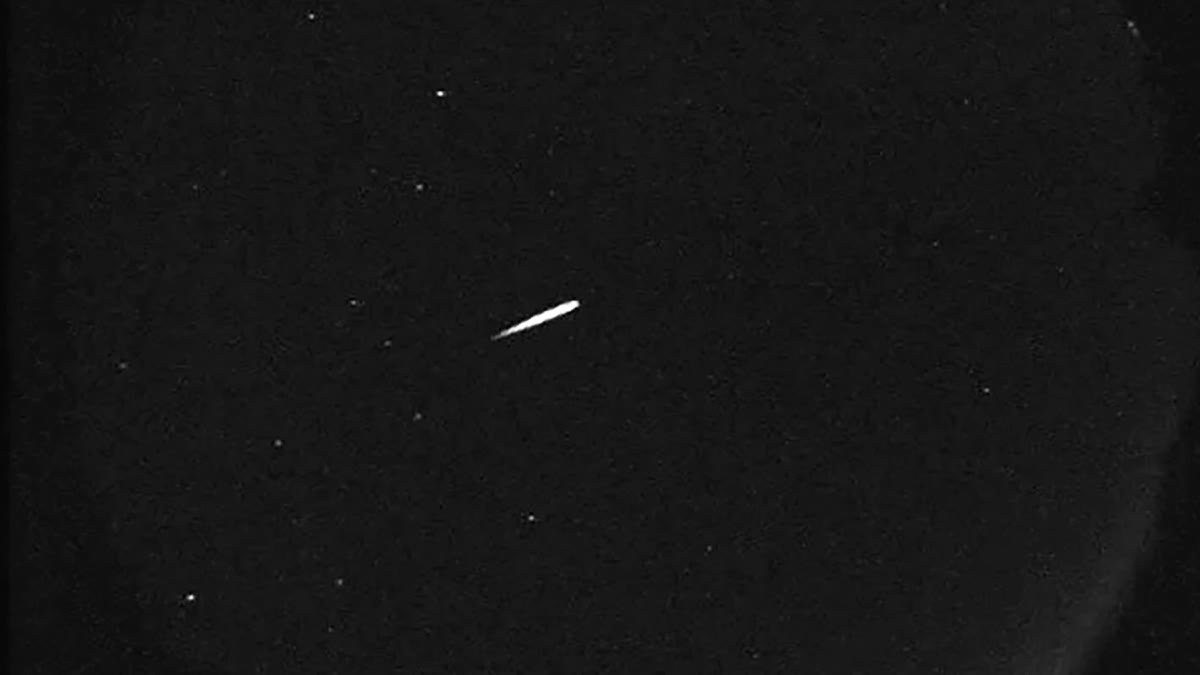

The Orionid meteor shower, created by debris from Halley’s Comet, will reach its peak overnight on October 21–22. Under favourable conditions, skywatchers could see 10–20 meteors per hour, although moonlight may reduce visibility.
Hyderabad: Stargazers have an opportunity to witness the Orionid meteor shower as it reaches its peak on the night of October 21–22. The annual celestial event occurs when Earth passes through a trail of dust and debris left behind by Halley’s Comet, producing bright streaks of light as tiny particles burn up in the atmosphere.
According to the American Meteor Society and NASA, the Orionids are active from October 2 to November 7 in 2026. Under ideal dark-sky conditions, observers may see around 10–20 meteors per hour during peak activity. However, the actual number visible will depend on local weather, light pollution and moonlight.
What Causes the Orionid Meteor Shower?
Halley’s Comet, officially designated 1P/Halley, leaves behind dust and small particles as it travels around the Sun. Every year, Earth crosses part of this debris trail.
When these particles enter Earth’s atmosphere at high speeds, they heat up and produce the luminous streaks commonly known as shooting stars. Despite the popular name, these streaks are not stars but small particles burning up in the atmosphere.
The Orionids are among the faster meteor showers, with particles entering the atmosphere at approximately 66 kilometres per second. Some meteors may leave glowing trails, while larger fragments can occasionally produce exceptionally bright flashes known as fireballs.
When Is the Best Time to Watch?
The shower’s peak falls on the night between October 21 and 22. Although meteors can appear throughout the night, the hours after midnight and before dawn generally offer better viewing opportunities.
The Moon is expected to be relatively bright during the peak, which could make fainter meteors difficult to spot. Conditions should improve after moonset, when the sky becomes darker. The exact time of moonset will vary by location.
For observers in India, staying out during the early morning hours of October 22 may offer a better chance of seeing the shower, provided the sky is clear and the Moon has set.
How to Watch the Meteor Shower Without a Telescope
One of the best things about the Orionids is that no telescope or specialised equipment is required. The meteors can be observed with the naked eye.
Here are a few tips to improve your chances:
- Find a dark location: Move away from streetlights, brightly lit buildings and other sources of artificial light.
- Allow your eyes to adjust: Spend around 20–30 minutes in darkness before beginning your observations.
- Choose an open area: Find a safe spot with a wide, unobstructed view of the sky.
- Watch patiently: Meteors may appear at irregular intervals, so give yourself enough time to observe.
- Avoid focusing only on Orion: Although the meteors appear to originate from the direction of the Orion constellation, they can streak across different parts of the sky.
A clear sky and reduced light pollution will make a significant difference to the viewing experience.
When Will Halley’s Comet Return?
Halley’s Comet is one of the best-known comets in astronomy. It takes approximately 75–76 years to complete an orbit around the Sun and was last seen in the inner Solar System in 1986.
The comet is expected to return to its closest point to the Sun in 2061. Until then, its debris will continue to produce the annual Orionid meteor shower in October and the Eta Aquariid meteor shower in May. <
For skywatchers, the Orionids offer a chance to enjoy a natural celestial display without expensive equipment. While moonlight may limit the number of meteors visible this year, a dark location and clear pre-dawn sky could still provide a memorable view.