
New Delhi / Gothenburg: India and Sweden have elevated their bilateral relationship into a deeper strategic defense partnership, signaling a major shift from a conventional buyer-seller military relationship toward long-term industrial collaboration, joint technology development, and defense innovation.
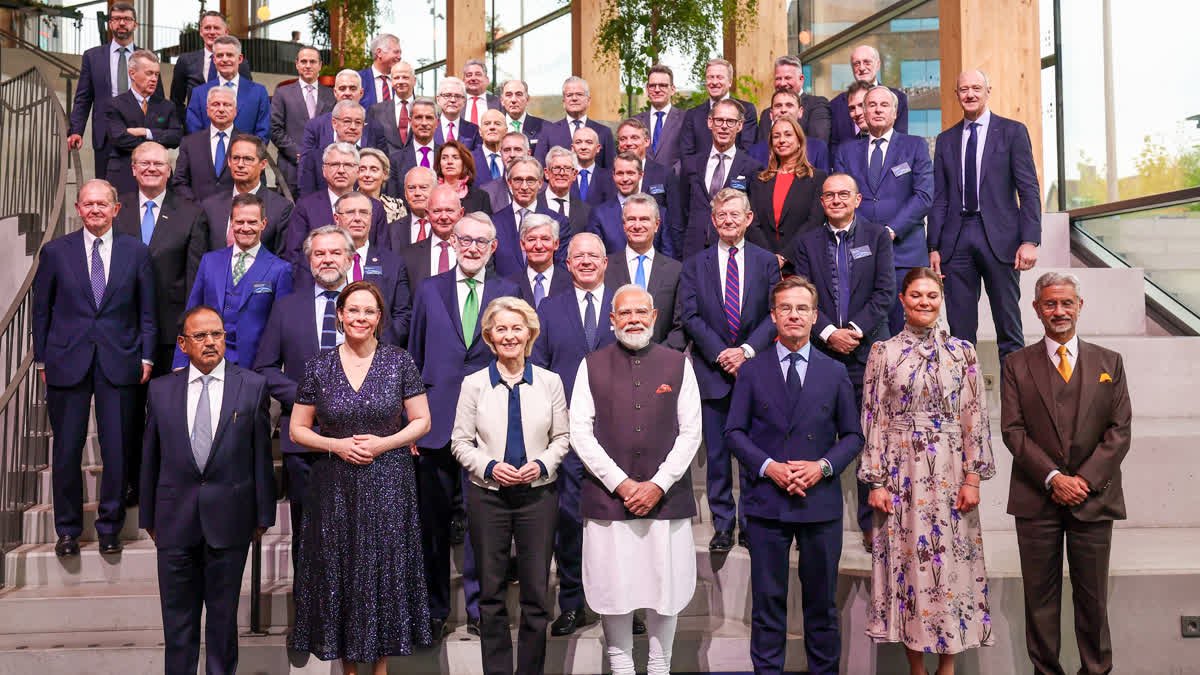
The new direction was formally outlined after Prime Minister Narendra Modi held bilateral talks with Swedish Prime Minister Ulf Kristersson in Gothenburg, where both leaders unveiled the India-Sweden Joint Action Plan 2026–2030. The roadmap places defense cooperation at the center of the broader strategic partnership between the two nations.
The agreement is being viewed as a significant geopolitical and industrial development, especially as India accelerates military modernization and seeks trusted technology partners under its “Make in India” and “Aatmanirbhar Bharat” defense manufacturing initiatives.
Strategic Shift: From Arms Purchases to Joint Defense Development
For decades, India’s defense ties with Sweden were largely centered on procurement and military hardware sales. The new framework, however, aims to transform that relationship into a long-term ecosystem focused on:
- Joint research and development (R&D)
- Defense innovation
- Co-production of military systems
- Technology transfer
- Local manufacturing in India
- Strategic institutional cooperation
Officials from both countries emphasized that future cooperation will increasingly focus on building capabilities together rather than merely importing equipment.
One of the four pillars of the new Joint Action Plan is titled “Strategic Dialogue for Stability and Security.” Under this framework, India and Sweden agreed to expand ministerial-level defense consultations, strengthen cooperation in defense innovation, deepen industrial investments, and increase engagement between military academic institutions and strategic think tanks.
Defense Innovation and Industrial Collaboration Take Center Stage
The upgraded partnership is expected to significantly expand collaboration between India’s growing defense manufacturing ecosystem and Sweden’s advanced military technology sector.
Sweden is internationally recognized for its expertise in:
- Fighter aircraft design
- Advanced avionics
- Airborne surveillance systems
- Radar and electronic warfare technologies
- Sensors and battlefield networking
- Lightweight precision weapons
- Systems integration
A key player in the partnership is Saab AB, the Swedish defense giant known for manufacturing the Gripen fighter jet and the widely used Carl-Gustaf shoulder-fired weapon system, which has long been operated by the Indian Army.
Saab has already established a manufacturing facility in India’s Haryana state for the production of Carl-Gustaf systems, reflecting the shift toward local manufacturing and industrial integration.
Prime Minister Modi said Swedish companies establishing manufacturing plants in India demonstrated that bilateral defense ties were evolving into a “long-term industrial partnership” rather than remaining limited to procurement contracts.
Strengthening India’s Defense Corridors
The partnership is expected to benefit India’s defense corridors in Tamil Nadu and Uttar Pradesh, which were created to attract advanced military manufacturing investments.
Swedish investments in these corridors are strategically important because they can help create:
- Skilled manufacturing jobs
- Local supplier networks
- Maintenance and repair ecosystems
- Export-oriented production chains
- Indigenous subsystem manufacturing
Analysts say the collaboration could also help India emerge as a regional export hub for jointly developed military systems.
By manufacturing equipment locally, both countries could reduce lifecycle maintenance costs while improving supply chain reliability and defense readiness.
Cybersecurity, Counterterrorism, and Emerging Technologies
Beyond conventional defense cooperation, the two countries are also expanding coordination in cybersecurity and counterterrorism.
According to Indian officials, India and Sweden are formalizing a cyber policy dialogue and working toward establishing a joint working group on counterterrorism.
The defense innovation agenda is also expected to cover emerging technologies such as:
- Artificial intelligence-based defense systems
- Autonomous military platforms
- Secure communications
- Sensor fusion
- Advanced battlefield automation
The framework is designed to bring together startups, MSMEs, research labs, and defense companies from both countries.
Long-Term Strategic and Geopolitical Importance
Strategic experts believe the partnership carries broader geopolitical significance.
Sweden’s integration within Europe’s advanced technology ecosystem could provide India with wider access to European defense innovation networks, particularly in:
- Dual-use technologies
- Advanced materials science
- Propulsion systems
- Defense electronics
The agreement also deepens institutional engagement between military colleges and strategic institutions from both countries, enhancing cooperation in areas such as:
- Arctic security
- Maritime domain awareness
- Hybrid warfare
- Cybersecurity
- Joint war-gaming exercises
Experts say such engagement creates long-term military familiarity and strategic trust between defense establishments.
India’s Record Defense Spending Adds Momentum
The timing of the partnership is notable because India recently announced a record defense allocation of approximately ₹7.85 lakh crore ($94+ billion) in the 2026–27 Union Budget — the largest defense allocation in the country’s history.
The defense budget accounts for nearly 2% of India’s projected GDP and represents a significant increase over the previous fiscal year.
The increased spending is intended to support:
- Military modernization
- Emergency procurement requirements
- Indigenous weapons production
- Ammunition replenishment
- Technology acquisition
This expanding budget environment makes India one of the world’s fastest-growing defense markets, increasing its attractiveness for international defense partnerships.
Experts See a Model Partnership for India’s Future Defense Strategy
Strategic affairs experts say the India-Sweden partnership reflects New Delhi’s broader effort to build deeper ties with technologically advanced and politically reliable partners.
Analysts note that Sweden offers India not only advanced defense technologies but also a trusted framework for high-level information sharing and industrial cooperation.
The partnership could evolve in multiple directions, including:
- Large-scale defense contracts
- Joint production ventures
- Submarine technologies
- Aerospace collaboration
- Integration into global defense supply chains
Experts also point out that Swedish firms could become suppliers within India’s broader defense manufacturing value chain, supporting both domestic requirements and exports.
A New Era in India-Sweden Defense Relations
The elevation of India-Sweden ties into a strategic partnership marks a turning point in bilateral relations.
Defense cooperation is no longer being viewed merely through the lens of military procurement. Instead, it is becoming a broader platform for:
- Innovation
- Industrial growth
- Technology sharing
- Strategic trust
- Long-term geopolitical cooperation
As India pushes for defense self-reliance and Sweden seeks deeper engagement in the Indo-Pacific and global defense markets, the partnership is expected to become increasingly important in shaping the future strategic landscape between Europe and India.