
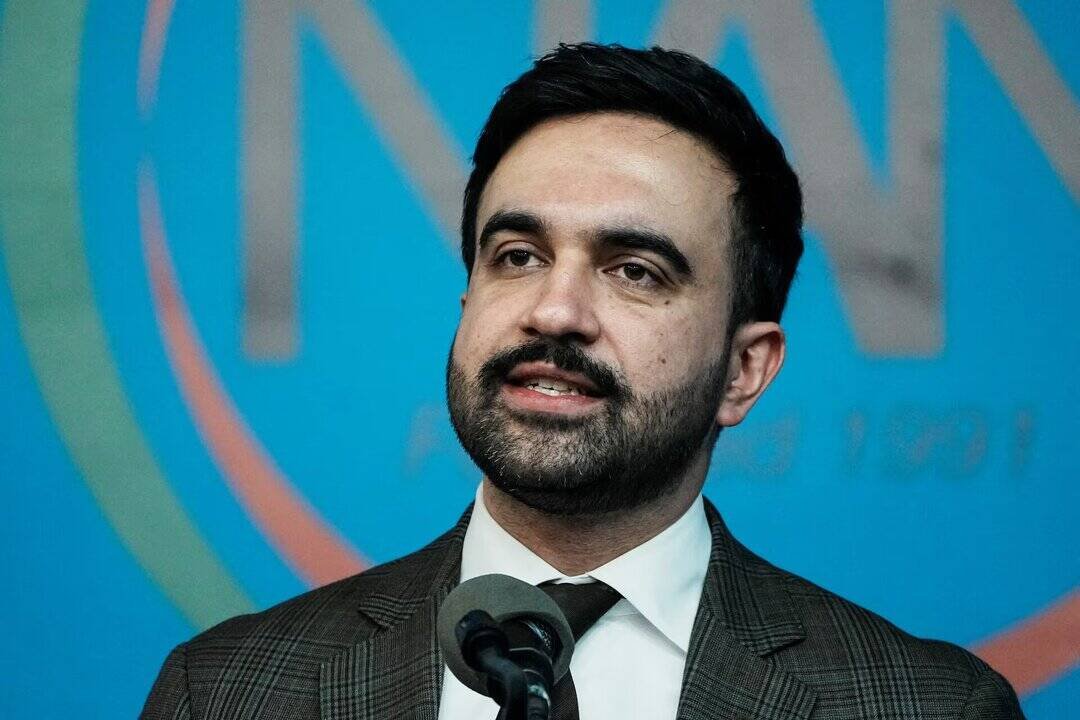

New York City: A political controversy has erupted after New York City Mayor Zohran Mamdani referred to the American Israel Public Affairs Committee (AIPAC) as “monsters” while criticizing the organization’s political influence and campaign spending.
During his remarks, Mamdani alleged that AIPAC channels “millions in dark money” into American politics, arguing that wealthy political organizations have an outsized influence on elections and public policy. His comments quickly drew criticism from political leaders and advocacy groups, who accused him of using inflammatory language against one of the country’s most influential pro-Israel organizations.
Among the strongest critics was Democratic Congressman Josh Gottheimer, who rejected Mamdani’s remarks and argued that the term “monsters” should instead be reserved for authoritarian regimes and terrorist organizations.
In a statement, Gottheimer said, “If you want to talk about real monsters, let’s start with the North Koreans, Russians, Sudanese, Iranian regime, and their proxies, Hamas and Hezbollah.” He accused the mayor of making divisive comments that distract from genuine global security threats.
The exchange has intensified the ongoing debate over U.S.-Israel relations, campaign finance, and the role of influential lobbying organizations in American politics. Supporters of Mamdani argue that he was criticizing political spending and lobbying practices rather than individuals or the broader pro-Israel community. Meanwhile, opponents contend that his choice of words was inappropriate and unnecessarily provocative.
The controversy has generated widespread discussion across political circles, media outlets, and social media, with reactions split along ideological lines. Some civil rights advocates have called for a more measured public discourse, while others defend the right of elected officials to criticize powerful political organizations.
As the debate continues, the incident is expected to remain a significant issue in New York City politics, with renewed attention on campaign finance transparency, lobbying influence, and the broader conversation surrounding Middle East policy in the United States.