
Mountain View : Google has withdrawn its newly introduced AI-powered image generation feature from Google Earth after facing widespread criticism from researchers, journalists, and digital misinformation experts who warned that the tool could be used to create highly realistic fake satellite imagery.
The decision comes just days after the company introduced the feature, which was designed to help users generate satellite-style images for visualization, planning, and educational purposes.
Why Did Google Remove the Feature?
Google had recently launched a feature called “Create Image” within Google Earth, powered by its Nano Banana 2 AI technology.
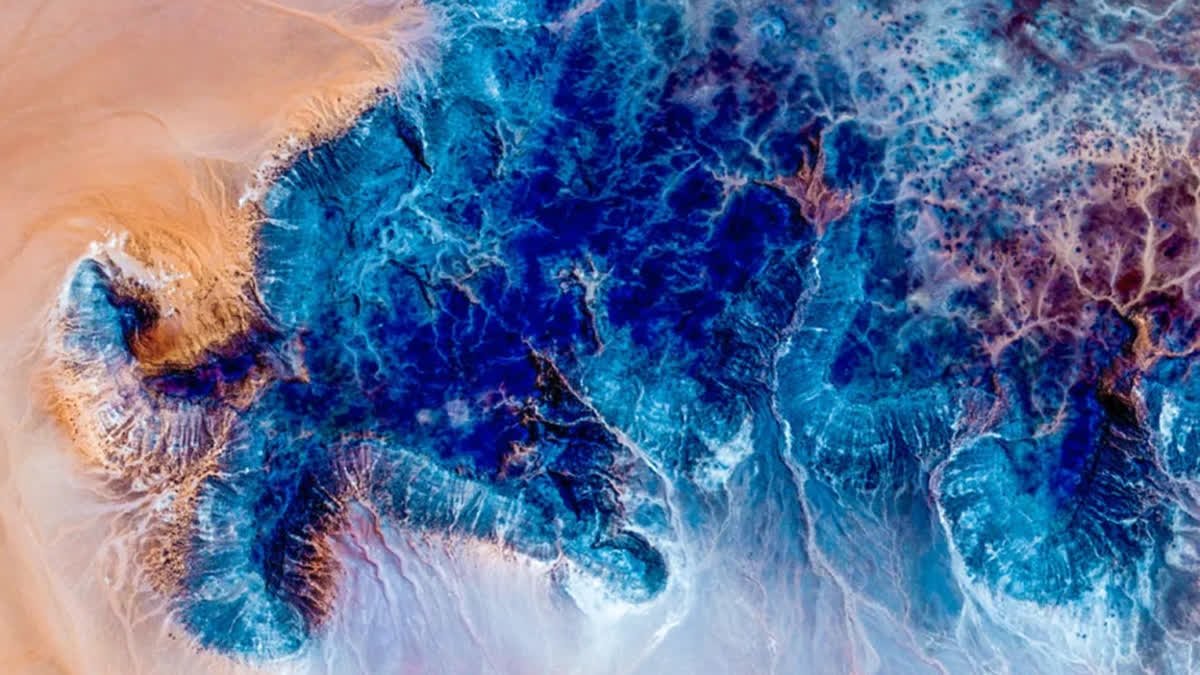
The tool enabled users to zoom into any location on Google Earth and generate AI-created satellite, aerial, and 3D map images within seconds.
According to Google, the feature was intended for legitimate applications such as:
- Historical visualization
- Urban and property planning
- Educational content
- Geographic simulations
However, soon after its release, experts warned that the technology could also be exploited to create convincing but entirely fabricated satellite images, potentially misleading the public and authorities.
Concerns Over Misinformation
Critics pointed out that the AI tool could generate realistic images depicting events that never occurred, including:
- Bomb explosions in major cities
- Fake nuclear facilities
- Imaginary military bases
- False battlefield scenes
- Natural disasters that never happened
- Large-scale migration events
Because Google Earth has long been regarded as a trusted platform for satellite imagery and geographic verification, experts argued that such AI-generated visuals could undermine public confidence in authentic satellite data.
Investigative Journalists Raise Alarm
Several investigative journalists and digital verification specialists expressed concern over the feature’s potential misuse.
Digital verification expert Henk van Ess criticized the rollout, saying the tool threatened the credibility that Google Earth had built over many years as a reliable source for verifying locations and events.
Experts warned that highly realistic fabricated imagery could complicate fact-checking, open-source intelligence (OSINT) investigations, and news verification, particularly during conflicts or natural disasters.
AFP Demonstrates the Risks
The concerns gained further attention after Agence France-Presse (AFP) reportedly tested the AI feature and successfully generated convincing but fictional satellite-style images depicting scenarios such as:
- An explosion in Paris
- A nuclear facility in Iran
- Bombing scenes in Russia
- Flooding in Bangladesh
- Large crowds of migrants at the U.S.–Mexico border
These images appeared realistic despite representing events that had not actually occurred, highlighting the potential for misinformation if such content were widely circulated.
Google’s Initial Response
Before withdrawing the feature, Google stated that every AI-generated image contained an embedded digital watermark, designed to distinguish AI-generated visuals from genuine satellite imagery.
However, many experts argued that hidden watermarks alone were insufficient because average users might not recognize or verify them before sharing the images online.
The criticism continued to grow despite Google’s explanation.
Experts Warn About Trust in Satellite Imagery
Ross Burley, head of a London-based organization focused on combating misinformation, reportedly said that public trust in satellite imagery has taken decades to build but could be damaged very quickly if realistic fake images become widespread.
Experts emphasized that satellite images are frequently used by governments, journalists, humanitarian organizations, researchers, and investigators, making accuracy and authenticity essential.
Google Withdraws the Tool
Following mounting criticism from the international community, Google has now removed the AI image generation feature from Google Earth.
The company indicated that it intends to introduce stronger safety measures and security safeguards before considering any future relaunch of the feature.
No timeline has been announced for its possible return.
Broader Debate on Responsible AI
The controversy has reignited discussions about the responsible deployment of generative AI technologies.
While AI image generation offers valuable applications in education, design, mapping, and planning, experts say it also presents serious challenges related to:
- Misinformation
- Deepfakes
- Public trust
- National security
- Verification of digital content
The incident underscores the importance of implementing robust safeguards before deploying AI tools capable of generating highly realistic visual content.
Key Highlights
- Google has removed its AI Image Generation feature from Google Earth following widespread criticism.
- The feature used Nano Banana 2 AI to create realistic satellite, aerial, and 3D images.
- Experts warned it could generate convincing fake satellite imagery, increasing the risk of misinformation.
- Critics said fabricated images could falsely depict explosions, military installations, natural disasters, and conflict zones.
- AFP reportedly demonstrated the tool’s capabilities by generating realistic but fictional satellite-style images.
- Google initially stated that AI-generated images included digital watermarks, but critics argued this safeguard was insufficient.
- The company has withdrawn the feature and said it will consider reintroducing it only after implementing stronger security measures.
The removal of the AI image generation feature from Google Earth highlights the growing challenge of balancing technological innovation with digital trust and security. As generative AI continues to evolve, technology companies face increasing pressure to ensure that powerful new tools are developed and deployed with effective safeguards against misuse.