

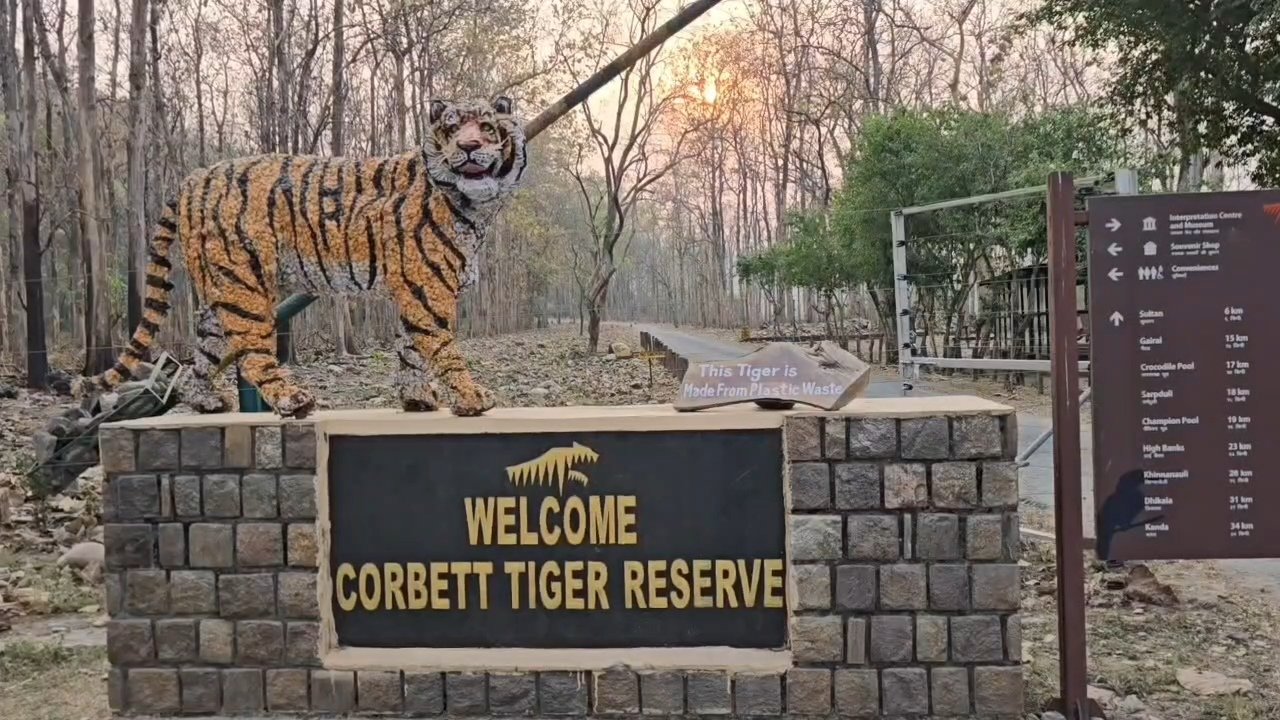

RAMNAGAR, UTTARAKHAND: The world-famous Corbett National Park has completed 90 years, marking nine decades of wildlife conservation, biodiversity protection, tourism and changing relationships between forests and local communities.
The 90th anniversary of Corbett is not merely a celebration of a historic national park. It is also an opportunity to remember the conservation legacy associated with Jim Corbett and examine the challenges facing one of India’s most important wildlife landscapes.
From Hailey National Park to Corbett Tiger Reserve
Corbett National Park was established on August 8, 1936, becoming India’s first national park.
It was initially named Hailey National Park, after then United Provinces Governor William Malcolm Hailey. The park was later known as Ramganga National Park before being renamed Corbett National Park in 1957 in honor of legendary hunter-turned-conservationist Jim Corbett.
The park was initially established across approximately 324 square kilometers. Its area expanded to around 520 square kilometers by 1966.
Over the years, additional protected areas, including the Sonanadi Wildlife Sanctuary, were incorporated into the broader conservation landscape. Today, the Corbett Tiger Reserve covers approximately 1,288.31 square kilometers.
Birthplace of Project Tiger
Corbett occupies a special place in India’s tiger conservation history.
When the Government of India launched Project Tiger in 1973, Corbett was among the country’s first nine tiger reserves selected for the flagship conservation program.
The initiative marked the beginning of one of the world’s most significant tiger conservation efforts, with India subsequently emerging as a global leader in wild tiger conservation.
Today, Corbett is recognized not only for its tiger population but also for its rich biodiversity.
The reserve provides habitat for tigers, elephants, leopards, gharials, otters, hundreds of bird species and a wide variety of plant species.
Corbett is also considered one of the areas with the highest tiger density in the world.
‘Tourism Must Not Come at the Cost of Nature’
As Corbett completes 90 years, wildlife experts and conservationists have raised concerns about the growing pressure of tourism on the protected landscape.
Renowned wildlife photographer Deep Rajwar praised Corbett’s conservation achievements but warned that tourism needs to remain environmentally responsible.
“If Jim Corbett were alive today, he might not even recognize the Corbett he once knew. Tourism has provided employment to local people, but the balanced, nature-based tourism that was originally envisioned is gradually becoming uncontrolled. A large number of tourists are now arriving without a genuine connection with forests and wildlife.”
— Deep Rajwar, Wildlife Photographer
Rajwar said policies should encourage responsible and nature-sensitive tourism, ensuring that visitors understand and respect the ecological importance of the forest.
‘Corbett Remains a Major Conservation Success’
Wildlife expert Sanjay Chhimwal described Corbett as an important chapter not only in India’s conservation history but also in the broader conservation story of Asia.
According to him, the park was established primarily to protect forests, wildlife and biodiversity, and it continues to fulfill that objective even after nine decades.
“The healthy populations of tigers, elephants, birds and other rare species today demonstrate that effective conservation work has been carried out here. Jim Corbett played an important role in stopping hunting and securing protected status for this region, helping safeguard this invaluable natural heritage.”
— Sanjay Chhimwal, Wildlife Expert
Tourism and Conservation Need a Balance
Wildlife expert Sumanta Ghosh described Corbett as the “crown of Uttarakhand” and an international model for conservation.
He said that despite numerous challenges, the reserve continues to support one of the world’s highest concentrations of wild tigers while also providing livelihoods to thousands of people.
However, he warned that the future will require a clear and balanced tourism policy.
“Tourism in Corbett should be developed in such a way that visitors do not come merely for entertainment but return as ambassadors of its biodiversity, culture and natural heritage. Tourism based only on recreation, noise and crowds is not in the interest of the forest.”
— Sumanta Ghosh, Wildlife Expert
Human-Wildlife Conflict Emerging as a Major Concern
Wildlife enthusiast Himanshu Tiruwa said Corbett’s journey from 1936 to 2026 has been exceptional from a conservation perspective.
The increasing presence of tigers, elephants, gharials, otters and birds, he said, demonstrates the success of conservation efforts in the landscape.
At the same time, he highlighted growing pressure on forests and shrinking habitat as major concerns.
According to him, human-wildlife conflict is increasing in areas such as Dhela, Sitabani and the Terai region, making habitat protection and community participation increasingly important.
Corbett Currently Has Around 260 Tigers
Corbett Tiger Reserve Director Dr. Saket Badola described August 8, 1936, as a historic date in India’s wildlife conservation journey.
He said that the country’s first national park continues to remain at the forefront of conservation.
According to Badola, Corbett currently has around 260 tigers, while the reserve continues to record one of the highest tiger densities in the world.
“In 90 years, Corbett has witnessed numerous geographical and ecological changes. Its area expanded, the construction of the Kalagarh Dam on the Ramganga River created a large reservoir, and tourism developed rapidly. Despite these changes, Corbett continues to maintain its identity as one of the world’s most important conservation landscapes.”
— Dr. Saket Badola, Director, Corbett Tiger Reserve
Badola emphasized that Corbett’s importance extends far beyond its tiger population.
The reserve supports significant populations of elephants, gharials, hundreds of bird species and other rare wildlife.
Corbett’s Economic Importance
The expansion of tourism has also transformed the economy of Ramnagar and surrounding areas.
According to officials and conservation experts, thousands of local people now depend directly or indirectly on wildlife tourism, hospitality, transportation, guiding and other tourism-related activities.
Corbett has therefore emerged as an important contributor to both Uttarakhand’s tourism economy and the wider regional economy.
The reserve demonstrates how conservation, tourism and local livelihoods can potentially coexist when supported by scientific management, community participation and responsible tourism practices.
What Lies Ahead?
After 90 years, Corbett stands at another important crossroads.
The central challenge for the coming decades will be maintaining a balance between tourism and conservation.
Increasing tourist numbers, infrastructure pressure, habitat fragmentation and human-wildlife conflict could pose serious challenges if not managed carefully.
Conservation experts believe that responsible tourism, local community participation, scientific wildlife management and protection of natural habitats will be crucial to maintaining Corbett’s ecological integrity.
The story of Corbett over the past nine decades demonstrates that conservation can succeed when political will, scientific management and public participation work together.
As Corbett enters its next chapter, the goal will be not simply to preserve its legacy, but to ensure that its forests, rivers, grasslands and wildlife remain protected for future generations.