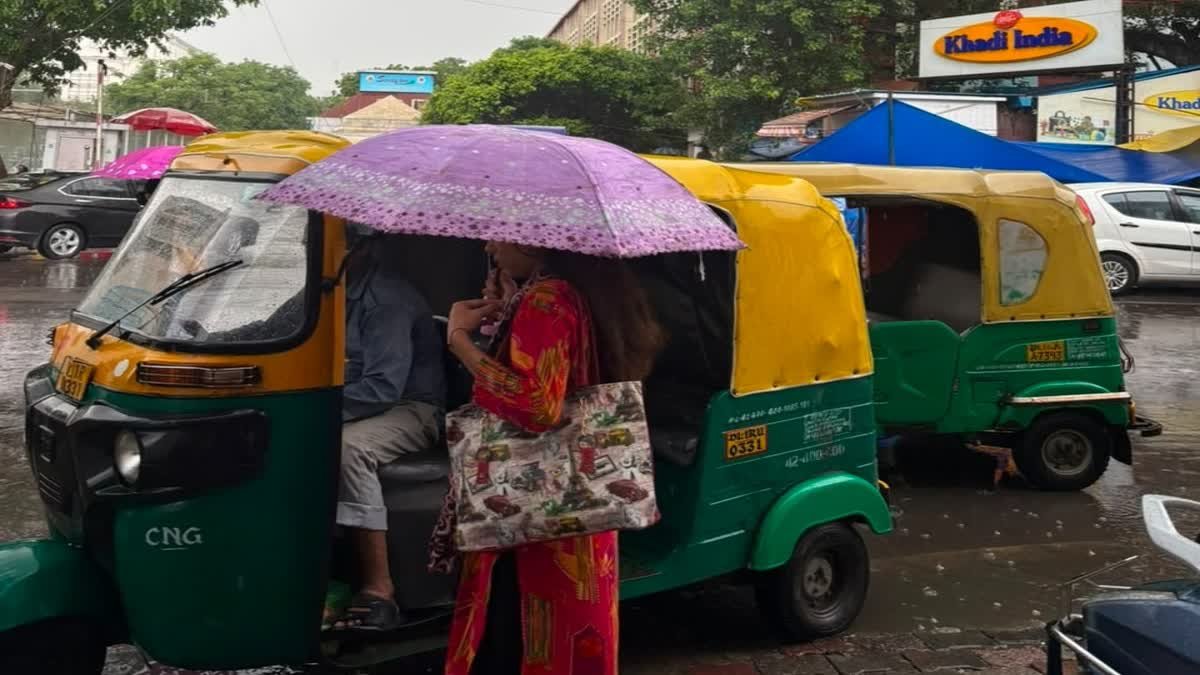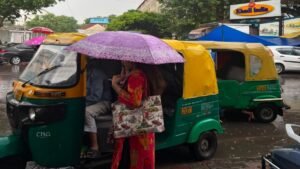

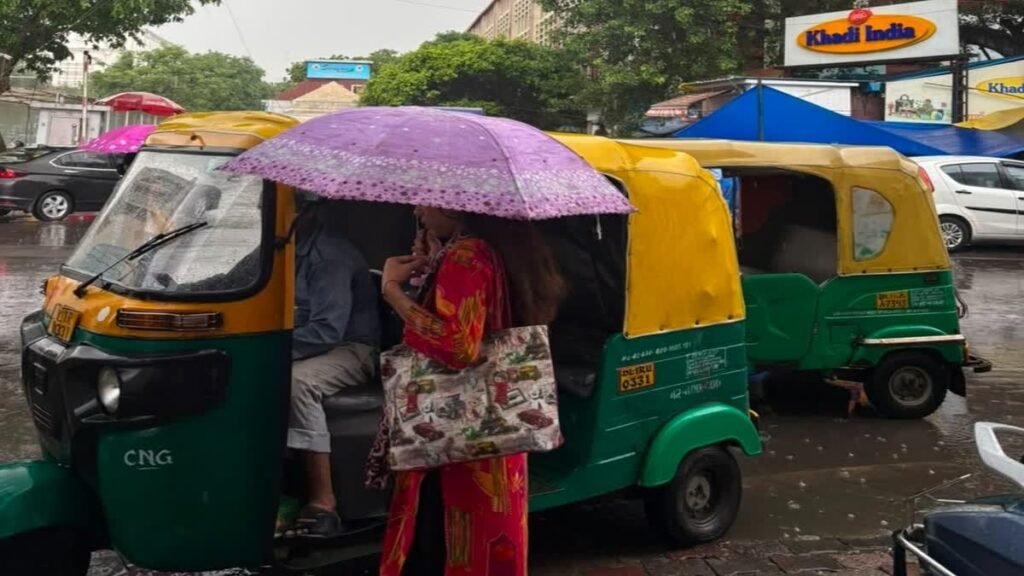
NEW DELHI : Heavy monsoon rains and widespread waterlogging across Delhi-NCR are creating fresh problems for daily commuters, with office-goers and college students complaining of steep increases in auto-rickshaw and ride-hailing fares.
While the monsoon brings relief from prolonged heat and humidity, heavy rainfall has made daily travel increasingly difficult and expensive. Commuters say they are being forced to pay two to three times the usual fare for short-distance journeys, particularly when roads are flooded and public transport options become limited.
Commuters Face Higher Auto and Ride-Hailing Fares
One of the most common complaints among commuters is the additional fare demanded by auto-rickshaw drivers, along with fluctuating prices on ride-hailing platforms such as Rapido.
In areas including Janpath, Connaught Place, Gurugram and Noida, commuters have reported being quoted fares significantly higher than normal, with some drivers allegedly demanding nearly double or even triple the regular amount, regardless of the distance.
The problem becomes particularly severe in low-lying areas, where roads are submerged under water following heavy rainfall.
With walking becoming difficult or unsafe in several locations, commuters often have little choice but to rely on autos, taxis or ride-hailing services.
Student Says ₹50 Ride Now Costs ₹150
Shatakshi, a college student, said she was forced to reconsider taking an auto after being quoted a significantly higher fare for her regular journey.
“I go to college every day. It used to cost ₹50 to reach college. Since the rains started, they are asking for ₹150 without thinking twice,” she said.
She added that the sudden increase was particularly frustrating for students with limited budgets.
“As a college student, the rain itself is frustrating because I don’t have much money. The sudden increase in fares is strange,” she said.
Gurugram Commuter Says ₹30 Journey Costs ₹100
Alka, who works in Gurugram, said she normally travels between Udyog Vihar Phase 2 and Sikanderpur for around ₹30.
However, during heavy rainfall and waterlogging, an auto driver charged her ₹100 for the same journey.
“I usually pay ₹30 for this trip. But today, because of the rain and waterlogging, the driver charged me ₹100, which is more than three times the regular fare,” she said.
She added that sharing an auto with another passenger can sometimes help reduce the financial burden.
According to her, commuters should not be forced to pay excessive fares simply because of bad weather, and appropriate measures are needed to prevent overcharging during emergencies and extreme weather conditions.
Traffic and Waterlogging Add to the Problem
Mayur Kudupale, a researcher, said the difficulties faced by commuters in Delhi during the rainy season are well known.
“Roads become waterlogged and walking becomes almost impossible. If I book a cab or an auto, traffic becomes a major problem. I end up losing both time and money,” he said.
He said the Delhi Metro remains a relatively comfortable option during heavy rain, but it cannot provide door-to-door connectivity to every destination.
Cab Fare Jumps From ₹100 to ₹425
Working professional Aniket said he experienced a sharp increase in cab fares while trying to travel to a railway station.
“I was booking a cab to reach the railway station when the sudden increase in the fare shocked me. It normally costs around ₹100, but because of the bad weather and poor road conditions, I had to pay ₹425,” he said.
He argued that the problem in Gurugram is not simply a temporary inconvenience.
“Anyone who regularly travels in Gurugram knows this is not a temporary problem. It needs to be fixed,” he said.
Despite being one of India’s major corporate and technology hubs, Gurugram frequently experiences severe waterlogging following intense rainfall, affecting both commuters and businesses.
Commuters Sometimes Pay More to Avoid Long Waits
Ekta Srivastava said the urgency created by bad weather often forces commuters to accept higher fares.
“Rain creates a sense of urgency in our minds, and sometimes that forces us to spend more money,” she said.
She added that she occasionally agrees to a driver’s demand for a higher fare simply to avoid a long wait and reach the office on time.
Auto Drivers Defend Higher Fares
Auto-rickshaw drivers, however, say that operating during heavy rain also involves additional risks and costs.
Mukesh, an auto driver, said drivers often wait for long periods for passengers but struggle to find customers willing to pay the quoted fare.
“People keep asking about the price and then walk away,” he said.
He argued that passengers should also consider the difficulties faced by drivers during extreme weather.
“People say negative things about us, but they don’t think about the fact that we are still willing to take them to their destination during heavy rain. There is a risk of accidents and damage to the auto parts,” he said.
Mukesh said the higher fare was partly due to the additional risks associated with driving during heavy rainfall.
Another Driver Says Fares Rise by Only ₹20
Auto driver Dhananjay, however, disputed claims that drivers routinely charge two or three times the normal fare.
“The claims made by passengers are not entirely correct. We increase the fare by around ₹20, but not more than that,” he said.
He added that drivers sometimes remain on the road for long periods without getting passengers.
“We wait for a long time, but passengers do not come. People prefer booking Rapido, but Rapido charges them more than we do,” he said.
Similar Complaints Reported in Other Cities
The issue is not limited to Delhi-NCR.
Commuters in cities such as Bengaluru and Mumbai have also complained about fare increases during periods of heavy rain and severe traffic disruption.
Some commuters have taken to social media to share videos and express frustration over higher fares, long waiting times, traffic congestion and waterlogged roads.
The recurring complaints highlight a larger challenge for major Indian cities: when heavy rainfall disrupts roads and public transport, commuters can become heavily dependent on private mobility services, creating an environment where demand, limited availability and difficult road conditions can sharply increase travel costs.
For daily commuters, the combination of waterlogging, traffic congestion, limited last-mile connectivity and higher fares has turned heavy rain into not only a transportation problem but also a growing financial burden.