

Senior House Republican Calls for U.S.–Taiwan Drone Co-Production as Taipei Considers $6.7 Billion Domestic Unmanned Systems Program
Taipei : U.S. Representative Michael McCaul (R-Texas) has expressed confidence that President Donald Trump will soon advance a long-delayed $14 billion package of defensive weapons for Taiwan, while urging Taipei to expand domestic drone production and deepen defense-industrial cooperation with the United States.
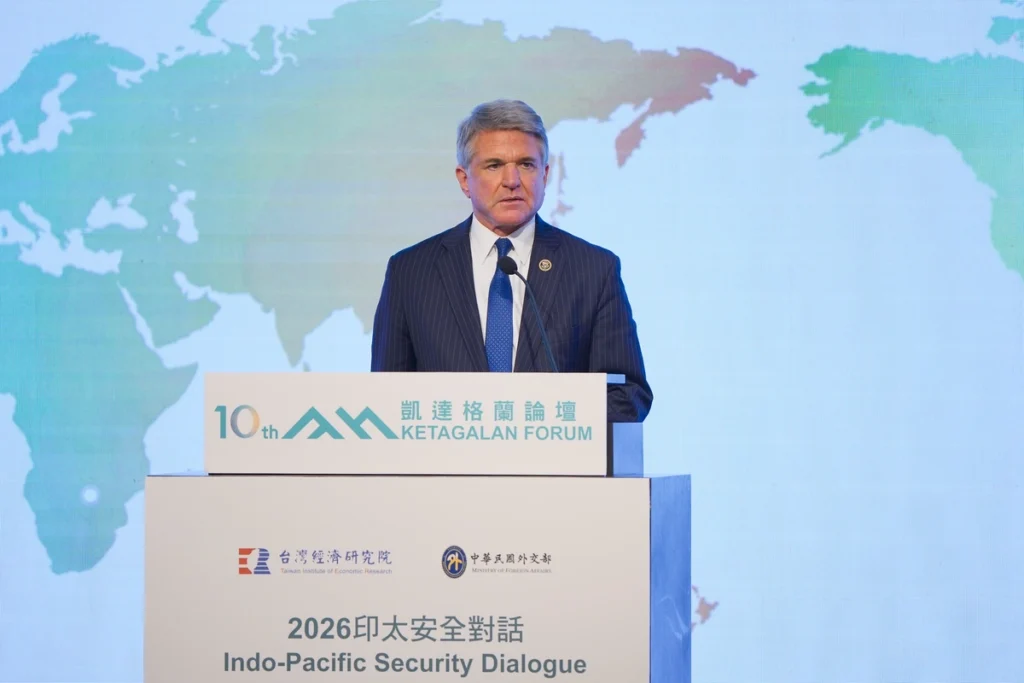
McCaul, the former chairman and current chairman emeritus of the House Foreign Affairs Committee, made the remarks during an August 4 address at the Ketagalan Forum in Taipei.
He did not disclose the specific weapons included in the proposed package or provide a firm timeline for its formal notification to Congress.
$14 Billion Taiwan Arms Package Still Under Review
The proposed $14 billion arms package has been awaiting administrative action for several months.
U.S. lawmakers have repeatedly urged the Trump administration to formally notify Congress so that the proposed sales can proceed through the established Foreign Military Sales (FMS) process.
Eight U.S. senators called on Trump in May to move forward with the package, arguing that Congress had already provided authorization for the proposed sales in January 2025.
However, the package has not yet been formally notified to Congress.
During his August 4 remarks, McCaul said he expected the administration to send Congress another package containing approximately $14 billion in critical defense articles for Taiwan.
Trump Previously Called Package a Negotiating Tool
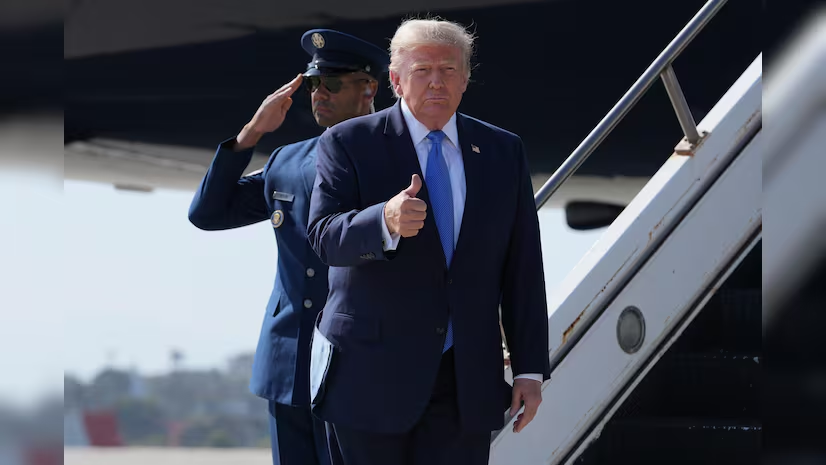
Questions surrounding the delay intensified after Trump said in May that the proposed package was being held “in abeyance.”
Trump described the arms package as a potential negotiating tool in discussions with Beijing and said that China’s position would factor into his decision.
The delay subsequently prompted questions from lawmakers concerned about Taiwan’s defense requirements and Washington’s commitment to supporting the island’s security.
U.S. Officials Offer Different Explanations for Delay
Senior U.S. officials have provided additional context regarding the delay.
Acting Navy Secretary Hung Cao told a Senate hearing that some foreign military sales were being delayed to preserve available munitions for U.S. military operations involving Iran.
However, Secretary of State Marco Rubio rejected the characterization that the Taiwan package was being withheld.
Rubio told the House Foreign Affairs Committee in June that the package was still under review, with officials assessing the near-term availability of weapons and balancing Taiwan’s requirements against U.S. military procurement needs.
Assistant Secretary of State Michael DeSombre subsequently told lawmakers on June 25 that the package remained under review by Trump but did not provide a specific timetable for a decision.
As of August 7, the $14 billion package remained under administrative review.
Earlier Taiwan Arms Sales Worth $11.1 Billion
Separately, the U.S. State Department notified Congress in December 2025 of eight potential Foreign Military Sales cases for Taiwan with a combined estimated value of up to $11.1 billion.
The proposed systems included:
- M109A7 self-propelled howitzers
- High Mobility Artillery Rocket Systems (HIMARS)
- Anti-armor missiles
- Unmanned systems
- Military communications equipment
McCaul described the earlier package as the largest U.S. foreign military sales package directed toward Taiwan at that time.
McCaul Pushes Taiwan to Expand Domestic Drone Production
Beyond U.S. weapons purchases, McCaul urged Taiwan to increase its investment in domestic drone manufacturing.
He called on Taiwan’s legislature to approve a separate funding proposal aimed at developing the island’s indigenous unmanned aircraft and maritime systems capabilities.
McCaul argued that expanding Taiwan’s domestic defense production would demonstrate a stronger commitment to self-defense and strengthen confidence in Washington’s partnership with Taipei.
Taiwan Considering $6.7 Billion Unmanned Systems Program
Taiwan’s government has proposed a separate special act authorizing approximately NT$210 billion, or about $6.7 billion, for the development and production of domestically manufactured unmanned aircraft and maritime systems.
The proposal would cover spending between 2026 and 2031 and remains under consideration by Taiwan’s legislature.
The initiative is separate from a broader special defense budget approved earlier in May.
Taiwan’s legislature authorized up to NT$780 billion, approximately $25 billion, for weapons procurement through the U.S. Foreign Military Sales system.
That legislation was narrower than the NT$1.25 trillion, or approximately $40 billion, package originally proposed by the administration of Taiwanese President Lai Ching-te, which also included commercially purchased and domestically developed weapons.
Lessons From the Russia-Ukraine War
McCaul linked Taiwan’s push for expanded drone production to lessons emerging from the Russia-Ukraine war, where unmanned systems have become increasingly important for surveillance, reconnaissance, targeting and battlefield operations.
He said he hoped to see greater U.S.–Taiwan cooperation in drone co-production and technology development.
Such cooperation could help Taiwan build a larger and more resilient unmanned-systems industry while strengthening the defense relationship between Washington and Taipei.
McCaul emphasized that the ultimate objective should be deterrence and peace, rather than conflict.
Lai Calls for Joint Research and Production
Taiwanese President Lai Ching-te also emphasized the importance of deeper defense-industrial cooperation with the United States.
Lai made the remarks on August 4 while presenting McCaul with Taiwan’s Order of Brilliant Star with Grand Cordon, recognizing his contributions to bilateral relations, economic cooperation and diplomatic ties.
Lai said Taiwan would continue developing:
- Asymmetric defense capabilities
- Drone systems
- Counter-drone technologies
- Civil-defense resilience
- Indigenous defense production
He also expressed Taiwan’s desire to expand its relationship with the United States beyond arms purchases toward joint research and development and joint production.
Washington Says Arms Sales Policy Is Not Controlled by Beijing
McCaul also addressed concerns that Washington’s efforts to stabilize relations with Beijing could affect U.S. arms sales to Taiwan.
Referring to the Six Assurances provided to Taiwan during the Reagan administration, McCaul emphasized that the United States does not consult Beijing regarding arms sales to Taiwan.
He argued that the principle remains part of U.S. policy and that decisions regarding Taiwan’s defense should not be subject to Chinese approval.
Cybersecurity and Asymmetric Defense Also in Focus
McCaul highlighted cybersecurity as another critical element of Taiwan’s defense strategy.
He argued that Taiwan’s security cannot rely solely on conventional weapons such as missiles and artillery. Instead, the island also needs strong capabilities in cyber defense, drones, counter-drone systems, communications and civil resilience.
Congress has already authorized up to $1 billion for the Taiwan Security Cooperation Initiative under the Fiscal Year 2026 National Defense Authorization Act.
According to the Senate Armed Services Committee’s official summary, the initiative can support defense equipment, services, training, medical supplies and combat casualty care capabilities for Taiwan.
What Happens Next?
The immediate next step for the delayed $14 billion Taiwan arms package is a formal decision by the Trump administration.
If the administration moves forward, a formal State Department notification to Congress would disclose the proposed weapons systems, their maximum estimated value and the principal contractors involved.
Until that notification is issued, the package remains under administrative review.
The developments also point toward a broader evolution in the U.S.–Taiwan defense relationship—from traditional arms sales toward joint technology development, domestic manufacturing, drone production, cybersecurity and integrated defense capabilities.
For Taiwan, the strategy is increasingly centered on building a resilient and asymmetric defense posture. For Washington, the debate reflects the continuing challenge of supporting Taiwan’s security while managing its increasingly complex relationship with Beijing.