

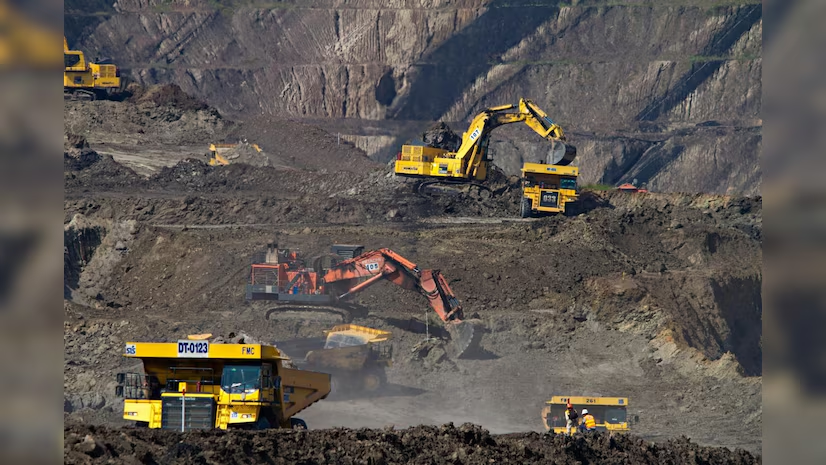

DEV BHOOMI DWARKA, GUJARAT: A proposed bauxite and marl mining project in Gujarat’s Devbhumi Dwarka district has received a recommendation for environmental clearance (EC) despite being located close to two nationally significant marine protected areas—the Marine Wildlife Sanctuary and the Marine National Park in the Gulf of Kachchh.
The proposed mining operation at the Mevasa Block covers an area of more than five hectares. The site is located approximately 1.6 kilometers from India’s first marine wildlife sanctuary and around 6 kilometers from the country’s first marine national park, both situated along the southern shore of the Gulf of Kachchh.
The Expert Appraisal Committee (EAC) of the Union Environment Ministry recommended the project for environmental clearance at its meeting held on July 29, 2026.
Mining Project Located Close to Protected Marine Ecosystems
The Marine Wildlife Sanctuary, established in 1980, covers approximately 458 square kilometers. Two years later, in 1982, the Marine National Park was established across an area of about 168 square kilometers to protect and conserve the region’s rich marine biodiversity.
According to Gujarat’s Forest and Environment Department, the shallow waters of the marine park contain a complex coral reef ecosystem, extensive mangrove habitats, and a wide range of marine and coastal species.
The protected area is considered ecologically important because of the close interdependence between its marine, coastal and terrestrial ecosystems.
EAC Sets Conditions for the Project
The environmental clearance recommendation was accompanied by several conditions that the project developer must comply with.
The project proponent, L and S Company, has been directed to follow up with the Gujarat Forest Department regarding approval of the required wildlife conservation plan.
The EAC also directed the company to implement appropriate measures to minimize stress on wild animals and reduce the possibility of human-wildlife conflict in and around the project area.
These conditions are intended to ensure that mining-related activities do not create unnecessary disturbances to wildlife and surrounding ecological systems.
Marine Park Supports Rich Biodiversity
The Gulf of Kachchh’s marine protected areas are known for their exceptional biodiversity.
According to the Gujarat Forest and Environment Department, the Marine National Park supports more than 49 species of hard corals, 23 species of soft corals, 70 species of sponges and 421 species of fish.
The area also contains approximately 27 species of prawns, 30 species of crabs, 172 species of birds, six species of mangroves and three species of sea turtles.
The combination of coral reefs, mangroves, tidal flats and shallow marine waters provides important habitat for a wide range of species.
Important Stopover for Migratory Birds
The environmental impact assessment (EIA) report also highlighted the importance of the marine park for migratory birds.
The park is strategically located along major bird migration routes and benefits from a wide tidal range and nutrient-rich waters, creating favorable conditions for aquatic and coastal wildlife.
During the winter season, large numbers of migratory waders—including flamingos, sandpipers and plovers—can be seen in the protected area.
The presence of these species makes the region particularly important for bird conservation and coastal biodiversity.
EIA Says Distance Provides a Natural Barrier
The project’s EIA report assessed the potential relationship between the proposed mining operation and the nearby protected ecosystems.
According to the report, the mining lease area is approximately 1.6 kilometers from the marine wildlife sanctuary and about 6 kilometers from the marine national park.
The report argued that the distance between the mining site and the protected ecosystems acts as a natural physical barrier, helping limit direct impacts on the marine habitats.
It further stated that any impacts on important habitat elements would primarily occur at a local scale and would not be considered critical at a regional scale for the life-cycle requirements of the species observed or expected in the area.
Environmental Concerns Remain Significant
Despite the EIA’s assessment, the location of the proposed project near two major marine protected areas makes environmental safeguards particularly important.
The Gulf of Kachchh ecosystem contains interconnected habitats, including coral reefs, mangroves, tidal areas and coastal wetlands. These habitats support marine organisms, fish, birds, reptiles and other wildlife.
The project’s compliance with the conditions imposed by the EAC—including the wildlife conservation plan and measures to prevent human-animal conflict—will therefore be an important factor in minimizing potential environmental risks.
The proposed five-hectare bauxite and marl mining project now moves forward with the EAC’s recommendation, subject to compliance with the prescribed environmental and wildlife protection conditions.
The development has drawn attention because of its proximity to India’s first marine wildlife sanctuary and first marine national park, both of which remain crucial to the conservation of the Gulf of Kachchh’s unique marine biodiversity.