

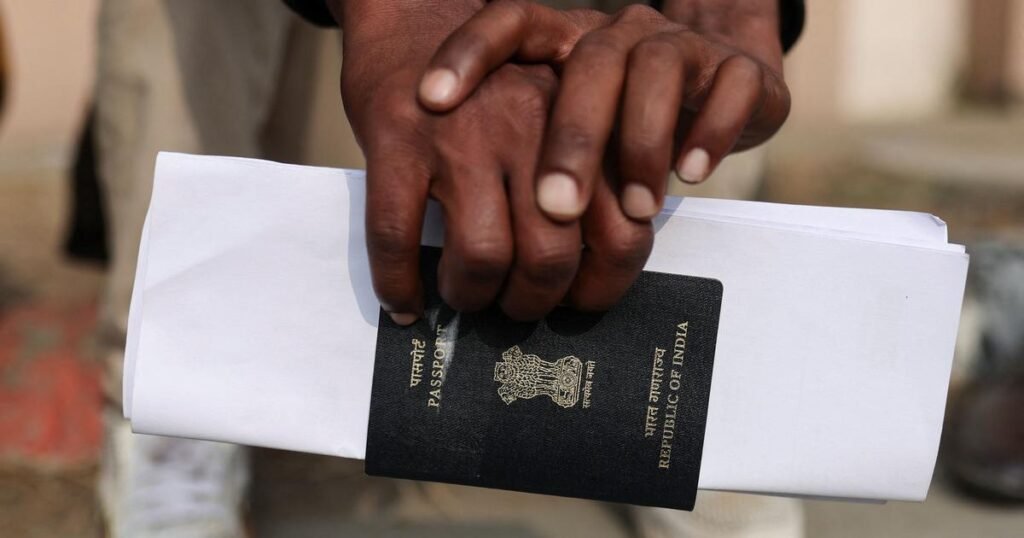
WASHINGTON, D.C. — International tourism is often portrayed as a gateway to freedom, adventure, and cultural exchange. Yet a recent academic study has revealed a starkly different reality for millions of travelers who hold what are commonly referred to as “weak passports.” According to researchers, the experience of crossing international borders can be significantly more challenging, stressful, and emotionally taxing for citizens of countries with limited global mobility.
As American travelers accustomed to the privileges associated with a strong passport, we found the study both enlightening and concerning. It highlights the unequal realities of global travel and the often-overlooked struggles faced by tourists from nations with lower-ranking passports.
The Passport Divide
The Henley Passport Index, one of the world’s most recognized passport rankings, measures passports based on the number of destinations their holders can enter without obtaining a visa beforehand.
Currently, Singapore holds the top position, with its citizens enjoying visa-free access to 192 destinations worldwide. In contrast, Afghanistan ranks at the bottom, with access to only 23 destinations without prior visa requirements.
Researchers note that passport strength is influenced by several factors, including a country’s economic stability, political standing, historical relationships, and perceptions related to security risks or terrorism.
The Cost of Traveling with a Weak Passport
According to the study, travelers from countries with weaker passports often face a lengthy and expensive process before their journey even begins.
Applicants may be required to:
- Submit extensive personal documentation.
- Provide proof of financial resources.
- Attend multiple visa interviews.
- Demonstrate detailed travel plans.
- Wait months for application decisions.
Even after fulfilling all requirements, visa applications may still be rejected without clear explanations.
For many travelers, the uncertainty becomes a significant financial and emotional burden long before boarding a flight.
Border Crossings: A Moment of Anxiety
The research, conducted by scholars including Samira Zare and her co-author, focused on the experiences of tourists navigating international airports and border checkpoints.
Their findings suggest that border crossings are often among the most stressful moments of a journey for holders of weak passports.
Participants reported encountering both subtle and overt forms of scrutiny, which they believed were influenced by assumptions about their:
- Nationality
- Passport strength
- Race
- Gender
- Social class
One traveler quoted in the study described the experience by saying that even when all documentation is in order, there remains a lingering fear of being denied entry.
“Performed Innocence” and Survival Strategies
One of the study’s most notable findings concerns a behavioral pattern researchers describe as “performed innocence” or “performed docility.”
To avoid suspicion and increase their chances of smooth entry, many travelers reported deliberately modifying their behavior. Common strategies included:
- Speaking in a softer tone.
- Smiling more frequently than felt natural.
- Avoiding disagreement with officials.
- Offering lengthy explanations about travel plans.
- Demonstrating excessive politeness.
Researchers argue that these actions are not merely expressions of courtesy but are often conscious efforts to prove that the traveler is a legitimate tourist who poses no threat.
An Unequal Travel Experience
As Americans, we often take for granted the relative ease with which we can enter many countries around the world. This study serves as a reminder that the concept of a borderless world remains out of reach for many people.
While international tourism markets itself as an opportunity for universal exploration and cultural connection, the reality is that mobility remains deeply unequal.
The findings suggest that passport strength can shape not only where individuals can travel but also how they are treated during their journeys.
Looking Ahead
Researchers hope that greater awareness of these challenges will encourage policymakers, border authorities, and international organizations to address disparities in global mobility and promote fairer treatment of travelers.
The study ultimately raises important questions about freedom of movement, global inequality, and the hidden emotional costs associated with international travel.
For millions of tourists worldwide, the journey is not simply about reaching a destination—it is also about navigating a system where their nationality can influence every step of the experience.