

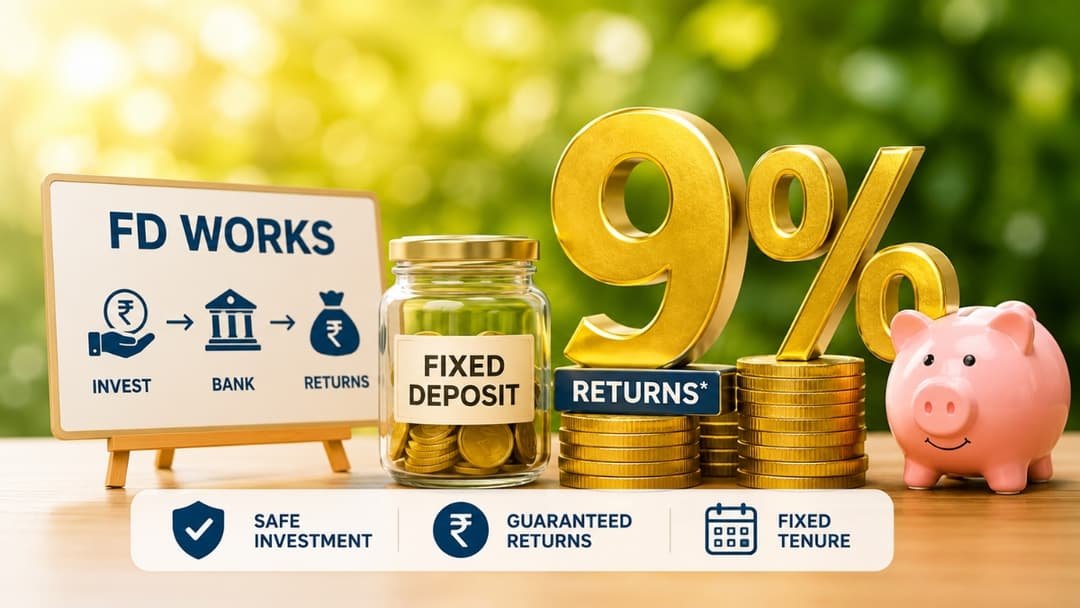

Mumbai, India — : Fixed Deposits (FDs) continue to remain one of the safest and most preferred investment options for Indian investors in 2026, especially amid global market volatility and uncertain economic conditions. While stock markets continue to fluctuate, FDs are offering guaranteed returns, capital protection, and stable income — making them highly attractive for retirees, conservative investors, and individuals seeking financial security.
As of May 2026, several financial institutions across India are still offering attractive FD interest rates ranging from 7% to over 9%, depending on the tenure, institution type, and investor category.
Small Finance Banks Leading the High-Interest Segment
India’s Small Finance Banks (SFBs) are currently offering some of the highest FD interest rates in the banking sector. Many SFBs are providing annual returns between 7.75% and 8.50% for regular customers and as high as 8.75% or more for senior citizens.
These higher returns are generally available for medium-term deposits ranging from one year to five years. Investors looking for better yields without entering risky market-linked investments are increasingly considering SFB fixed deposits.
In addition to competitive rates, deposits in Small Finance Banks are protected under the Deposit Insurance and Credit Guarantee Corporation (DICGC) insurance scheme, which covers up to ₹5 lakh per depositor per bank.
NBFCs Offering Returns Above 9%
Certain highly rated Non-Banking Financial Companies (NBFCs) are currently offering the highest FD returns in India, with interest rates crossing the 9% mark.
Well-established NBFCs are offering:
- Up to 9.10% annual returns for general investors
- Up to 9.35% for senior citizens
These rates are typically available for deposit tenures between two and three years.
However, financial experts advise investors to carefully evaluate the credit ratings, financial stability, and reputation of NBFCs before investing, as NBFC deposits do not carry the same level of security perception as traditional bank FDs.
Large Banks Continue to Prioritize Stability Over High Returns
India’s major public and private sector banks continue to attract investors who prioritize safety, trust, and extensive branch networks over maximum returns.
Typical FD Rates Offered by Large Banks:
Institution Type General Citizens Senior Citizens Preferred Tenure Small Finance Banks 7.75% – 8.50%+ 8.00% – 8.75%+ 1–5 Years Reputed NBFCs Up to 9.10% Up to 9.35% 2–3 Years Large Private Banks 7.00% – 7.75% Up to 7.75% 2–5 Years Public Sector Banks 6.00% – 6.75% 7.00% – 7.20% Flexible
Note: Interest rates are indicative and may change based on RBI policy decisions and institution-specific revisions.
Senior Citizens Continue to Benefit the Most
Senior citizens remain among the biggest beneficiaries of the current FD environment. Most banks and NBFCs are offering an additional 0.50% interest rate premium to investors aged 60 years and above.
This makes fixed deposits one of the most reliable retirement income tools in India today, particularly for pensioners seeking predictable monthly or quarterly income.
Additionally, senior citizens can claim tax deductions of up to ₹50,000 annually on FD interest income under Section 80TTB of the Income Tax Act.
Important Factors Investors Should Consider
Financial planners recommend that investors evaluate multiple factors before selecting an FD product:
1. Safety and Insurance
Deposits in scheduled banks are insured up to ₹5 lakh under DICGC coverage. Investors with larger amounts are advised to diversify funds across multiple banks.
2. Taxation
FD interest is fully taxable according to the investor’s income tax slab. Tax-saving FDs with a five-year lock-in period also qualify for deductions under Section 80C.
3. Liquidity Needs
Longer tenure FDs often provide higher returns, but premature withdrawals may attract penalties. Investors should align tenures with financial goals and emergency liquidity needs.
4. Interest Rate Outlook
Many economists believe the Reserve Bank of India could consider interest rate cuts later in 2026 if inflation remains under control. Investors locking in higher FD rates now may benefit if rates decline in the future.
Experts Recommend a Balanced FD Strategy
Financial advisors suggest that investors should avoid concentrating all their funds in a single institution type.
A balanced FD portfolio may include:
- Large banks for maximum security
- Small Finance Banks for higher yields
- Select highly rated NBFCs for enhanced returns
Such diversification can potentially help investors achieve blended annual returns between 7.5% and 8.5% while reducing overall risk exposure.
Bottom Line
Despite evolving market conditions, Fixed Deposits continue to offer Indian investors stability, predictable income, and peace of mind in 2026. With select institutions still offering returns above 9%, FDs remain a strong option for conservative and long-term savers seeking guaranteed growth without market volatility.
For investors willing to compare rates carefully and diversify wisely, the current FD environment presents one of the most attractive fixed-income opportunities seen in recent years.