

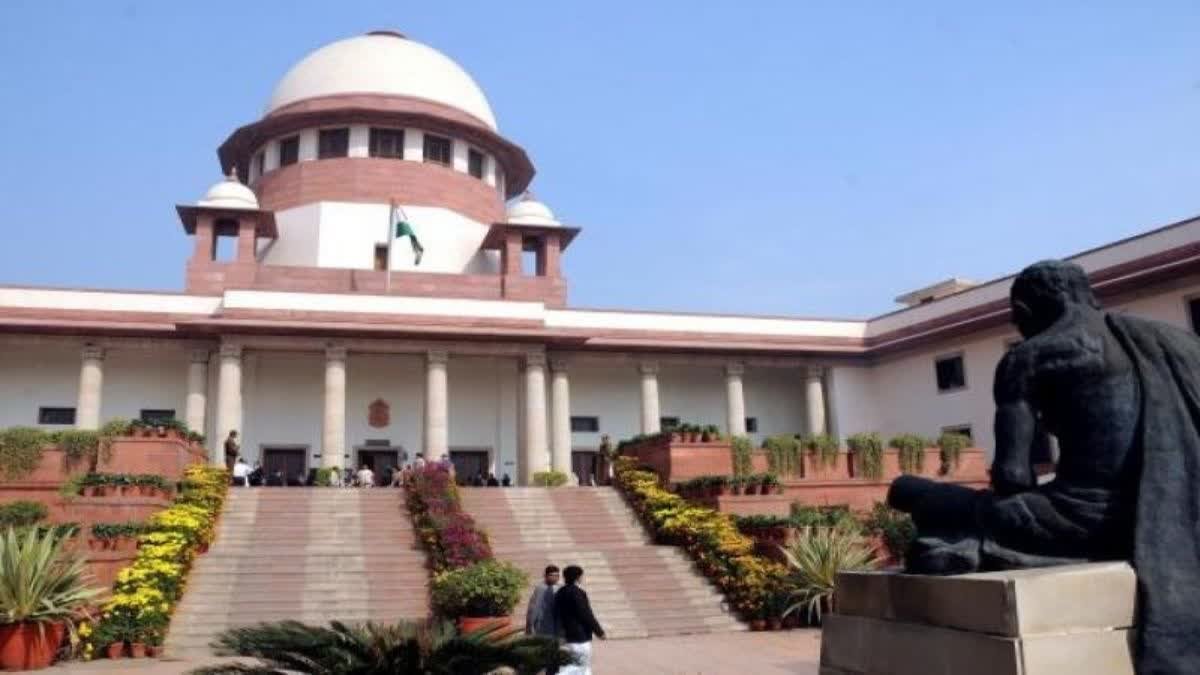

New Delhi : The Supreme Court of India has directed the Central Bureau of Investigation (CBI) to investigate the circumstances surrounding the custodial death of 34-year-old Shravan Suryavanshi in Chhattisgarh in January 2024. The court also directed the Chhattisgarh government to pay ₹25 lakh in compensation to the deceased man’s wife and children.
A bench comprising Justice Vikram Nath and Justice Sandeep Mehta said that, in the interest of justice, the circumstances surrounding Suryavanshi’s death while in custody required an independent investigation by the CBI.
The bench directed the CBI Director to ensure that a regular criminal case is registered against those responsible for Suryavanshi’s death. The investigation has been ordered to be conducted by a senior CBI officer and completed expeditiously. The investigating officer has also been directed to submit a report before the Supreme Court on the next date of hearing.
Court Questions Conduct of State Authorities
The Supreme Court strongly criticised the conduct of the concerned state authorities, particularly their failure to take appropriate action even after a judicial inquiry into the custodial death.
The court observed that the explanation that no police or disciplinary action was taken because the judicial inquiry report had not been forwarded to the police authorities appeared to be an attempt to cover up the matter and mislead the court.
According to the bench, the circumstances clearly indicated that an FIR should have been registered immediately and a proper investigation should have been conducted into Suryavanshi’s death. The court said the state authorities had deliberately and conveniently attempted to suppress the matter.
The court also noted that the post-mortem report was not placed before the High Court and that important information was brought on record only after directions were issued by the Supreme Court. The bench said this further reflected the delaying approach of the state authorities.
Supreme Court Orders CBI Investigation
The Supreme Court held that the circumstances surrounding the custodial death required an independent investigation and directed the CBI to determine the responsibility of the officials involved.
The court made it clear that if officials are found responsible for custodial violence or Suryavanshi’s death, appropriate criminal and legal action must be taken against them in accordance with law.
The Director General of Police, Chhattisgarh, has been directed to ensure that all records connected with the case are transferred to the CBI Director within one week through a special messenger.
The Supreme Court also said that the conduct of state officials who failed to take appropriate action despite the judicial inquiry would itself be examined as part of the CBI investigation.
Suryavanshi Was Arrested in an Excise Case
According to the Supreme Court’s order, Suryavanshi had been arrested in connection with an FIR registered in Bilaspur under the Chhattisgarh Excise Act, 1915.
The FIR alleged that he was found in possession of three bottles containing approximately six litres of raw ‘Mahua’ liquor, valued at around ₹1,200.
Suryavanshi was subsequently lodged in Bilaspur Central Jail.
On January 21, 2024, his health reportedly deteriorated while he was in custody, following which he was taken to a hospital for treatment. He died during treatment on January 22, 2024.
Since Suryavanshi died while in custody, the Jail Superintendent had written to the District and Sessions Judge requesting a judicial inquiry into the custodial death.
High Court Had Earlier Found Custodial Violence
The case reached the Supreme Court after Suryavanshi’s wife and children challenged an October 2024 judgment of the Chhattisgarh High Court.
The High Court had concluded that Suryavanshi had been subjected to custodial violence and that the violence was responsible for his unnatural death.
The petitioners had sought ₹50 lakh in compensation and appropriate action against the officials allegedly responsible for the custodial death.
However, the High Court awarded only ₹1 lakh in compensation and, according to the Supreme Court, failed to adequately address the request for action against those responsible for the custodial violence and death.
Supreme Court Increases Compensation to ₹25 Lakh
The Supreme Court observed that Suryavanshi was the sole earning member of his family and that his death had left his wife and children in difficult circumstances.
Taking into account the facts and circumstances of the case, the Supreme Court directed the State of Chhattisgarh to pay ₹25 lakh as compensation to the deceased’s wife and children.
The court’s order provides both financial relief to the family and a direction for a fresh investigation into the circumstances that led to Suryavanshi’s death.
Court Seeks Accountability
The Supreme Court emphasised that a death occurring while a person is in state custody demands serious scrutiny and accountability.
The bench made it clear that the CBI investigation should establish the complete chain of events leading to Suryavanshi’s death and identify any officials responsible for custodial violence, negligence, suppression of evidence or failure to take lawful action.
The court has also directed that the investigation be conducted expeditiously, with the CBI required to place its findings before the Supreme Court.
Key Points
- Victim: Shravan Suryavanshi, 34
- State: Chhattisgarh
- Custody: Bilaspur Central Jail
- Date of hospitalisation: January 21, 2024
- Date of death: January 22, 2024
- Cause under judicial findings: Custodial violence resulting in unnatural death
- Earlier High Court compensation: ₹1 lakh
- Compensation ordered by Supreme Court: ₹25 lakh
- Investigation agency: CBI
- CBI investigation: To be conducted by a senior officer
- Records to be transferred: Within one week
- Petitioners: Wife and children of Shravan Suryavanshi
- Original case: FIR under the Chhattisgarh Excise Act, 1915
The Supreme Court’s intervention has therefore put the custodial death case under an independent central investigation, while also directing compensation for the victim’s family and calling for accountability of officials who may have been responsible for the death or for failing to act after the judicial inquiry.