


By Sudhanva Deshpande
Penguin Random House is among the world’s largest publishing groups, but its recent decisions over books dealing with Indian politics and history have raised questions about editorial independence, censorship and the pressures faced by publishers.
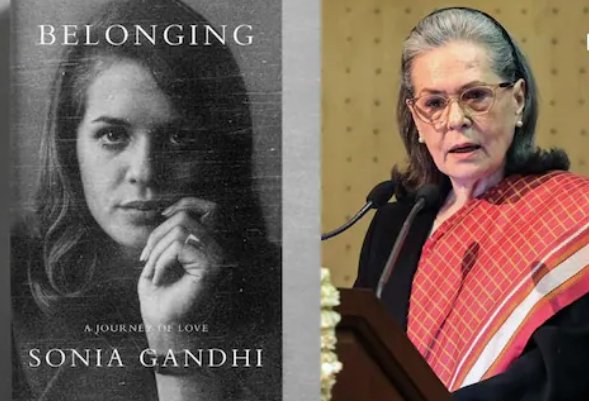
In an essay titled Penguins Shenanigans, theatre actor, director and LeftWord Books managing editor Sudhanva Deshpande argues that Penguin’s decision not to publish Sonia Gandhi’s memoir in India is part of a broader pattern involving books that are critical of the BJP, the RSS or the Narendra Modi government.
According to Deshpande, an imprint of Penguin Random House is publishing Gandhi’s memoir in the United States with an initial print run of 100,000 copies, while Penguin India declined to publish it. The memoir is instead being brought out in India by HarperCollins.
Deshpande describes the decision as commercially questionable, arguing that Gandhi’s position as a major Indian political figure would have made the memoir commercially significant even without the controversy surrounding its publication.
He further alleges that Penguin’s reference to legal advice was used to justify what he considers an attempt to restrict the contents of the memoir. These claims are Deshpande’s interpretation of the publisher’s decision.
Previous disputes involving Penguin
Deshpande points to several earlier instances to support his argument.
One concerns American journalist and cartoonist Joe Sacco’s graphic book The Once and Future Riot, which examines the communal violence in Muzaffarnagar, Uttar Pradesh, in 2013. According to Deshpande, Penguin withdrew from publishing the book, which was subsequently taken up by LeftWord Books.
He also refers to a book by former Army chief General V.K. Singh, saying Penguin had originally been associated with its publication before backing out.
Another prominent case cited by Deshpande involves historian Wendy Doniger’s The Hindus: An Alternative History. In 2014, Penguin India withdrew the book and agreed to destroy remaining copies following a legal dispute initiated by Dinanath Batra, an RSS-affiliated education activist. The book was later published in India by Speaking Tiger without changes to the text.
Deshpande argues that these cases raise broader questions about how publishers respond to legal threats and political controversy.
Golwalkar biography becomes another flashpoint
The essay also discusses historian Dhirendra K. Jha, who had signed a two-book agreement with Penguin.
Jha’s Gandhi’s Assassin was published by Penguin in 2022. According to Deshpande, difficulties arose over Jha’s subsequent biography of former RSS chief M.S. Golwalkar.
Deshpande says Penguin sought changes relating to references to Nazi Germany, Golwalkar’s 1939 book We, or Our Nationhood Defined, and documentation concerning an RSS camp in 1942.
Jha declined to make the requested changes, and the biography was eventually published by Simon & Schuster India.
The episode, Deshpande argues, illustrates what he sees as a distinction between legitimate editorial scrutiny and censorship. Penguin’s editorial reasoning in individual cases may involve legal, factual or other considerations, but Deshpande contends that the cumulative pattern deserves scrutiny.
Other publishers have also faced criticism
Deshpande says Penguin is not the only major publisher to have withdrawn from politically sensitive books.
He cites the case of Orient Blackswan, which, according to his account, set aside a book dealing with communalism and sexual violence in Gujarat on May 16, 2014, the day the results of the Lok Sabha election were announced.
He attributes that decision to legal pressure from Dinanath Batra, who had threatened legal action against the publisher.
These cases, Deshpande argues, demonstrate the difficulties authors and publishers can face when books address politically sensitive subjects.
Editorial due diligence or censorship?
A central argument in Deshpande’s essay concerns the use of terms such as “fact-checking”, “legal advice” and “editorial due diligence” when publishers withdraw or seek changes to controversial manuscripts.
He acknowledges that publishers have legitimate responsibilities to verify factual claims and assess legal risks, particularly when dealing with non-fiction.
However, he argues that such responsibilities should not become a mechanism for removing historically documented material simply because it may prove politically controversial.
His strongest criticism is directed at what he sees as a recurring reluctance among large publishers to take risks with books that challenge powerful political organisations or figures.
The role of small publishers
Deshpande also challenges the argument that large publishers have greater responsibilities because they employ larger workforces and have more to lose from legal or political confrontation.
He argues that smaller publishing houses can face substantially greater financial risks when confronted with lawsuits or government pressure.
According to him, independent publishers such as LeftWord Books often operate with considerably fewer financial and legal resources, yet have continued to publish works that larger companies have declined.
For Deshpande, this raises a larger question about the role of publishers in a democratic society.
Books, ideas and freedom of expression
The essay concludes with a broader defence of publishing as more than a conventional commercial enterprise.
Deshpande argues that books do not merely constitute products for sale; they carry ideas that influence public debate and social discourse. In his view, a healthy society requires space for competing viewpoints, including ideas that challenge established political or social positions.
He warns that repeated withdrawals of politically sensitive books can have consequences beyond individual publications by encouraging self-censorship among authors, editors and publishers.
“Penguins Shenanigans” therefore presents the controversy surrounding Sonia Gandhi’s memoir as part of a wider debate over publishing freedom in India.
The allegations and interpretations in the essay are those of Sudhanva Deshpande. Penguin Random House and Penguin India’s specific reasons for decisions concerning individual manuscripts should be considered separately from the broader argument advanced by the author.