


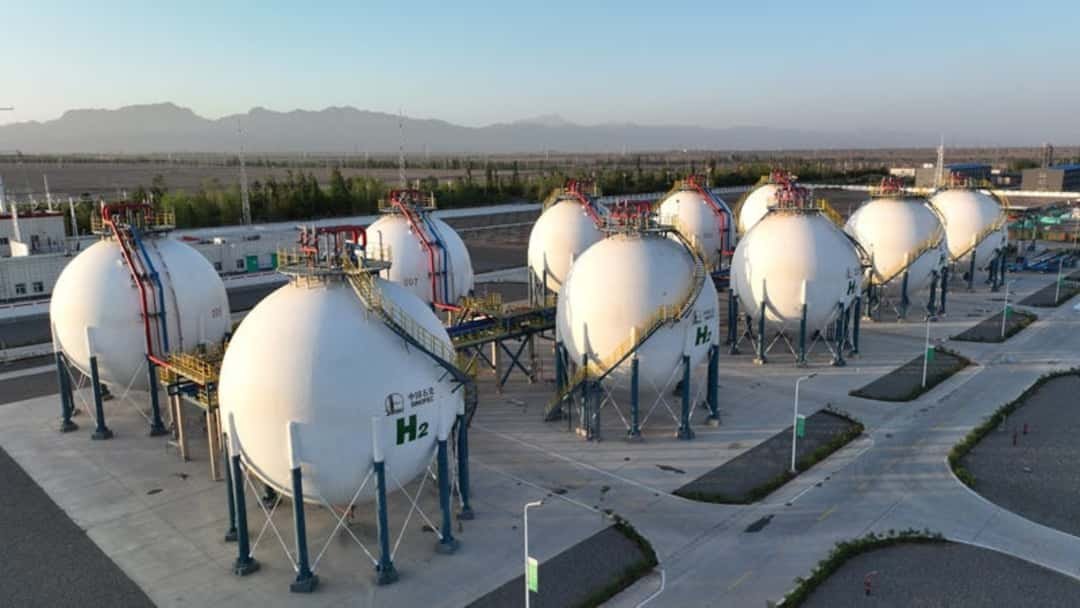

BEIJING, China — China has approved a series of four-year hydrogen energy pilot programs across five major city clusters, marking another significant step in the country’s efforts to accelerate clean energy adoption, strengthen domestic hydrogen supply chains, and expand the use of hydrogen-powered transportation and industrial technologies.
According to a government circular released Friday, the initiative will focus on hydrogen technology development, industrial applications, fuel cell vehicles, and hydrogen refueling infrastructure. The programs are jointly overseen by China’s Ministry of Industry and Information Technology (MIIT), Ministry of Finance (MOF), and National Development and Reform Commission (NDRC).
Under the initiative, participating city clusters could receive up to 1.6 billion yuan (approximately $238 million) each in central government reward funding over four years. The funding will be tied to program performance and is intended to support the commercial deployment of hydrogen energy applications while reducing costs for end users.
Five Major City Clusters Selected for Hydrogen Energy Development
The pilot initiative covers five geographical groupings designed to strengthen regional cooperation, expand industrial capabilities, and accelerate the commercialization of hydrogen technologies.
The selected clusters include:
1. Beijing-Tianjin-Hebei Region
The Beijing-Tianjin-Hebei region will focus on advancing hydrogen technology, developing industrial applications, and expanding the use of hydrogen-powered vehicles. The region’s established industrial base and research capabilities could help support the development and testing of hydrogen-related equipment, fuel cells, and supporting infrastructure.
2. Guangdong-Hong Kong-Macao Greater Bay Area
The Greater Bay Area, one of China’s most important manufacturing and technology centers, will play a key role in expanding hydrogen applications across industry and transportation. The region’s manufacturing ecosystem and transportation networks offer opportunities to develop hydrogen-powered commercial vehicles, industrial hydrogen projects, and refueling facilities.
3. Northeast China and the Yangtze River Delta
The first cross-regional group will connect northeastern China, including eastern Inner Mongolia, with the Yangtze River Delta. The partnership is intended to strengthen cooperation between hydrogen-producing regions and major industrial and commercial markets.
4. Xinjiang and the Chengdu-Chongqing Economic Circle
The second cross-regional group will link Xinjiang with the Chengdu-Chongqing economic circle. This arrangement could support closer coordination between energy resources, hydrogen production, industrial demand, and transportation applications across different parts of the country.
5. Yellow River Bend and the Central Plains
The fifth cluster will connect the Yellow River bend with the Central Plains. The initiative will seek to improve regional coordination in hydrogen production, industrial utilization, infrastructure development, and supply-chain integration.
By connecting multiple regions, China aims to build a more coordinated hydrogen economy rather than relying on isolated demonstration projects.
Four Priority Areas for Hydrogen Energy Development
The government circular directs participating cities to accelerate progress across four major areas.
1. Hydrogen Technology and Equipment Development
The first priority is to improve hydrogen-related technologies and equipment. This includes supporting technological innovation, strengthening domestic manufacturing capabilities, and improving the performance and reliability of equipment used in hydrogen production, storage, transportation, and utilization.
Developing competitive domestic technologies could help China lower equipment costs, improve operational efficiency, and strengthen its position in the global hydrogen industry.
2. Industrial Hydrogen Projects
The second priority is to expand hydrogen applications in industrial sectors. Hydrogen can serve as an industrial feedstock and, depending on how it is produced and used, may help reduce emissions in sectors where direct electrification is difficult.
Potential applications include chemical manufacturing, refining, steel production, and other energy-intensive industries. However, the climate benefits will depend heavily on the hydrogen production method, the electricity source used, and the emissions associated with the complete supply chain.
The pilot programs are expected to encourage practical industrial applications and help determine which projects can operate at commercially viable costs.
3. Promotion of Fuel Cell Vehicles
The third priority is to increase the adoption of hydrogen fuel cell vehicles, particularly in transportation applications where their operating characteristics may offer advantages.
Hydrogen fuel cell vehicles generate electricity through an electrochemical reaction between hydrogen and oxygen. Their main byproduct during operation is water, although their overall environmental impact depends on how the hydrogen is produced and delivered.
Fuel cell technology may be particularly relevant for selected heavy-duty applications, including trucks, buses, and fleet vehicles that require substantial operating range and relatively short refueling times.
China’s broader policy agenda includes a target of approximately 100,000 fuel cell vehicles nationwide by 2030, according to the policy described in the announcement.
4. Construction of Hydrogen Refueling Stations
The fourth priority is to accelerate the construction of hydrogen refueling stations.
A dependable refueling network is essential for increasing fuel cell vehicle adoption. Without sufficient stations, fleet operators may face higher operating costs, limited route flexibility, and concerns about the reliability of hydrogen supplies.
The pilot programs will support infrastructure development as part of a broader effort to connect hydrogen production, distribution, and end-user demand.
Up to 1.6 Billion Yuan in Funding for Each City Cluster
Financial support is a central component of the initiative.
Each participating city cluster can receive up to 1.6 billion yuan, equivalent to approximately $238 million, over the four-year pilot period. The maximum award is not an automatic payment; the allocation of central government reward funds will depend on evaluations of the programs’ performance.
The three ministries will assess progress and use the results to determine funding allocations.
The funding must be used exclusively to support hydrogen energy applications. One of its main objectives is to reduce the cost of hydrogen deployment for end users and encourage broader commercial adoption.
The performance-based approach is intended to connect public spending with measurable progress rather than simply financing the construction of projects.
Participating cities must also improve industrial and supply-chain coordination, strengthen project planning, promote the smooth circulation of goods and services within the domestic market, and avoid local protectionism that could prevent businesses and technologies from operating across regional boundaries.
In addition, authorities are required to strengthen safety management and conduct timely assessments of the programs’ economic, social, and environmental benefits.
China Targets 100,000 Fuel Cell Vehicles by 2030
The new pilot programs support China’s wider ambition to establish a larger domestic market for hydrogen-powered transportation.
Under a policy issued in March, China aims to have 100,000 fuel cell vehicles nationwide by 2030. Achieving this target will require coordinated development across vehicle manufacturing, hydrogen production, refueling infrastructure, and fleet operations.
Fuel cell vehicles currently face several challenges, including high vehicle costs, expensive hydrogen supplies, and an insufficient refueling network in many locations.
Government-backed pilot projects could help address these obstacles by concentrating investment in selected regions, encouraging fleet adoption, and creating stronger demand for hydrogen-related equipment and services.
Commercial viability, however, will depend on whether operating costs can become competitive with alternatives such as battery-electric vehicles, conventional fuels, and other low-carbon technologies.
China Remains the World’s Largest Hydrogen Producer and Consumer
China already occupies a leading position in the global hydrogen industry.
According to the figures cited in the announcement, the country produced more than 39 million metric tons of hydrogen in 2025, making it the world’s largest hydrogen producer and consumer.
Much of today’s hydrogen production is used in existing industrial processes. However, hydrogen produced using renewable electricity could create new opportunities to reduce emissions in sectors where other clean-energy solutions are difficult to implement.
The distinction between production methods is critical.
Green hydrogen is generally produced through water electrolysis powered by renewable electricity, such as solar or wind energy. When the electricity supply is genuinely low-carbon, this approach can significantly reduce emissions compared with conventional hydrogen production.
By contrast, hydrogen produced from fossil fuels without effective emissions controls can have a substantially higher carbon footprint. Hydrogen produced from fossil fuels with carbon capture may reduce emissions, but its overall climate performance depends on capture rates, energy requirements, methane leakage, and other factors.
China’s ability to expand lower-emission hydrogen production will therefore depend not only on increasing output but also on improving the carbon intensity and cost of production.
High Costs and Infrastructure Challenges Remain
Despite its potential, hydrogen energy faces several significant commercial and technical barriers.
High production costs remain a major obstacle, particularly for renewable hydrogen. Electrolyzers, renewable electricity, water treatment, and associated infrastructure can require substantial investment.
Storage and transportation also present challenges. Hydrogen has a low volumetric energy density under ordinary conditions, meaning it often requires compression, liquefaction, or conversion into another carrier for efficient transport and storage.
These processes consume energy and add costs to the supply chain.
Refueling infrastructure is another constraint. Building hydrogen stations requires specialized equipment, safety systems, reliable supplies, and sufficient customer demand to justify investment.
Furthermore, hydrogen is not automatically a zero-emission energy source. Its environmental benefits depend on the production pathway, energy inputs, transport requirements, and final application.
The pilot programs will therefore need to demonstrate that hydrogen technologies can deliver reliable performance and meaningful emissions reductions at an economically sustainable cost.
Implications for China’s Clean Energy Strategy
The five-cluster initiative reflects a shift toward developing hydrogen through coordinated regional ecosystems that connect production, industrial consumption, transportation, and infrastructure.
Rather than focusing exclusively on hydrogen production, the programs seek to support the complete chain from technology development to final use.
If successful, the initiative could strengthen China’s domestic hydrogen equipment industry, encourage wider deployment of fuel cell vehicles, and create opportunities for industrial applications that are difficult to decarbonize through direct electrification alone.
The program could also provide lessons about how public funding, regional cooperation, and performance-based incentives can accelerate the commercialization of emerging energy technologies.
However, the scale of its eventual impact will depend on implementation, funding efficiency, technology costs, infrastructure utilization, and the availability of genuinely low-emission hydrogen.
Global Significance
China’s hydrogen push comes as governments and industries worldwide explore alternatives to fossil fuels in heavy industry and transportation.
A successful expansion of China’s hydrogen ecosystem could increase demand for electrolyzers, fuel cells, hydrogen storage systems, refueling equipment, and other specialized technologies. It could also intensify competition among international manufacturers and influence global hydrogen supply chains.
For other countries, the initiative offers a potential example of how hydrogen development can be organized around industrial clusters and cross-regional cooperation. At the same time, differences in energy prices, infrastructure, industrial demand, and government support mean that the Chinese approach may not be directly transferable to every market.
The most important measure of success will be whether the pilot programs move beyond demonstration projects to deliver commercially viable hydrogen applications with verifiable environmental benefits.
Conclusion
China’s approval of four-year hydrogen energy pilot programs across five city clusters represents a significant policy commitment to expanding hydrogen applications in industry and transportation.
With up to 1.6 billion yuan in potential central government reward funding per cluster, the initiative aims to accelerate technology development, expand industrial projects, promote fuel cell vehicles, and build hydrogen refueling infrastructure.
The programs also support China’s broader ambition to reach 100,000 fuel cell vehicles by 2030 and strengthen its position in the global clean-energy industry.
Nevertheless, high costs, storage and transportation challenges, infrastructure requirements, and the need for lower-emission production remain substantial hurdles.
The long-term success of China’s hydrogen strategy will depend on whether these pilot programs can turn technological progress and government support into commercially competitive solutions that deliver measurable economic and environmental benefits.