

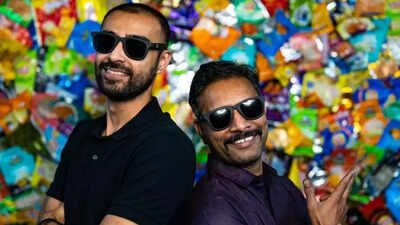

New Delhi: What most people throw away as useless trash has become a source of inspiration—and income—for Anish Malpani. In a remarkable example of sustainable entrepreneurship, Malpani managed to generate ₹11 lakh in revenue within just seven days by transforming discarded chips packets into stylish sunglasses.
Chips packets, often criticized for containing more air than chips, usually end up in landfills after use. But Anish Malpani saw opportunity where others saw waste. By recycling empty chips packets made of multi-layered plastic (MLP), he created fashionable eyewear that not only sells well but also helps protect the environment and support marginalized communities.
Anish Malpani, around 36 years old, was working in the United States after completing his BBA from the University of Texas. Despite having a stable and well-paying job, he decided to return to India. What triggered this life-changing decision was witnessing the harsh conditions of waste pickers working at the Deonar dumping ground in Mumbai. Determined to create social and environmental impact, he chose entrepreneurship over comfort.
In 2020, Malpani founded Ashaya Recyclers Private Limited, focusing on solving one of the biggest challenges in plastic waste management—recycling multi-layered plastic packaging. To tackle this, he hired a PhD holder in chemistry, and together they conducted extensive research to convert MLP waste into high-quality reusable material.
This innovation led to the launch of WITHOUT, a brand that produces sunglasses made entirely from recycled chips packets. WITHOUT claims to be the world’s first company to manufacture eyewear using recycled multi-layered plastic.
The response was overwhelming. During 2022–23, Anish sold around 500 pairs of sunglasses through his website, each priced at ₹500. Within just one week of launch, the company recorded a revenue of ₹11 lakh—an impressive achievement for a sustainability-driven startup.
Beyond profits, Malpani’s initiative provides livelihood opportunities to waste collectors and contributes to reducing plastic pollution. His journey stands as a powerful reminder that meaningful business ideas can emerge from the most unexpected places—and that waste, when reimagined, can truly turn into wealth.