


On-Site Inspection Finds No Evidence of Coal or Waste Discharge as Alleged in Social Media Video
SURGUJA, CHHATTISGARH — A claim circulating on social media alleging that water from a mining site was carrying coal and other waste materials outside the mine has come under scrutiny following an on-site inspection. The ground-level inspection found a situation that was significantly different from what was being claimed in the viral video.
The video, which was widely circulated on social media, reportedly suggested that coal and other waste materials were being discharged along with water from the mining area. The claim triggered discussion among local residents and drew attention to the alleged discharge.
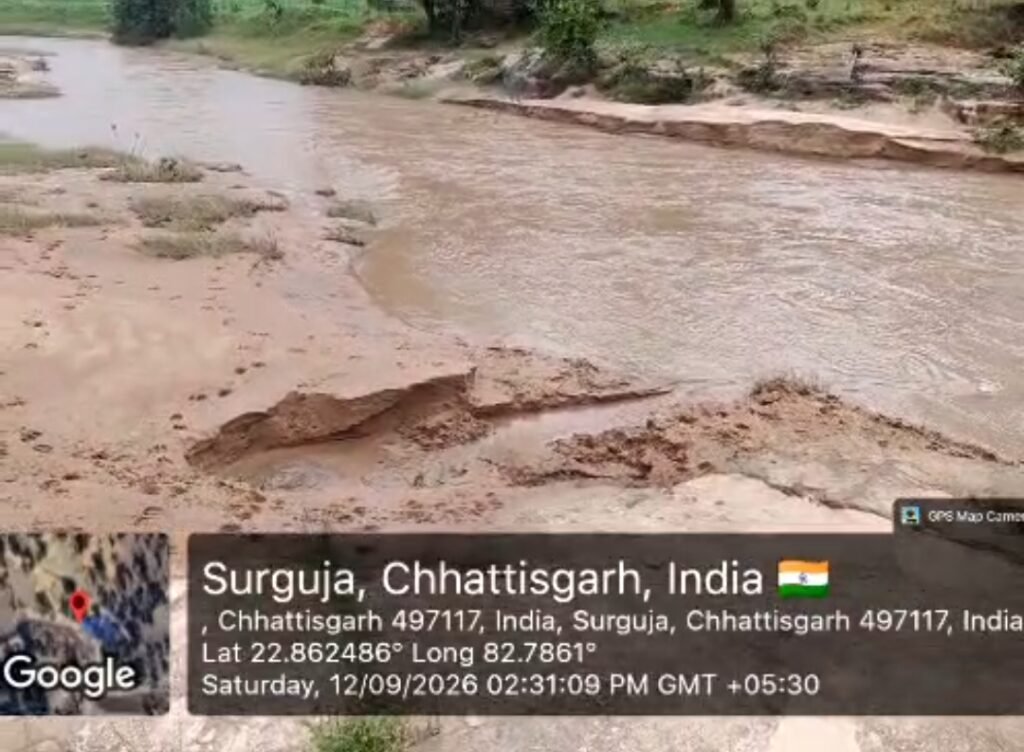
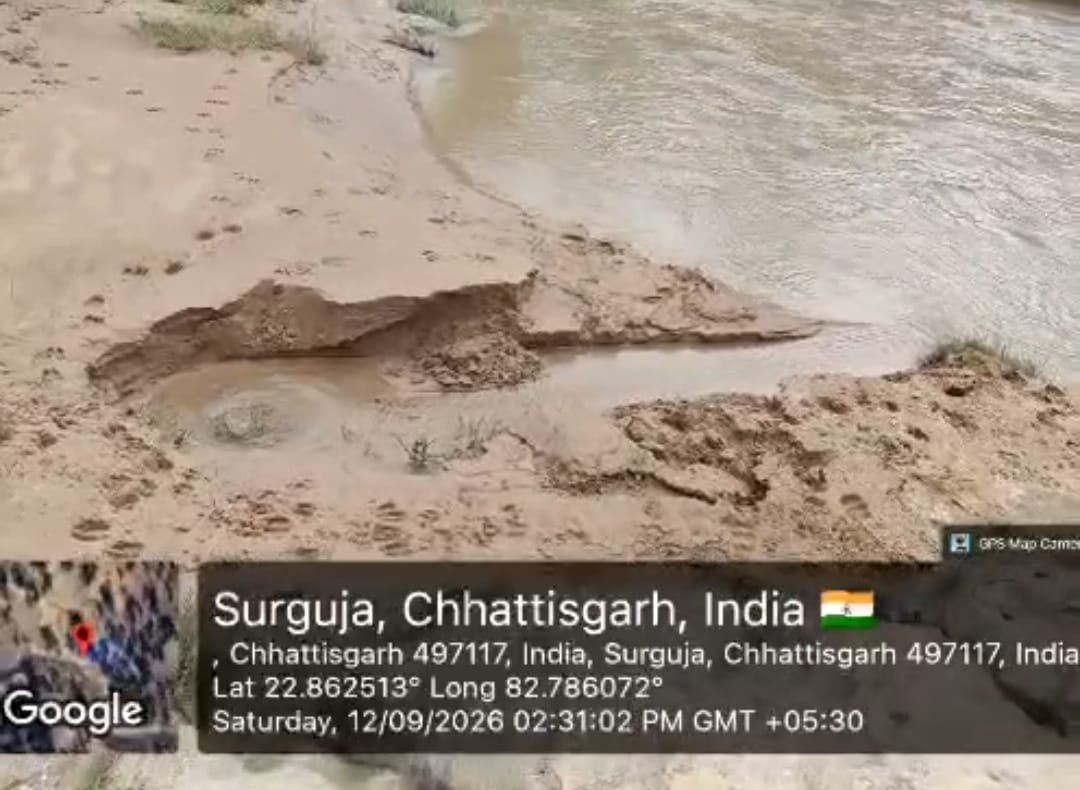
To determine the actual situation on the ground, the location shown in connection with the claim was inspected directly. During the inspection, the water at the site was found to be clear, and no visible coal, solid waste, or other waste material was observed flowing along with the water.
The condition at the site was also recorded on video during the inspection to document the situation as it appeared at the time of the visit.
Ground Reality Differs From Viral Claim
The viral video and the claim accompanying it presented an image of mining water allegedly carrying coal and waste material out of the site. However, the direct inspection did not confirm those allegations.
At the time of the inspection, the water appeared clean and normal, with no visible signs of coal particles or other waste being discharged through the water. No scene was observed that could independently establish the claim that coal or waste was being deliberately released along with the mine water.
The difference between the social media claim and the conditions observed during the physical inspection raises questions about whether the viral video may have been shared without sufficient context.
However, the findings of a single on-site inspection should be understood as a record of the conditions observed at that particular time and location and should not, by themselves, be treated as a comprehensive environmental assessment.
On-Site Verification Helps Clear the Confusion
The incident once again highlights the importance of fact-checking viral content before accepting it as established fact.
Videos and photographs can spread rapidly through social media, often reaching thousands of people before their source, date, location, or context has been independently verified. In some cases, old footage, footage from another location, or selectively presented visuals can create a misleading impression.
In this case, the on-site inspection provided an opportunity to compare the claim circulating online with the actual conditions observed at the location.
The inspection found clear water and did not identify any visible flow of coal or waste material along with the water. As a result, the specific allegation made in connection with the viral video could not be confirmed during the inspection.
Importance of Independent Verification
The episode underlines the need for independent verification whenever serious allegations are made through social media.
Claims involving mining operations, environmental pollution, water contamination, or waste disposal can have significant implications for local communities and public perception. Such claims therefore require careful verification rather than conclusions based solely on a viral photograph or video.
A responsible approach involves checking the location, circumstances, timing, and available evidence before drawing conclusions.
The physical inspection in this case helped bring forward the ground reality observed at the site, which differed from the impression created by the viral claim.
Facts, Not Rumors, Should Guide Public Discussion
The incident serves as a reminder that virality does not establish authenticity. A video becoming popular online does not automatically mean that every claim associated with it is accurate.
Residents and social media users are therefore encouraged to verify information before forwarding or sharing it. Where possible, claims should be checked against direct evidence, reliable sources, and on-site verification.
At the same time, any allegation involving possible environmental violations should be examined through appropriate official and scientific channels, including relevant authorities and proper water or environmental testing where necessary.
For now, the on-site inspection found clear water and no visible evidence of coal or waste being carried out with the water, meaning that the specific claim circulating with the viral video was not confirmed at the time of inspection.
The incident ultimately reinforces a simple principle: social media claims should be verified before they are treated as facts. In matters affecting the public and the environment, evidence and ground-level verification must take priority over rumors and unverified content.