

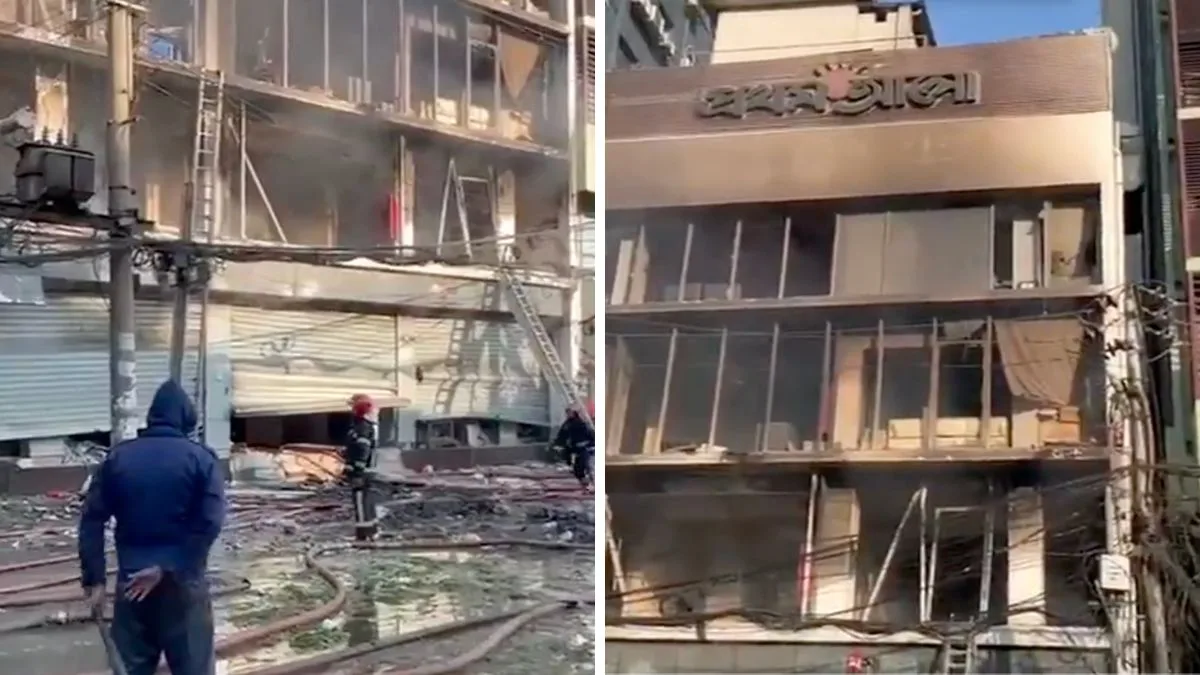

Dhaka: The killing of Sharif Osman Hadi has plunged Bangladesh into renewed street unrest, sparking widespread protests, anti-India slogans, and violent attacks on media establishments across Dhaka and several other cities. The incident has intensified political tensions and raised concerns about law and order in the country.
10 Points to Understand What’s Unfolding in Bangladesh
- Who was Sharif Osman Hadi?
Sharif Osman Hadi was a politically active figure whose death has become a rallying point for opposition groups and student organizations. - Circumstances of the killing:
Hadi was reportedly killed under controversial circumstances, with protesters accusing state agencies and ruling-party affiliates of involvement. Authorities have promised an investigation. - Immediate public reaction:
News of Hadi’s killing triggered spontaneous demonstrations, particularly among youth and student groups, which quickly escalated into large-scale street protests. - Anti-India sentiment resurfaces:
Protesters have raised anti-India slogans, accusing New Delhi of interfering in Bangladesh’s internal affairs and backing the current government. - Attacks on media houses:
Several television stations, newspaper offices, and digital media platforms were vandalized, with journalists reporting intimidation and physical assaults. - Role of social media:
Videos and posts related to Hadi’s killing spread rapidly online, fueling anger and mobilizing protesters across multiple cities. - Government response:
The government has imposed heightened security measures, deployed additional police forces, and warned against violence, while appealing for calm. - Opposition allegations:
Opposition parties have termed Hadi’s killing a “political murder” and are demanding accountability, resignations, and international scrutiny. - Impact on press freedom:
Media watchdogs have expressed concern over growing attacks on journalists, calling the situation a serious threat to press freedom in Bangladesh. - Regional and diplomatic implications:
The anti-India protests have added a diplomatic dimension to the unrest, potentially affecting Bangladesh–India relations amid an already tense political climate.
Conclusion
The killing of Sharif Osman Hadi has acted as a catalyst for deeper political frustrations in Bangladesh, exposing fault lines related to governance, freedom of expression, and foreign relations. As protests continue, the coming days will be crucial in determining whether the unrest subsides or escalates further.