

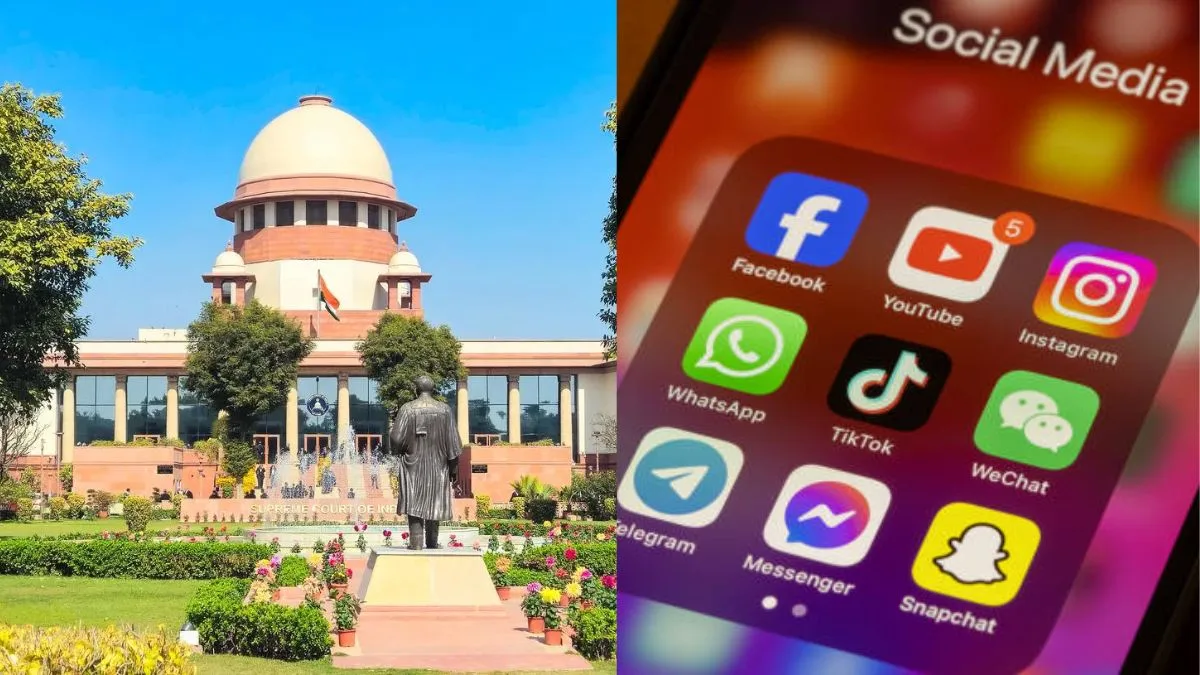

NEW DELHI, India — The Supreme Court of India has emphasized the importance of balancing children’s online safety with their freedom to access the internet, suggesting that technology-based safeguards, such as a dedicated ‘child mode’ for social media accounts, could offer a more effective solution than imposing blanket restrictions on children’s internet access.
The court’s observations highlight the growing debate over how to protect children from online risks without limiting their access to education, information, communication, and other opportunities available through digital platforms.
Rather than treating internet access itself as a threat, the approach outlined in the reported observations points toward creating safer digital environments in which children can explore the online world with appropriate protections.
The suggestion comes amid increasing concerns about cyberbullying, online exploitation, harmful content, excessive screen time, and the effects of social media on children’s mental and emotional well-being.
Supreme Court Emphasizes Balance Between Safety and Freedom
The central message of the court’s reported observations is that children’s safety and their freedom to access the internet do not necessarily have to conflict with each other.
Children increasingly depend on digital platforms for schoolwork, educational resources, creative activities, communication, and access to information. Restricting internet access entirely could also prevent them from benefiting from these opportunities.
At the same time, children may be more vulnerable than adults to inappropriate content, online manipulation, cyberbullying, privacy violations, and other digital risks.
The challenge for policymakers, technology companies, parents, and educators is therefore to establish safeguards that address these dangers without unnecessarily denying children access to useful online resources.
The court’s suggested approach favors considering protective measures that are tailored to children’s needs rather than automatically excluding them from digital spaces.
What Is ‘Child Mode’ on Social Media?
One of the measures suggested by the court is a ‘child mode’ for social media accounts.
In principle, such a feature could provide children with a more controlled online experience while allowing them to use digital platforms for age-appropriate purposes.
Depending on how it is designed and implemented, a child mode could include several protective features.
1. Age-Appropriate Content
Social media platforms could limit children’s exposure to content that is unsuitable for their age. This could involve stronger content filters and restrictions on material involving violence, sexual exploitation, or other harmful subjects.
2. Stronger Privacy Settings
Children’s accounts could use stricter default privacy settings to limit the collection and public exposure of personal information.
These safeguards could reduce the risk of strangers accessing sensitive details about a child’s identity, location, school, or daily activities.
3. Restrictions on Unwanted Contact
A child-focused account could limit messages, friend requests, and other forms of contact from unknown users.
Such measures could help reduce the risk of grooming, harassment, cyberbullying, and other forms of online abuse.
4. Controls on Screen Time and Notifications
Platforms could provide tools to manage usage time, reduce unnecessary notifications, and encourage healthier digital habits.
These features could help children balance online activities with sleep, exercise, schoolwork, and offline social interaction.
5. Age-Appropriate Recommendations
Recommendation systems could be designed to reduce the promotion of harmful or unsuitable material to younger users.
Platforms could also introduce stronger safeguards against algorithmic recommendations that encourage excessive engagement or repeatedly expose children to disturbing content.
These are potential features of a child-focused system, not a confirmed list of measures ordered by the Supreme Court.
Why Blanket Restrictions Could Be Problematic
A blanket restriction would limit children’s internet access broadly, potentially preventing them from using both beneficial and harmful online services.
The internet has become an important resource for learning, particularly for students who depend on digital libraries, online classes, educational videos, and interactive learning tools.
It also provides opportunities for children to develop digital literacy, explore their interests, communicate with others, and access information about the world around them.
A broad prohibition could disproportionately affect children who rely on online resources because of limited access to physical libraries, educational institutions, or other learning facilities.
However, unrestricted access also carries risks, particularly when platforms lack effective age-appropriate protections.
The approach suggested by the court points toward protecting children within the digital environment rather than assuming that denying access is the only way to keep them safe.
The effectiveness of such an approach would depend on the quality of safeguards, how consistently platforms enforce them, and whether children and parents understand how to use the available controls.
Growing Concerns About Children’s Online Safety
The debate over children’s internet access has become increasingly important as social media and digital communication platforms play a larger role in everyday life.
Several concerns have drawn attention from parents, educators, child-protection experts, and policymakers.
Cyberbullying: Children may experience harassment, humiliation, threats, or social exclusion through online platforms.
Exposure to harmful content: Algorithms, search results, and user-generated material can expose young users to content that is inappropriate for their age.
Online exploitation: Predators may attempt to establish contact with children, manipulate them, or obtain personal information and images.
Privacy and data collection: Children may not fully understand how platforms collect, store, analyze, or share their personal information.
Mental health and well-being: Excessive social media use, online comparison, sleep disruption, and pressure to maintain a digital identity can affect children’s well-being.
Addictive design and excessive use: Continuous feeds, notifications, and engagement-driven features can encourage prolonged screen time.
These concerns demonstrate why online safety requires a combination of technological safeguards, age-appropriate education, parental guidance, and effective accountability for digital platforms.
Role of Social Media Companies
The reported suggestion of a child mode also places attention on the responsibilities of social media companies.
Platforms could be expected to consider how their products are designed for younger users, what safeguards are enabled by default, and whether their systems adequately address risks faced by children.
A meaningful child mode would need to offer more than a simple label on an account. Its protections would have to work in practice.
For example, age-appropriate content controls would need to be effective, privacy settings would need to be understandable, and restrictions on unwanted contact would need to be enforced consistently.
Platforms would also need to consider how they verify age without collecting excessive amounts of sensitive personal information.
Another challenge is ensuring that children cannot easily bypass safeguards by changing account settings or creating unrestricted accounts.
Privacy, child protection, and access to information must be considered together when developing such systems.
The court’s reported observations do not, by themselves, establish a specific technical standard or confirm that a nationwide child-mode requirement has been formally ordered.
What It Could Mean for Parents and Children
For parents, the discussion reinforces the importance of helping children develop safe and responsible online habits rather than relying exclusively on prohibitions.
Parents can take practical steps to improve online safety by:
- Enabling available age-appropriate settings and parental controls.
- Reviewing account privacy settings with their children.
- Discussing cyberbullying, online scams, and suspicious messages.
- Teaching children not to share passwords, precise locations, or sensitive personal information with strangers.
- Encouraging children to report uncomfortable interactions without fear of punishment.
- Establishing reasonable screen-time routines that protect sleep, education, and offline activities.
Children should also understand that they can seek help from a trusted adult if someone threatens them, requests inappropriate images, or attempts to manipulate them online.
At the same time, safety measures should be appropriate to a child’s age and maturity. Open communication can help children recognize risks and make better decisions as they gain independence.
Implications for India’s Digital Policy
The Supreme Court’s reported observations contribute to a broader discussion about the relationship between digital rights, child protection, privacy, and platform responsibility.
India has a large and growing population of young internet users, making the design of age-appropriate digital services an important policy consideration.
A child-mode approach could encourage discussions about whether online platforms should provide stronger default protections for minors, improve age-assurance systems, and give families clearer controls over children’s digital experiences.
Any such policy would need to consider practical questions, including how age is verified, how children’s personal information is protected, and how safeguards can be applied without unnecessarily blocking educational or other beneficial content.
Policymakers would also need to consider the needs of children from different socioeconomic backgrounds, including those who rely on shared devices or have limited access to digital education.
The wider challenge is to develop measures that are effective, proportionate, and compatible with children’s interests and rights.
Conclusion
The Supreme Court’s reported emphasis on balancing children’s online safety with their freedom to access the internet highlights an important question for India’s digital future.
A safer internet for children does not necessarily require a complete restriction on their online access. Features such as a dedicated child mode could provide one way to reduce exposure to harmful content, strengthen privacy, limit unwanted contact, and encourage healthier digital habits.
However, the success of this approach would depend on effective implementation, responsible platform design, appropriate safeguards, and cooperation among parents, schools, technology companies, and authorities.
The broader message is that children should be protected from online harm while retaining meaningful opportunities to learn, communicate, and explore the digital world.
Editorial note: This report is based on the supplied summary of the court’s observations. The specific case details, the date and context of the hearing, the exact judicial remarks, and whether any binding directions were issued have not been independently verified. The proposed child-mode features are illustrative possibilities, not confirmed court-mandated requirements.