
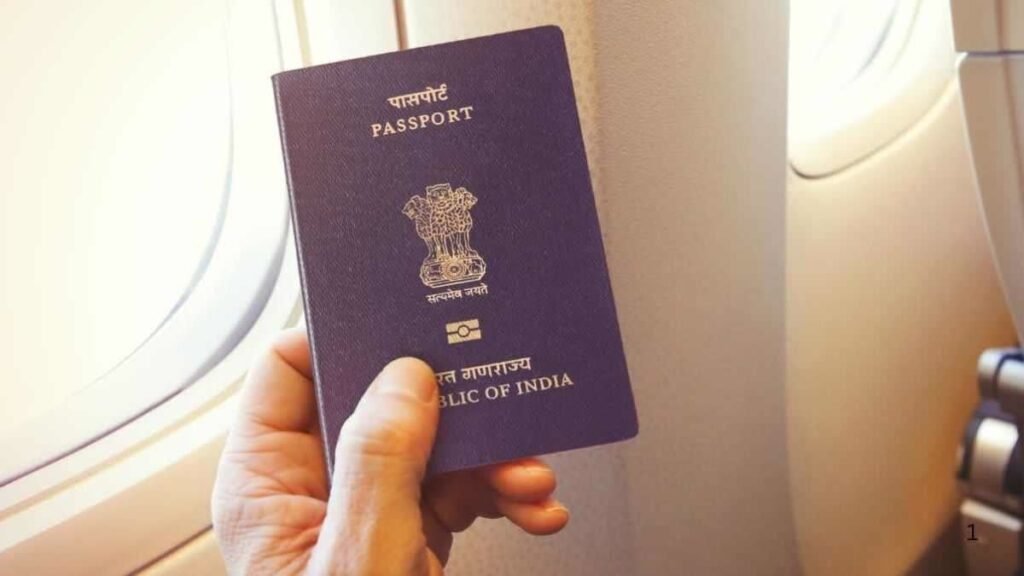
Hyderabad, India |The Henley Passport Index 2026 has revealed a significant setback for the Indian passport, which has fallen six places to 81st in the latest global rankings. The report, released during the index’s 20th anniversary, highlights shifting trends in global mobility, diplomacy, and visa-free travel, while also exposing the widening gap between the world’s strongest and weakest passports.
According to the latest rankings, Indian passport holders can now travel to 55 countries without obtaining a visa in advance, either through visa-free entry or visa-on-arrival facilities. Earlier in February 2026, India was ranked 75th, making this one of the country’s most notable declines in recent years.
Singapore Retains World’s Most Powerful Passport
Singapore has once again secured the No. 1 position, with its citizens enjoying visa-free access to 192 destinations worldwide. The country’s strong diplomatic ties and extensive international agreements continue to make it the global leader in passport strength.
A major highlight of the report is the remarkable rise of the United Arab Emirates (UAE). The UAE has climbed from 62nd place in 2006 to 2nd place in 2026, marking one of the most dramatic improvements in the history of the rankings. Emirati passport holders can now travel to 188 countries without requiring a prior visa. The UAE shares the second position with Japan and South Korea.
India’s Decline Reflects Limited Global Mobility
The Henley Passport Index measures passport strength based on the number of destinations citizens can enter without obtaining a visa before travel. India’s decline to 81st place indicates a reduction in its international travel freedom compared with many other nations.
Although Indian citizens continue to benefit from visa-free or visa-on-arrival access to 55 destinations, the country’s overall ranking has weakened due to slower growth in international visa-waiver agreements.
United States and United Kingdom Lose Momentum
The report also shows that traditional passport powerhouses such as the United States and the United Kingdom are no longer dominating the rankings as they once did.
The United Kingdom has improved slightly to 6th place, supported by additional visa-free arrangements with countries including China and Malawi.
Meanwhile, the United States remains at 10th place. Analysts suggest that America’s relatively cautious approach toward expanding visa-free entry for foreign nationals has resulted in fewer reciprocal agreements from other countries, limiting the strength of the U.S. passport.
Growing Gap Between Strongest and Weakest Passports
The report highlights an increasing divide between countries with strong diplomatic influence and those facing political or economic instability.
- In 2006, the difference between the world’s strongest and weakest passports was 118 visa-free destinations.
- In 2026, that gap has widened to a record 170 destinations, reflecting growing global inequality in international mobility.
At the bottom of the rankings is Afghanistan, whose passport allows visa-free or visa-on-arrival access to only 22 countries, making it the world’s weakest passport.
Other countries experiencing declines include Bangladesh, Nigeria, The Gambia, Mali, and Bolivia, with Bolivia falling dramatically from 29th to 63rd place.
Global Peace Declines Despite Increased Travel Freedom
One of the report’s most striking observations is the contrast between global peace and travel freedom.
According to the Global Peace Index 2026, peace levels have deteriorated in 119 of 163 countries since 2008, while approximately 103 countries have experienced internal or external conflicts during the past five years.
Despite this decline in global stability, international travel access has generally expanded.
For example, Israel, despite ranking 159th in the Global Peace Index due to ongoing regional conflicts, holds the 18th strongest passport in the world.
Similarly, the United States and Ukraine possess passports that are significantly stronger than their peace rankings might suggest.
On the other hand, Bhutan, considered one of the world’s most peaceful nations with a 16th-place peace ranking, stands only 88th in passport strength because of limited visa-waiver agreements and relatively modest diplomatic outreach.
Key Highlights
- India falls to 81st place in the Henley Passport Index 2026.
- Indian passport holders enjoy visa-free or visa-on-arrival access to 55 countries.
- Singapore remains the world’s strongest passport with access to 192 destinations.
- UAE reaches 2nd place, completing a remarkable 60-place rise since 2006.
- United States ranks 10th, while the United Kingdom moves to 6th.
- Afghanistan remains the world’s weakest passport, with access to only 22 destinations.
- The gap between the strongest and weakest passports has expanded to a record 170 destinations, highlighting growing global inequality in international mobility.
The Henley Passport Index 2026 demonstrates that while international travel opportunities continue to expand for many countries, passport strength remains closely linked to diplomatic influence, global partnerships, and foreign policy rather than economic development or domestic peace alone.