

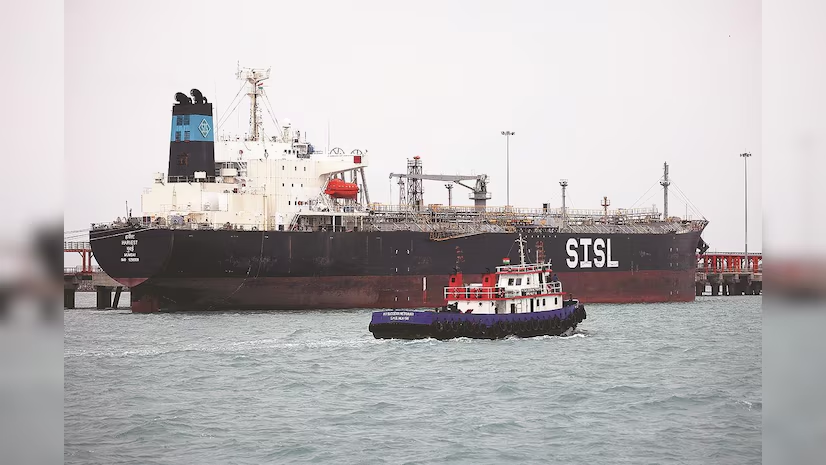

Ahmedabad / Gujarat, India’s leading export-oriented state, is witnessing a significant slowdown in its outbound trade, with exports declining for the third consecutive year. While the state continues to top national rankings for industrial development and business-friendly policies, weakening petroleum product exports have exposed the risks of excessive dependence on a single sector.
Despite recently securing the top position in NITI Aayog’s Investor Friendliness Index, Gujarat’s export performance has softened since FY24, highlighting the need for greater diversification in its export basket.
India’s Export Leader Faces New Challenges
For decades, Gujarat has been regarded as one of India’s strongest economic engines, supported by a robust manufacturing base, world-class ports, petrochemical industries, and export-oriented infrastructure.
Historically, Maharashtra was India’s largest exporting state until FY20, with Gujarat ranking second. However, beginning in FY21, Gujarat overtook Maharashtra to become the country’s leading exporter.
The state’s exports experienced remarkable growth during the post-pandemic recovery period.
According to available trade data:
- FY21 Exports: USD 60.59 billion
- FY22 Exports: USD 124.41 billion
- FY23 Exports: USD 146.49 billion (record high)
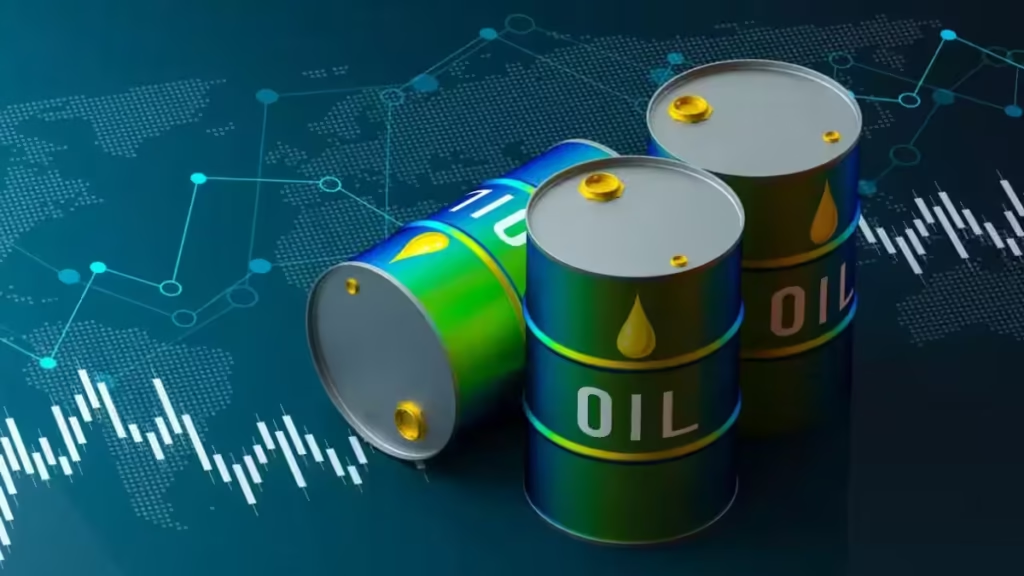
The sharp increase was primarily driven by a boom in petroleum product exports, supported by strong global energy demand and elevated international crude oil prices.
Exports Decline for Three Consecutive Years
After reaching a historic peak in FY23, Gujarat’s export momentum began to weaken.
Since the beginning of FY24, the state’s exports have fallen by approximately 24.5%, declining to USD 110.58 billion in FY26.
The sustained decline reflects softer global demand, lower petroleum prices, and changing international trade dynamics that have particularly affected refined petroleum exports.
Petroleum Sector Drives Both Growth and Risk
Industry experts note that Gujarat’s export performance has long been closely linked to its petroleum refining and petrochemical industries, making the state vulnerable to fluctuations in global energy markets.
While petroleum exports helped Gujarat achieve record export levels in recent years, the same dependence has now become a major source of weakness as international demand and prices have moderated.
The slowdown illustrates the challenges of relying heavily on a single export category, especially one closely tied to volatile global commodity markets.
Share in India’s Exports Falls
As exports have slowed, Gujarat’s contribution to India’s overall merchandise exports has also declined.
The state’s share in national exports has fallen from:
- 32.74% in FY23
- To 25.57% in FY26
Although Gujarat remains India’s largest exporting state, the decline signals increasing competition from other manufacturing and export-oriented states while highlighting the need to broaden its industrial base.
Strong Investment Climate Remains Intact
Despite weaker export numbers, Gujarat continues to maintain a strong reputation among investors.
The state recently topped NITI Aayog’s Investor Friendliness Index, reflecting its strengths in:
- Ease of Doing Business
- Industrial Infrastructure
- Policy Stability
- Efficient Governance
- Logistics and Port Connectivity
- Manufacturing Ecosystem
Its extensive network of ports, industrial corridors, and special economic zones continues to attract domestic and international investment.
Need for Export Diversification
Economists believe the current slowdown presents an opportunity for Gujarat to diversify beyond petroleum-based exports.
Potential growth sectors include:
- Engineering Goods
- Chemicals and Specialty Chemicals
- Pharmaceuticals
- Textiles and Technical Textiles
- Automobiles and Auto Components
- Renewable Energy Equipment
- Electronics Manufacturing
- Food Processing and Agro Exports
Diversification could help reduce exposure to commodity price cycles while strengthening long-term export resilience.
Global Headwinds Affect Trade
The decline in exports also reflects broader international challenges, including:
- Slowing global economic growth
- Lower energy prices
- Geopolitical uncertainties
- Weak external demand
- Changing international supply chains
These factors have affected export-oriented economies worldwide, particularly those with significant exposure to energy and commodity markets.
Outlook
While Gujarat continues to be India’s leading export state and a preferred investment destination, the recent decline in outbound shipments underscores the importance of building a more diversified export portfolio.
With strong industrial infrastructure, investor-friendly policies, and continued manufacturing expansion, the state remains well-positioned to regain export momentum. However, reducing dependence on petroleum exports and promoting high-value manufacturing sectors will be critical to sustaining long-term growth and strengthening Gujarat’s role in India’s global trade ambitions.