
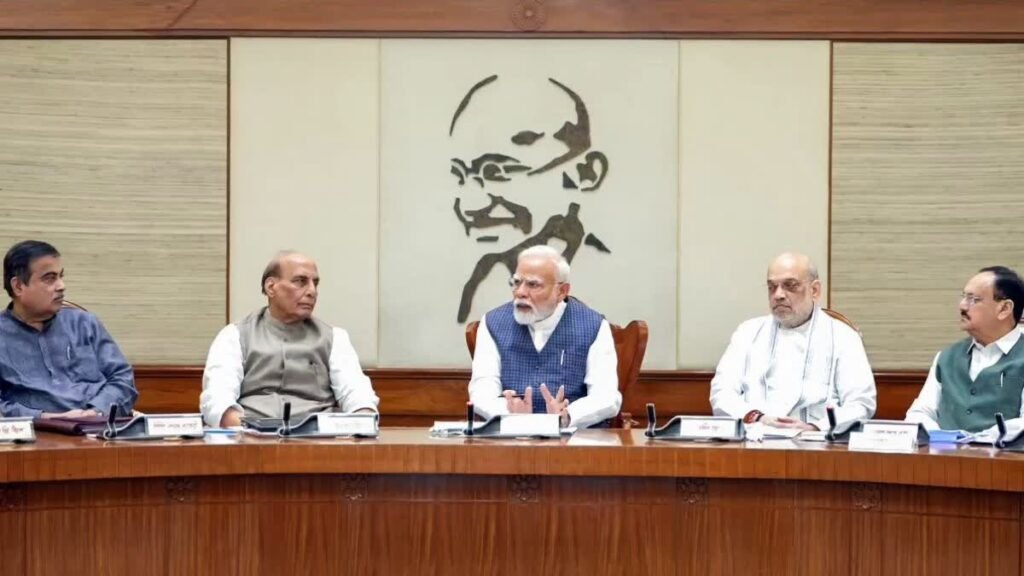
New Delhi, India | The Union Cabinet, chaired by Prime Minister Narendra Modi, has approved a draft bill aimed at imposing stricter penalties for public examination paper leaks and organized cheating. The proposed legislation is designed to strengthen the legal framework against examination fraud and protect the integrity of India’s recruitment and competitive examination system.
The move comes just hours after Prime Minister Modi emphasized the government’s commitment to taking strong action against those involved in paper leak scandals, which have affected several major public examinations in recent years.
Key Provisions of the Draft Bill
According to government sources, the proposed legislation includes severe punishments for individuals and organized groups involved in leaking examination papers or manipulating public examinations.
The draft bill proposes:
- Up to 10 years of imprisonment for those involved in organized paper leak operations.
- A fine of up to ₹100 million (₹10 crore) for organized examination fraud.
- Strict legal action against criminal networks involved in cheating.
- Measures to strengthen the security and transparency of public examinations.
The bill is expected to be introduced in Parliament during the upcoming session next week.
Background
The proposed legislation builds upon the Public Examinations (Prevention of Unfair Means) Act, 2024, which was enacted following nationwide outrage over alleged NEET and UGC-NET examination paper leak controversies.
Before the 2024 law, India did not have a comprehensive national legal framework specifically addressing unfair practices in centrally conducted public examinations.
The legislation covers examinations conducted by major government agencies, including:
- Union Public Service Commission (UPSC)
- Staff Selection Commission (SSC)
- National Testing Agency (NTA)
- Railway Recruitment Boards
- Banking Recruitment Agencies
- Other central government recruitment bodies
Administrative Changes in the Education Ministry
Alongside the cabinet decision, the government announced an important administrative appointment.
Naresh Pal Gangwar, a 1994-batch Indian Administrative Service (IAS) officer from the Rajasthan cadre, has been appointed as the new Secretary of the Department of Higher Education, replacing Vineet Joshi.
The appointment is expected to support ongoing reforms in India’s higher education and examination systems.
Americans React to India’s Tougher Anti-Cheating Measures
Reacting to the cabinet’s decision, Michael Anderson, an education policy analyst from Washington, D.C., said:
“Maintaining the integrity of public examinations is essential for any country. Strong penalties can serve as a deterrent against organized examination fraud and help restore public confidence in the recruitment process.“
Meanwhile, Jennifer Collins, an education researcher from Boston, Massachusetts, commented:
“Fair and transparent examinations are the foundation of merit-based recruitment. Strong legal measures, combined with secure testing technology, can significantly reduce the risk of paper leaks and protect honest candidates.“
What Happens Next?
Following Cabinet approval, the draft bill is expected to be introduced in Parliament during the upcoming session. If passed by both Houses of Parliament and approved by the President of India, the legislation will further strengthen the government’s efforts to combat exam paper leaks, organized cheating, and recruitment fraud across the country.
The proposed law represents one of the toughest legal measures against examination malpractice in India, reflecting the government’s commitment to ensuring fair, transparent, and credible public examinations for millions of students and job aspirants.