


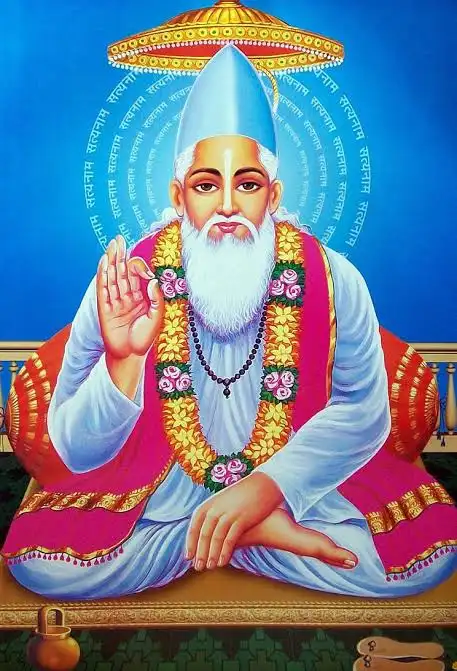

Varanasi, India — More than 500 years after his lifetime, Sant Kabir Das continues to inspire millions of people across the globe with his timeless message of truth, equality, peace, and devotion to one Supreme God. Revered as one of India’s greatest mystic poets, spiritual leaders, and social reformers, Kabir’s teachings remain highly relevant in today’s world, where religious harmony and social unity are more important than ever.
A Humble Beginning
Although historians differ on the exact details of his birth, the most widely accepted tradition states that Sant Kabir Das was born around 1398 CE near Varanasi (Kashi), Uttar Pradesh. According to popular belief, he was discovered as an infant near the Lahartara Tank and was lovingly raised by a Muslim weaver couple, Niru and Nima.
Growing up in a simple household, Kabir learned the profession of weaving, earning his livelihood through honest labor while dedicating his life to spiritual wisdom and service to humanity.
A Journey Toward Spiritual Enlightenment
Kabir is traditionally believed to have become a disciple of the respected Hindu saint Ramananda. His spiritual philosophy brought together elements of the Bhakti movement and Sufi traditions, emphasizing that God is One, regardless of religious names or forms.
He rejected divisions based on religion, caste, and social status, teaching that sincere devotion, compassion, and righteous living are the true paths to God—not empty rituals or outward displays of faith.
Powerful Teachings That Changed Society
Sant Kabir courageously challenged many social evils of his time, including caste discrimination, religious intolerance, superstition, hypocrisy, and social inequality. His teachings encouraged people to judge others by their character and actions, not by their religion, caste, or background.
Among his most enduring messages were:
- There is only one Supreme God.
- All human beings are equal.
- Truth, honesty, humility, and compassion are life’s greatest virtues.
- Blind faith and meaningless rituals should be rejected.
- True worship comes from a pure heart and selfless service.
These principles continue to inspire people seeking peace, unity, and spiritual understanding.
A Literary Legacy That Endures
Kabir composed thousands of Dohas (couplets), Bhajans, and spiritual poems in simple language that ordinary people could easily understand. His verses offered practical wisdom about life, morality, and devotion.
His teachings were later compiled in the Bijak, one of the principal sacred texts of the Kabir Panth. Many of his hymns were also included in the Guru Granth Sahib, the holy scripture of Sikhism, reflecting his profound influence across multiple faith traditions.
Death and an Enduring Symbol of Unity
Sant Kabir is traditionally believed to have passed away around 1518 CE in Maghar, Uttar Pradesh.
According to a well-known tradition, after his death, both Hindus and Muslims wished to perform his final rites according to their respective customs. When the cloth covering his body was lifted, it is said that flowers were found instead of his physical remains. The flowers were divided between both communities—one portion was cremated, while the other was buried—symbolizing Kabir’s lifelong message of religious harmony, peace, and unity.
An Everlasting Legacy
More than five centuries later, Sant Kabir’s teachings continue to guide millions of followers worldwide. His message of love, equality, humility, truth, and universal brotherhood remains relevant in addressing modern-day challenges such as religious conflict, discrimination, and social injustice.
His birth anniversary, Kabir Jayanti, is celebrated every year across India and in many parts of the world. His poems are studied in schools, universities, and spiritual institutions, ensuring that his wisdom continues to inspire future generations.
Conclusion
Sant Kabir Das dedicated his life to spreading the universal values of love, truth, peace, equality, and devotion to one God. Through his fearless voice and timeless poetry, he encouraged humanity to rise above divisions and embrace compassion and justice. Even today, his teachings serve as a powerful reminder that true spirituality lies in kindness, honesty, humility, and the unity of all people, making him one of the greatest spiritual icons in world history.