

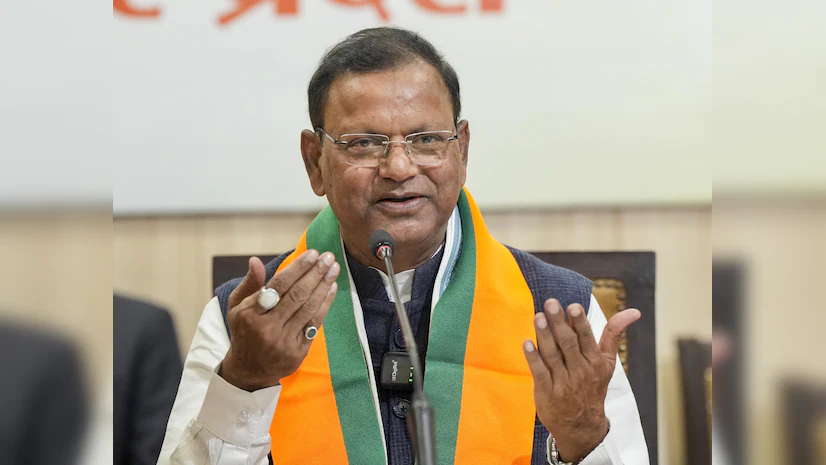

New Delhi, India | July 29, 2026 — The Government of India has reaffirmed that the country’s macroeconomic fundamentals remain strong and resilient despite ongoing global uncertainties, including geopolitical tensions in West Asia, currency volatility, and external economic pressures. In a written reply presented in the Rajya Sabha, Minister of State for Finance Pankaj Chaudhary highlighted India’s sustained economic growth, robust domestic demand, improving banking sector performance, and prudent fiscal management as key pillars supporting the nation’s economy.
The statement comes amid heightened global market volatility and concerns over international trade disruptions, inflationary pressures, and currency fluctuations.
Strong Economic Growth Continues
According to the Finance Ministry, India’s real Gross Domestic Product (GDP) has consistently grown at more than 7% annually over the past three years, making it one of the world’s fastest-growing major economies.
The government attributed this sustained expansion to:
- Robust domestic demand
- Healthy corporate balance sheets
- Prudent fiscal discipline
- Continued investment-led growth
- Strong financial sector stability
Officials emphasized that India’s economic momentum remains intact despite challenging global conditions.
Financial System Remains Resilient
Referring to the Reserve Bank of India’s (RBI) Financial Stability Report (June 2026), the minister stated that India’s financial system remains resilient, supported by strong balance sheets across both banks and non-banking financial institutions (NBFCs).
The report indicates that the banking sector has strengthened significantly through improved capital adequacy, healthier loan portfolios, and declining bad loans.
Indian Rupee Faces External Pressure
The government acknowledged that the Indian Rupee (INR) has experienced depreciation against the U.S. Dollar (USD) since the escalation of the West Asia conflict.
According to the minister:
- The Indian Rupee depreciated by 5.8% against the U.S. Dollar during FY27, between February 27 and July 22, 2026.
However, officials clarified that the exchange rate is market-determined, and the Reserve Bank of India does not target any fixed exchange rate level.
The RBI continues to monitor global developments and intervenes in foreign exchange markets only to address excessive volatility.
Industrial Growth Maintains Momentum
High-frequency economic indicators suggest continued resilience.
The Index of Industrial Production (IIP) recorded:
- 4.9% year-on-year growth in April 2026
- 5.1% year-on-year growth in May 2026
The government said these figures demonstrate sustained industrial expansion driven by ongoing investment despite global economic uncertainty.
Government Measures to Support Businesses
To reduce the impact of imported inflation and external shocks, the government has implemented several policy measures, including:
- Import duty adjustments to manage inflation.
- Expanded MSME credit support.
- Affordable financing initiatives.
- Promotion of long-term Foreign Direct Investment (FDI).
- Trade facilitation measures.
- Expansion of digital platforms.
- Advancement of Free Trade Agreements (FTAs).
These initiatives are intended to strengthen domestic industries while improving India’s competitiveness in international markets.
Regional Rural Banks Report Record Profit
The government also announced that Regional Rural Banks (RRBs) achieved their highest-ever consolidated net profit during FY2025–26.
Key highlights include:
- Net Profit: ₹10,177 crore
- Improved Capital to Risk Weighted Asset Ratio (CRAR)
- Growth in deposits
- Expansion of advances
- Lower Non-Performing Assets (NPAs)
- Improved Credit-Deposit Ratio
Officials stated that RRBs continue to play an essential role in expanding financial inclusion across rural India.
Public Sector Banks Reach Historic Milestone
The Finance Ministry also reported significant improvements in the performance of Public Sector Banks (PSBs).
Key achievements include:
- Gross Non-Performing Assets (GNPA) declined to a historic low of 1.9% during FY2025–26.
- Highest-ever combined net profit of approximately ₹1.98 lakh crore.
The government described these results as evidence of healthier bank balance sheets and stronger financial stability.
Emergency Credit Support Expanded
To assist businesses affected by the West Asia crisis, the government launched Emergency Credit Line Guarantee Scheme (ECLGS) 5.0 in May 2026.
Major features include:
- 100% government guarantee for eligible MSME loans.
- 90% guarantee coverage for non-MSMEs and the scheduled passenger airline sector.
- Total credit support of ₹2.55 lakh crore.
- ₹5,000 crore specifically allocated for the airline industry.
- Eligible airlines can receive loans up to ₹1,500 crore under specified conditions.
The scheme aims to help businesses manage temporary liquidity challenges resulting from international disruptions.
American Experts Share Their Views
Dr. Michael Anderson, an American international economist based in Washington, D.C., said India’s domestic demand continues to be one of its greatest economic strengths.
“India’s large consumer market provides an important buffer against global economic shocks. Strong domestic demand allows the economy to maintain growth even when international markets face uncertainty.”
Meanwhile, Sarah Thompson, an American financial markets analyst from New York, highlighted the importance of banking sector reforms.
“The decline in bad loans, record profits for public sector banks, and stronger rural banking performance suggest that India’s financial system has become significantly more resilient than it was several years ago. These improvements enhance investor confidence.”
Key Highlights
- India’s GDP has grown at over 7% annually for the past three years.
- Indian Rupee depreciated 5.8% against the U.S. Dollar amid the West Asia conflict.
- Industrial production grew 4.9% in April and 5.1% in May 2026.
- Regional Rural Banks posted a record ₹10,177 crore net profit.
- Public Sector Banks reported a historic low 1.9% GNPA and record profits of ₹1.98 lakh crore.
- ECLGS 5.0 provides up to ₹2.55 lakh crore in guaranteed credit support for eligible businesses.
Looking Ahead
While global geopolitical tensions and economic uncertainty continue to pose challenges, the Government of India maintains that the country’s strong macroeconomic fundamentals, resilient financial institutions, healthy corporate sector, and prudent fiscal management position it well to sustain long-term economic growth.
As policymakers continue implementing reforms, expanding financial inclusion, and strengthening trade and investment partnerships, India aims to reinforce its position as one of the world’s leading emerging economies while maintaining stability amid an increasingly uncertain global environment.