

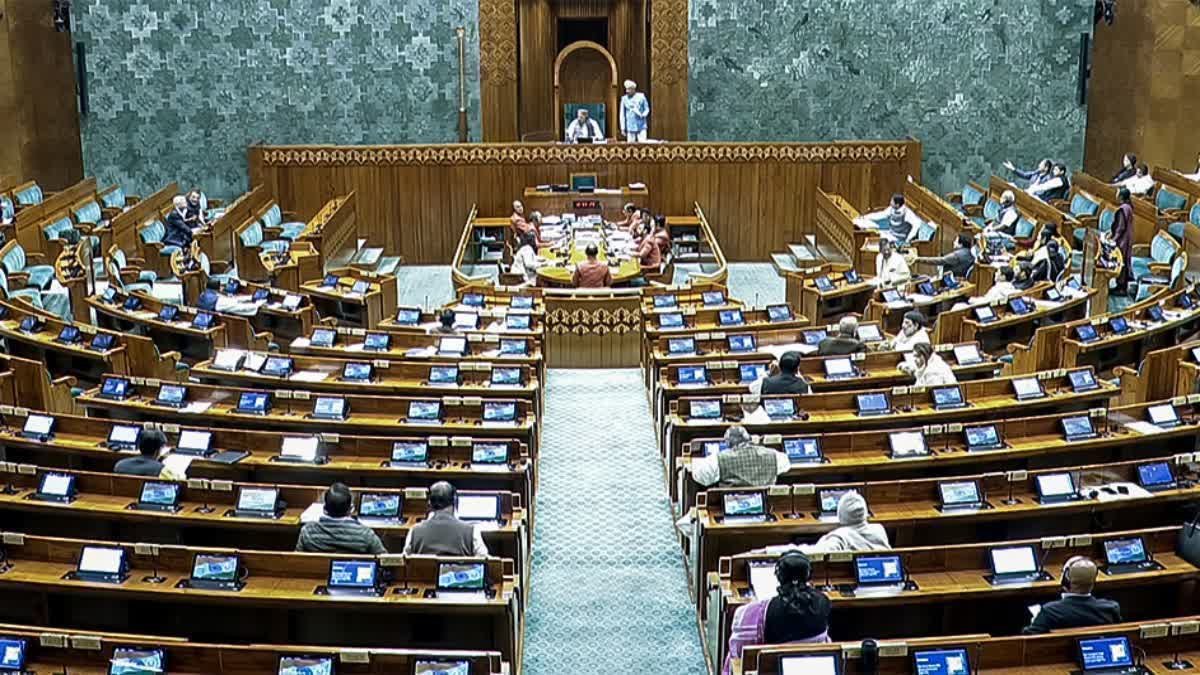

New Delhi — India’s Parliament opened a special three-day session with the introduction of key constitutional and legislative proposals focused on electoral restructuring and women’s political representation. Prime Minister Narendra Modi called on all political parties to support the measures, warning that opposing women’s reservation could carry long-term political consequences.
The bills under discussion include the Constitution (131st Amendment) Bill, 2026, the Delimitation Bill, 2026, and the Union-State Laws (Amendment) Bill, 2026—all aimed at reshaping India’s electoral framework and strengthening representation.
Push for Women’s Reservation
At the center of the debate is the proposed amendment linked to the Nari Shakti Vandan Adhiniyam, 2023, which seeks to reserve 33% of seats in the Lok Sabha (lower house of Parliament) and state assemblies for women.
Addressing lawmakers in the Lok Sabha, Prime Minister Modi urged members not to politicize the issue, calling it a historic opportunity.
“There are moments in a nation’s life that define its legacy. Today is one such moment in parliamentary history,” he said.
He added that political parties that oppose expanding women’s representation could face consequences from voters in the long run, pointing to past instances where resistance to women’s rights led to electoral setbacks.
Delimitation Debate Sparks Political Tensions
The Delimitation Bill, 2026—which proposes redrawing parliamentary constituencies based on population changes—has triggered concerns among opposition parties. Critics argue that the process could reduce representation for southern and northeastern states relative to more populous regions.
Finance Minister Nirmala Sitharaman responded to these concerns, assuring lawmakers that a delimitation commission would consult all political stakeholders before finalizing any changes.
Opposition parties clarified that they support women’s reservation in principle but are wary of linking it to delimitation, which they believe could alter the balance of political representation.
Heated Exchanges in Parliament
The session saw sharp exchanges between ruling and opposition leaders. Congress leader Priyanka Gandhi criticized the Prime Minister, suggesting that women are quick to recognize political rhetoric that may be misleading.
Meanwhile, discussions also touched on social representation. Modi highlighted his own background, stating that he comes from an extremely backward class but is committed to representing all sections of society.
During the debate, Samajwadi Party MP Dharmendra Yadav questioned whether the government was adequately addressing the concerns of backward communities. Modi responded by emphasizing his constitutional duty to serve all citizens equally.
In a lighter moment, he referred to Samajwadi Party leader Akhilesh Yadav as a friend, prompting a brief exchange of smiles across party lines.
Appeal for Consensus Over Credit
Prime Minister Modi also downplayed the issue of political credit, stating that he would be willing to publicly acknowledge all parties if the bill is passed unanimously.
“We do not seek credit. If it passes, I will thank everyone and even publish all your photos,” he remarked, signaling openness to bipartisan cooperation.
A Defining Legislative Moment
The special parliamentary session is being closely watched as a potential turning point in India’s democratic evolution. While the government is pushing for swift passage of the bills, opposition concerns over delimitation and representation remain key hurdles.
If approved, the legislation could significantly reshape India’s political landscape by increasing women’s participation in governance while also redefining electoral boundaries for future elections.