

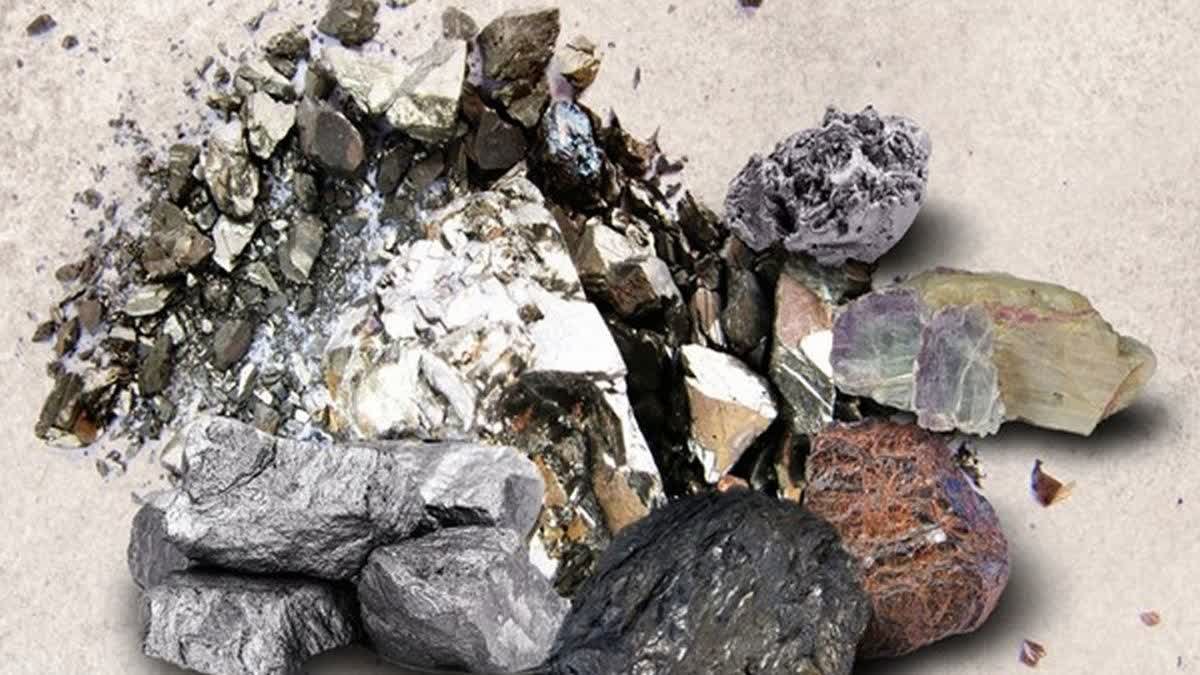

New Delhi : The global transition toward clean energy could face significant supply challenges over the next two decades as demand for critical minerals such as lithium, copper, nickel, graphite, and rare earth elements continues to outpace production. According to the latest report by the International Energy Agency (IEA), the world may experience persistent shortages of these essential minerals by 2040, despite growing investments in mining and refining.
The report highlights that the rapid expansion of electric vehicles (EVs), battery storage systems, solar power, and wind energy will dramatically increase demand for critical raw materials, while supply chains remain vulnerable due to heavy geographical concentration.
Massive Investment Needed to Meet Future Demand
The IEA estimates that more than $750 billion in investment will be required in mining and mineral refining between now and 2040 to meet the growing global demand for clean energy technologies.
The largest investment requirements include:
- Copper: Approximately $310 billion
- Nickel: Around $280 billion
These investments are considered essential to expand production capacity and prevent long-term supply shortages.
Demand for Critical Minerals Set to Surge
The report forecasts substantial increases in demand across several key minerals that are vital for the clean energy transition.
Lithium
Demand for lithium, the primary material used in EV batteries and energy storage systems, is expected to increase by more than threefold by 2040.
Graphite
Global demand for graphite, another essential battery component, is projected to double over the same period.
Nickel and Rare Earth Elements
- Nickel demand is expected to rise by approximately 65%.
- Rare earth elements, which are critical for electric motors and wind turbines, are projected to witness a 50% increase in demand.
Copper
The report predicts that global copper demand will increase by more than 25%, requiring an additional 7 million tonnes of copper production by 2040.
Copper remains indispensable for:
- Electric vehicle manufacturing
- Power transmission networks
- Renewable energy infrastructure
- Charging stations
- Grid modernization projects
China’s Dominance in Refining Raises Supply Risks
While mining projects are expanding across multiple countries, the IEA warns that mineral refining remains heavily concentrated in a few nations, particularly China.
According to the report, China currently accounts for approximately:
- 90% of global graphite refining
- 75% of cobalt refining
- 70% of lithium refining
- 50% of copper refining
This concentration poses a significant strategic risk to global supply chains.
The report cautions that any disruption in China’s refining sector—whether due to geopolitical tensions, trade restrictions, or production interruptions—could significantly delay the worldwide clean energy transition.
Recycling Will Play a Crucial Role
The IEA emphasizes that recycling critical minerals from used batteries and electronic equipment will become increasingly important in addressing future shortages.
Currently, only about 10% of critical minerals are recovered through recycling worldwide.
The report suggests increasing this figure to 20% by 2040, which could substantially reduce dependence on newly mined resources while improving supply security.
Need for Diversified Supply Chains
Beyond expanding mining and recycling, the report recommends that governments and industries work together to:
- Diversify mineral supply sources.
- Invest in domestic refining capacity.
- Strengthen international partnerships.
- Accelerate sustainable mining practices.
- Promote circular economy initiatives through recycling and reuse.
These measures would reduce dependence on a limited number of suppliers and improve resilience against future supply disruptions.
Key Highlights
- The International Energy Agency (IEA) warns of potential critical mineral shortages by 2040.
- More than $750 billion in mining and refining investments will be required.
- Lithium demand is projected to increase by more than three times.
- Graphite demand is expected to double.
- Nickel demand could rise by 65%, while rare earth elements may increase by 50%.
- Copper demand is forecast to grow by over 25%, requiring an additional 7 million tonnes of supply.
- China continues to dominate global mineral refining, creating potential supply chain vulnerabilities.
- Increasing critical mineral recycling from 10% to 20% by 2040 could help alleviate future shortages.
The IEA’s latest assessment underscores that while the world is accelerating its shift toward clean energy, ensuring a stable and diversified supply of critical minerals will be essential for achieving global climate goals. Without timely investments, expanded refining capacity, and stronger recycling efforts, shortages of key minerals could become a major obstacle to the energy transition.