


FSSAI’s 2026 draft regulations propose restricting plastic and synthetic materials in pan masala packaging, with paper, paperboard, cellulose, tin and glass listed as permissible alternatives.
New Delhi: Consumers and manufacturers of pan masala could see significant changes in packaging if the Food Safety and Standards Authority of India (FSSAI) finalises its proposed amendments to packaging regulations.
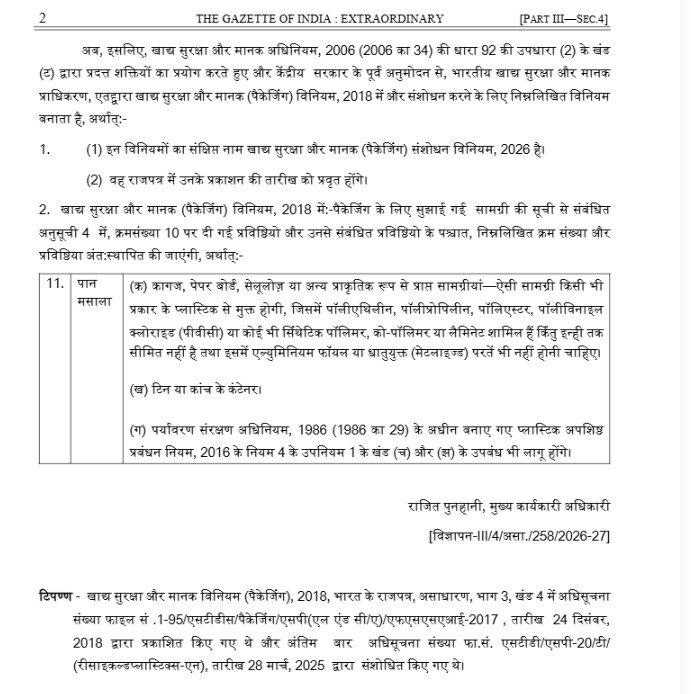
However, an important clarification is needed: FSSAI’s official website currently lists the measure as a draft notification, uploaded on April 29, 2026. The official draft proposes adding specific packaging requirements for pan masala; it does not establish, from the material currently available, that a final rule came into force on August 10, 2026. (FSSAI)
What Does the Draft Propose?
Under the proposed amendment to the Food Safety and Standards (Packaging) Regulations, 2018, packaging for pan masala would be permitted using:
- Paper
- Paperboard
- Cellulose or other naturally derived materials
- Tin containers
- Glass containers
The proposed provision specifies that paper and other naturally derived materials must be free from plastic, including polyethylene, polypropylene, polyester, PVC and other synthetic polymers, copolymers or laminates. It also proposes excluding aluminium foil and metallised layers. (FSSAI)
The draft also refers to existing provisions of the Plastic Waste Management Rules, 2016, which prohibit the use of plastic sachets for storing, packing or selling gutkha, tobacco and pan masala and restrict plastic materials in such packaging. (FSSAI)
Will Pan Masala Be Sold Only in Boxes?
If the proposed packaging requirements are finalised in their current form, manufacturers would need to move away from conventional plastic-based packaging and use the specified alternative materials.
This could mean greater use of paper-based packs, tin containers and glass containers, depending on the final regulations and how manufacturers adapt their packaging.
Could Prices Increase?
A shift away from low-cost flexible plastic packaging could increase packaging and manufacturing expenses. However, there is currently no official confirmation that pan masala prices will increase as a direct result of the proposed FSSAI amendment.
Any impact on retail prices would depend on packaging costs, manufacturing changes, logistics and how much of the additional cost manufacturers ultimately pass on to consumers.
Why Is the Change Significant?
The proposed amendment comes amid broader efforts to develop alternatives to plastic packaging for pan masala and gutkha sachets. FSSAI is also involved in BIOPACKATHON 2026, a programme focused on biodegradable packaging solutions for pan masala and gutkha sachets. (FSSAI)
For manufacturers, the transition could require changes in packaging materials, machinery, supply chains and production processes.
Key Point for Consumers
For now, consumers should distinguish between a draft regulation and a final notified regulation. FSSAI’s official notifications page identifies the pan masala packaging measure as a Draft Food Safety and Standards (Packaging) Amendment Regulations, 2026. (FSSAI)
Therefore, claims that “the new rule has already come into force from August 10, 2026” should be treated cautiously unless and until a final notification confirming the effective date is published.