

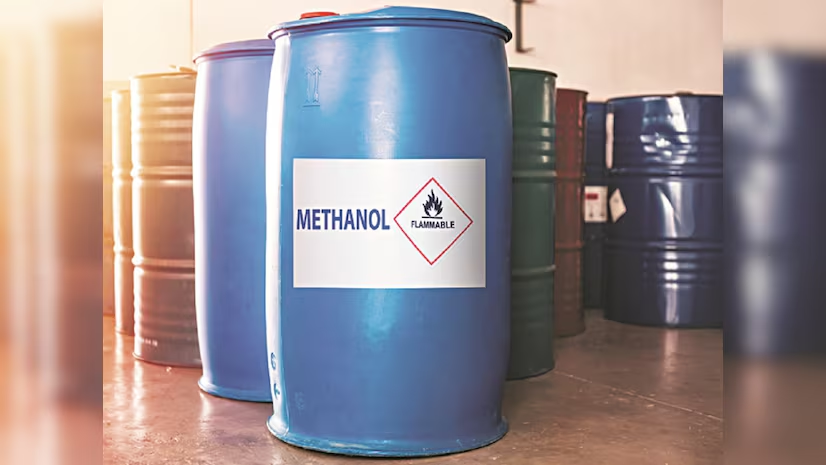

New Delhi | India has significantly diversified its methanol import sources, reducing its long-standing dependence on the Middle East and substantially increasing imports from China, according to a recent report by Crisil Intelligence. The shift follows supply chain disruptions and rising prices triggered by the ongoing West Asia conflict, which affected production and logistics across the Gulf region.
The report highlights that India’s strategic move to broaden its import base has helped mitigate supply risks and ensure the continued availability of methanol, a vital industrial chemical used across several key manufacturing sectors.
Sharp Decline in Dependence on the Middle East
According to the Crisil Intelligence report, India traditionally relied heavily on the Middle East for its methanol imports.
However, the conflict in the region significantly altered import patterns.
During the period March–May 2026, only around 51% of India’s methanol imports originated from the Middle East, compared to approximately 88% during April 2025 to February 2026.
The dramatic decline reflects India’s efforts to reduce supply chain vulnerabilities and secure alternative sources for this critical industrial input.
China Emerges as a Key Supplier
As supplies from the Gulf became uncertain, China emerged as one of the primary alternative suppliers of methanol to India.
Indian importers increasingly turned to Chinese producers to offset shortages resulting from disruptions in the Middle East. The diversification strategy enabled industries to maintain production despite logistical challenges and fluctuating global prices.
Analysts believe the growing role of China in India’s methanol supply chain could continue if geopolitical uncertainties persist.
Impact of the West Asia Conflict
The report attributes the shift in sourcing primarily to the ongoing West Asia conflict, which disrupted both production facilities and transportation networks in several Gulf countries.
The conflict led to:
- Reduced methanol production capacity in affected regions.
- Supply chain disruptions across major shipping routes.
- Higher freight and transportation costs.
- Volatility in international methanol prices.
- Delayed deliveries to importing countries, including India.
These challenges prompted Indian buyers to diversify procurement strategies in order to minimize operational risks.
India’s Heavy Dependence on Imports
India remains overwhelmingly dependent on imported methanol.
According to the report:
- Approximately 98% of India’s methanol requirement is met through imports.
- Domestic production accounts for only a small fraction of total demand.
- Industrial growth continues to increase the country’s consumption of methanol.
This heavy import dependence makes supply diversification an important strategy for ensuring uninterrupted industrial operations.
Importance of Methanol to Indian Industry
Methanol is one of the world’s most widely used industrial chemicals and serves as a crucial raw material across multiple sectors of the Indian economy.
It is extensively used in:
- Automotive manufacturing
- Construction materials
- Chemical production
- Pharmaceutical manufacturing
- Paints and coatings
- Adhesives and resins
- Plastics and synthetic materials
- Fuel blending and alternative energy applications
Because of its broad industrial applications, stable methanol supplies are essential for sustaining manufacturing activity and supporting economic growth.
Strategic Diversification Strengthens Supply Security
Industry experts believe that diversifying import sources reduces India’s exposure to geopolitical risks and strengthens supply chain resilience.
By expanding procurement beyond traditional suppliers, Indian companies can:
- Reduce dependence on a single region.
- Improve supply chain flexibility.
- Manage price volatility more effectively.
- Enhance long-term energy and industrial security.
- Minimize disruptions caused by geopolitical events.
The report suggests that a diversified sourcing strategy could become increasingly important as global trade continues to face geopolitical and logistical uncertainties.
Future Outlook
While the Middle East is expected to remain an important supplier of methanol, India is likely to continue maintaining a broader supplier base to reduce future risks.
Market analysts anticipate that Indian importers will increasingly evaluate suppliers based on:
- Supply reliability
- Competitive pricing
- Logistics efficiency
- Geopolitical stability
- Long-term contractual arrangements
Such diversification is expected to support India’s growing industrial demand while improving resilience against external shocks.
Conclusion
The Crisil Intelligence report highlights a significant shift in India’s methanol import strategy, with the country reducing its dependence on the Middle East and increasing purchases from China in response to supply disruptions caused by the West Asia conflict. With nearly 98% of its methanol requirements met through imports, India has adopted a more diversified sourcing approach to safeguard supplies for critical industries including automotive, construction, chemicals, and pharmaceuticals.
The changing import pattern underscores the growing importance of supply chain resilience, geopolitical risk management, and diversified global sourcing in ensuring uninterrupted industrial production and supporting India’s expanding manufacturing sector.