
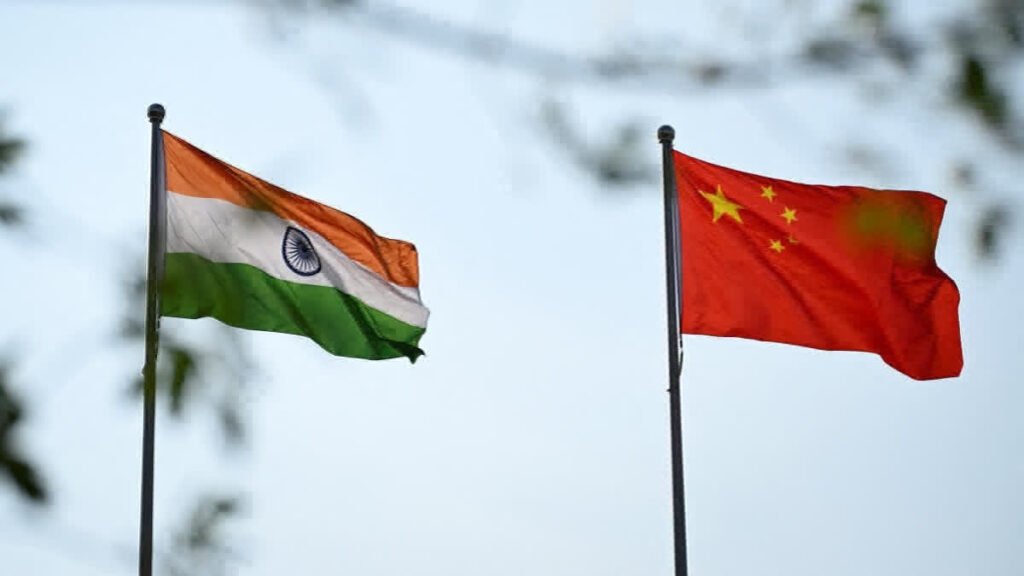
Beijing : The appointment of Vikram Doraiswami as India’s next Ambassador to China has sparked notable interest across diplomatic and academic circles in Beijing, signaling expectations of a more nuanced phase in India–China relations.
A senior Indian Foreign Service (IFS) officer from the 1992 batch, Doraiswami is currently serving as India’s High Commissioner to the United Kingdom. He is expected to assume his new role in Beijing in the coming weeks.
Chinese Recognition and Symbolism
Responding to the appointment, Chinese Foreign Ministry spokesperson Lin Jian highlighted an interesting cultural aspect—Doraiswami’s chosen Chinese name, “Wei Jiameng.”
Chinese scholars interpret the name with layered meaning:
- “Wei” is a common Chinese surname, phonetically resembling the “Vi” in Vikram.
- Historically, Wei was also the name of a powerful state in ancient China.
- “Jia” translates to “auspicious” or “commendable.”
- “Meng” means “ally” or “partner.”
Taken together, experts suggest the name conveys the idea of a “commendable ally” or even “a builder of strong alliances”—a symbolic message seen as diplomatically significant in the current context of India–China relations.
Strong China Background
Doraiswami is widely regarded as a seasoned China expert. Early in his diplomatic career, he served in both Hong Kong and Beijing. He began as a Third Secretary in Hong Kong, where he also earned a diploma in Mandarin from the New Asia–Yale-in-Asia Chinese Language School.
He later served a four-year stint in Beijing starting in 1996, giving him deep familiarity with China’s political, cultural, and strategic landscape. His fluency in Mandarin further enhances his diplomatic effectiveness.
Chinese Media and Academic Reactions
Chinese state-affiliated publication Global Times prominently featured his appointment on its front page, describing him as an “experienced China expert.”
Scholars from leading Chinese institutions echoed this sentiment:
- Lin Minwang of Fudan University noted that the ambassadorial role in China is among the most critical in India’s diplomatic service. He emphasized that Doraiswami’s prior experience offers him a “comprehensive and rational understanding” of China.
- Qian Feng from Tsinghua University described him as a veteran diplomat with deep insight into both China’s national conditions and bilateral ties.
Strategic Significance
Analysts believe Doraiswami’s appointment underscores India’s intent to stabilize and pragmatically manage its relationship with China amid ongoing geopolitical complexities.
His blend of linguistic skills, prior on-ground experience, and strategic understanding is expected to play a crucial role in rebuilding trust, enhancing communication, and advancing bilateral cooperation.
Outlook
With both countries navigating sensitive geopolitical challenges, Doraiswami’s tenure is being closely watched. His appointment is widely seen as a signal of New Delhi’s emphasis on professionalism, continuity, and constructive engagement with Beijing.
As he prepares to take charge, expectations are high that his expertise will help steer India–China relations toward greater stability and dialogue.