


PCI says consumers can continue making instant digital payments without transaction charges as investments in cybersecurity, fraud prevention and infrastructure increase
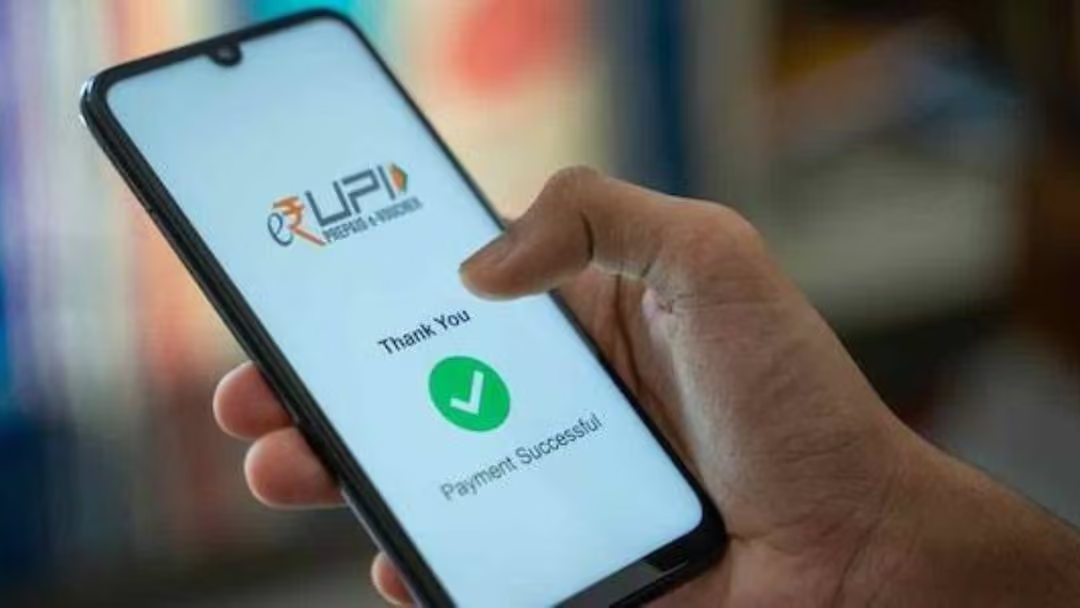
New Delhi : The Payments Council of India (PCI) has reaffirmed that Unified Payments Interface (UPI) transactions will remain free for consumers, allowing users across India to continue making instant digital payments without paying transaction charges.
The industry body also said that small merchants will not be charged for accepting digital payments, reinforcing UPI’s role as one of India’s most widely used digital payment platforms.
Consumers Will Not Pay Transaction Charges
In a statement, the PCI said Indians can continue using UPI to make instant digital payments without transaction charges.
The clarification comes amid discussions surrounding the economics of India’s rapidly expanding digital payments ecosystem and the costs associated with maintaining the infrastructure supporting high-volume UPI transactions.
According to the PCI, the consumer-facing experience of UPI will continue to remain free of transaction charges.
Small Merchants to Continue Receiving Payments Without Charges
The PCI also emphasized that small merchants will not be charged for accepting digital payments.
This is particularly significant for India’s large network of small retailers, local businesses and other micro and small enterprises that increasingly rely on digital payments to receive money from customers.
The continued availability of free digital payment acceptance is expected to support the wider adoption of cashless and digital transactions among smaller businesses.
Merchant Service Charges Are Commercial Arrangements
The PCI clarified that any Merchant Service Charges (MDR) or other applicable charges are commercial arrangements between merchants and payment service providers.
The council stressed that such arrangements do not mean consumers are charged for using UPI.
In other words, the existence of commercial arrangements within the payments ecosystem should not be interpreted as a transaction fee being imposed directly on consumers for making UPI payments.
Heavy Investment in UPI Infrastructure
The PCI highlighted the substantial investment being made by banks, fintech companies, the National Payments Corporation of India (NPCI) and the Reserve Bank of India (RBI) to maintain the reliability and security of India’s digital payments infrastructure.
These investments cover several critical areas, including:
- Technology infrastructure
- Cybersecurity
- Fraud prevention
- Payment-system resilience
- Innovation
- Digital payment infrastructure
The growing scale of UPI transactions requires payment institutions to continuously upgrade systems to ensure that payments remain fast, secure and reliable.
UPI Has Become Critical Digital Infrastructure
The PCI described UPI as a critical piece of India’s national digital infrastructure, given its extensive daily use by citizens and businesses.
The platform has transformed the way consumers make payments, enabling instant transfers between bank accounts through participating banks and payment applications.
Its growing use has also strengthened the role of digital payments in everyday commerce, from small retail purchases and local businesses to online transactions and larger commercial payments.
Security and Fraud Prevention Remain Key Priorities
As transaction volumes continue to increase, the PCI emphasized that maintaining the security and resilience of the UPI ecosystem will require sustained investment.
The council identified fraud prevention and cybersecurity as particularly important areas as digital payment usage expands.
Payment institutions will need to continuously strengthen their systems to protect users against evolving cyber threats, payment fraud and other risks associated with high-volume digital transactions.
Continued Investment Needed as UPI Volumes Grow
The PCI said the continued increase in UPI transaction volumes makes ongoing investment in infrastructure, security, innovation and fraud prevention essential.
The council believes that strengthening these capabilities will help ensure that UPI can continue serving consumers and businesses reliably for years to come.
Key Highlights
- UPI transactions will remain free for consumers, according to the Payments Council of India.
- Consumers can continue making instant digital payments without transaction charges.
- Small merchants will not be charged for accepting digital payments.
- Any applicable merchant service charges are commercial arrangements between merchants and payment providers and do not mean consumers pay to use UPI.
- Banks, fintech companies, NPCI and RBI continue investing in technology and payment infrastructure.
- Cybersecurity and fraud prevention remain major priorities.
- PCI described UPI as a critical national digital infrastructure for India.
- Continued investment will be necessary to support the platform’s security, resilience and reliability as transaction volumes grow.