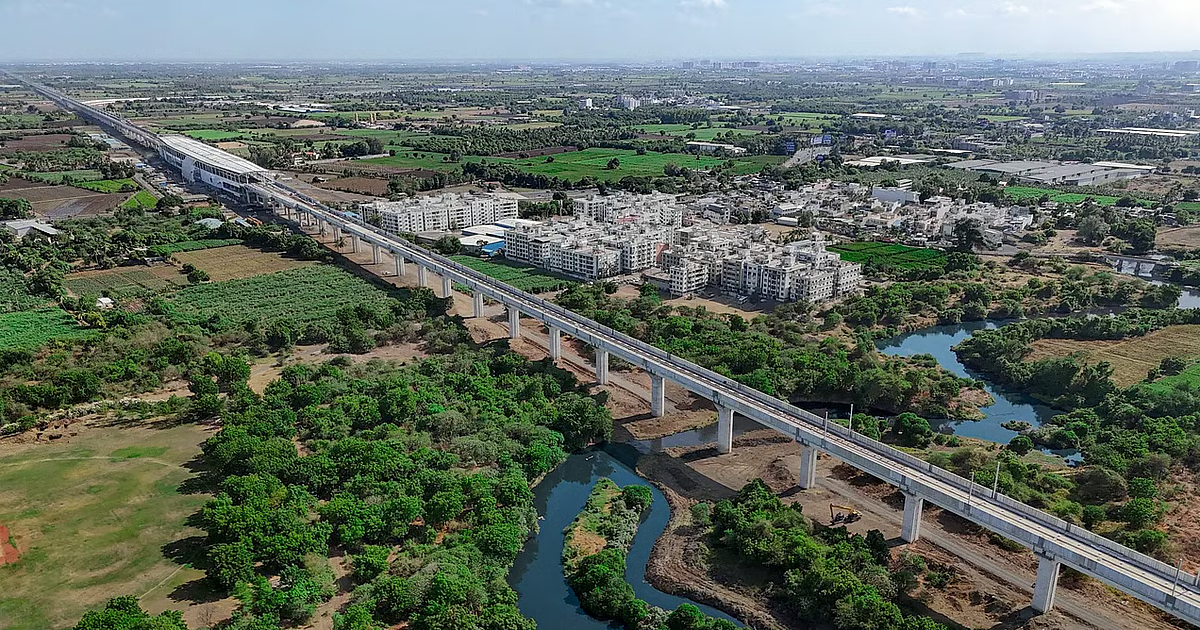

India’s first bullet train project is entering an advanced phase of construction, with 371 km of viaducts and 456 km of pier work completed along the 508-km Mumbai-Ahmedabad High-Speed Rail (MAHSR) corridor. The ambitious railway project, designed to transform intercity connectivity through high-speed passenger services, is expected to begin phased operations in 2027.
The corridor will connect Mumbai and Ahmedabad through 12 stations across Maharashtra, Gujarat and the Union Territory of Dadra and Nagar Haveli. Trains are designed to operate at speeds of up to 320 kmph, potentially reducing the journey between the two cities to approximately two hours.
The first passenger services are targeted to begin on the Surat-Bilimora section in 2027, with subsequent extensions planned as construction, testing and safety certification progress. The broader project includes elevated tracks, mountain tunnels, India’s first undersea railway tunnel, modern passenger stations and an advanced electrification network.
𝐌𝐚𝐣𝐨𝐫 𝐜𝐨𝐧𝐬𝐭𝐫𝐮𝐜𝐭𝐢𝐨𝐧 𝐦𝐢𝐥𝐞𝐬𝐭𝐨𝐧𝐞𝐬 𝐚𝐜𝐡𝐢𝐞𝐯𝐞𝐝
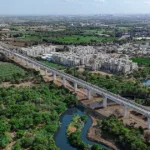
Construction has progressed substantially across the corridor, with 456 km of piers and 371 km of viaducts completed by September 2026. Approximately six lakh noise barriers have been installed along 299 km, while 9,300 overhead electrification masts have been erected across 206 km.
The project is being developed predominantly on elevated structures, with approximately 465 km of the 508-km alignment planned above ground level. This arrangement eliminates level crossings and reduces interference from road traffic, pedestrians and animals, which is essential for maintaining high-speed operations.
A major engineering feature is the use of the Full Span Launching Method, which allows entire 40-metre-long concrete girders weighing approximately 970 tonnes to be placed directly onto supporting piers.
Unlike conventional construction techniques that require assembling smaller segments at the site, the method enables large prefabricated structures to be installed in a single operation, accelerating construction and improving structural consistency.
Specialised equipment used for girder transportation and installation is also being manufactured domestically, helping expand India’s capabilities in large-scale railway infrastructure construction.
Eight stations have reached the architectural finishing stage following the completion of major civil works, while construction continues at other locations.
Three rolling stock depots are being developed at Sabarmati, Surat and Thane to support train maintenance, inspection and operational requirements.
𝐈𝐧𝐝𝐢𝐚’𝐬 𝐟𝐢𝐫𝐬𝐭 𝐮𝐧𝐝𝐞𝐫𝐬𝐞𝐚 𝐫𝐚𝐢𝐥 𝐭𝐮𝐧𝐧𝐞𝐥
One of the most complex components of the Mumbai-Ahmedabad corridor is a 21-km underground tunnel in Maharashtra, including a seven-kilometre stretch beneath Thane Creek.
The tunnel will form India’s first undersea railway passage and will connect the underground section near Mumbai with the elevated high-speed alignment further north.
Construction involves two massive tunnel boring machines operating from Vikhroli and Sawli. The first machine began excavation towards Bandra Kurla Complex in July 2026, followed by the second machine operating towards Vikhroli.
The machines have cutterheads measuring 13.6 metres in diameter and weigh approximately 3,200 tonnes each. Their overall length extends to around 96 metres, making them among the largest machines deployed for railway tunnelling in India.
Of the 21-km underground section, approximately 16 km is being constructed using tunnel boring machines, while the remaining five kilometres has been excavated using the New Austrian Tunnelling Method.
The project also includes mountain tunnels in Maharashtra, where excavation has progressed through difficult geological formations.
The tunnelling work requires continuous monitoring of ground movement, groundwater conditions and structural stability to ensure that the alignment can safely accommodate high-speed train operations.
𝐌𝐨𝐝𝐞𝐫𝐧 𝐬𝐭𝐚𝐭𝐢𝐨𝐧𝐬 𝐚𝐧𝐝 𝐩𝐚𝐬𝐬𝐞𝐧𝐠𝐞𝐫 𝐟𝐚𝐜𝐢𝐥𝐢𝐭𝐢𝐞𝐬
The high-speed corridor will feature 12 stations at Mumbai Bandra Kurla Complex, Thane, Virar, Boisar, Vapi, Bilimora, Surat, Bharuch, Vadodara, Anand, Ahmedabad and Sabarmati.
Mumbai’s Bandra Kurla Complex station will be the only underground station on the route, situated approximately 32 metres below ground level.
The station will have three levels accommodating passenger platforms, concourses and railway services. Six platforms, each more than 400 metres long, are being developed to accommodate high-speed trainsets.
Construction at the site involves extensive underground excavation within one of Mumbai’s major commercial districts, requiring coordination with surrounding roads, buildings and transport infrastructure.
The remaining stations will be elevated, with designs incorporating architectural elements associated with their respective cities.
Surat station will reflect the city’s diamond industry, while Sabarmati will feature a multimodal transport hub connecting the bullet train network with conventional railways, metro services and the Bus Rapid Transit System.
Passenger facilities are expected to include spacious waiting areas, lifts, escalators, accessibility provisions, modern ticketing systems and integrated transport connections.
The stations are being developed to facilitate efficient passenger movement while accommodating future growth in high-speed railway traffic.
𝐈𝐧𝐝𝐢𝐠𝐞𝐧𝐨𝐮𝐬 𝐛𝐮𝐥𝐥𝐞𝐭 𝐭𝐫𝐚𝐢𝐧 𝐦𝐚𝐧𝐮𝐟𝐚𝐜𝐭𝐮𝐫𝐢𝐧𝐠
India is simultaneously developing domestically manufactured high-speed trainsets to support the operational requirements of the corridor.
The Integral Coach Factory and Bharat Earth Movers Limited (BEML) are working on the B28 trainset, designed for a maximum speed of 280 kmph and an operating speed of approximately 250 kmph.
The eight-coach trainset is expected to accommodate around 557 passengers and incorporate modern passenger amenities, including air-conditioned interiors, ergonomic seating, accessible facilities, luggage storage and advanced onboard monitoring systems.
The first body frame has been manufactured, with structural testing and further production activities progressing ahead of planned trials in 2027.
The indigenous programme is intended to strengthen domestic expertise in high-speed railway design, manufacturing, testing and maintenance.
A more advanced B35 trainset, designed for speeds of up to 350 kmph, is also envisaged as part of the next stage of India’s high-speed rail technology development.
Domestic manufacturing capabilities are being expanded beyond trainsets to include track components, electrical systems, transformers, overhead equipment and specialised construction machinery.
The corridor is adopting Japanese J-slab ballastless track technology, which provides a stable track structure suited to high-speed operations and reduces maintenance requirements compared with conventional ballasted tracks.
𝐀𝐝𝐯𝐚𝐧𝐜𝐞𝐝 𝐞𝐥𝐞𝐜𝐭𝐫𝐢𝐟𝐢𝐜𝐚𝐭𝐢𝐨𝐧 𝐧𝐞𝐭𝐰𝐨𝐫𝐤
The Mumbai-Ahmedabad corridor is being equipped with a 2×25 kV overhead traction system designed to deliver reliable electricity to trains operating at high speeds.
The electrification network will include 14 traction substations positioned along the route, drawing electricity from the grid and supplying power to the overhead equipment.
Nearly 22,000 steel masts are planned to support the electrical infrastructure.
The system uses precisely tensioned overhead contact wires to ensure continuous electrical connection with train pantographs, even at speeds exceeding 300 kmph.
The 50-km Surat-Bilimora section was scheduled for overhead equipment energisation on November 20, 2026, marking an important step towards testing and commissioning.
Both tracks on the elevated section are covered by the electrification programme, while a centralised control centre will monitor power distribution and system performance.
Once energised, overhead electrical installations will remain live, requiring strict safety precautions for workers and people living near the corridor.
𝐒𝐚𝐟𝐞𝐭𝐲 𝐬𝐲𝐬𝐭𝐞𝐦𝐬 𝐟𝐨𝐫 𝐡𝐢𝐠𝐡-𝐬𝐩𝐞𝐞𝐝 𝐨𝐩𝐞𝐫𝐚𝐭𝐢𝐨𝐧𝐬
The corridor will incorporate multiple layers of safety technology to address operational risks associated with high-speed train movement.
A network of 28 seismometers is planned to detect earthquake activity and enable automatic protective measures, including emergency braking and power shutdowns when necessary.
Anemometers at 14 locations will monitor wind conditions, while rain gauges will provide information on precipitation levels along vulnerable stretches.
These monitoring systems will be connected to centralised operational controls to support rapid responses to adverse weather and geological events.
The elevated alignment, absence of level crossings and controlled access to railway infrastructure are also intended to minimise the risk of collisions and unauthorised track intrusion.
High-speed railway operations will additionally depend on advanced signalling, train control, communication and emergency response systems.
𝐒𝐞𝐯𝐞𝐧 𝐚𝐝𝐝𝐢𝐭𝐢𝐨𝐧𝐚𝐥 𝐡𝐢𝐠𝐡-𝐬𝐩𝐞𝐞𝐝 𝐜𝐨𝐫𝐫𝐢𝐝𝐨𝐫𝐬
India’s long-term high-speed railway programme extends beyond the Mumbai-Ahmedabad project, with seven additional corridors announced in the Union Budget 2026-27.
The proposed network covers nearly 4,000 km and involves anticipated investments of approximately ₹16 lakh crore.
The identified routes include Delhi-Varanasi, Varanasi-Siliguri, Mumbai-Pune, Pune-Hyderabad, Hyderabad-Bengaluru, Hyderabad-Chennai and Chennai-Bengaluru.
The proposed corridors are intended to connect major commercial, industrial, educational and administrative centres through significantly faster intercity transport.
Projected journey times include approximately 48 minutes between Mumbai and Pune, one hour and 13 minutes between Chennai and Bengaluru, and three hours and 50 minutes between Delhi and Varanasi.
The proposed network could substantially reduce travel times across heavily used transport corridors while creating opportunities for economic development in intermediate cities.
However, the additional corridors remain at different stages of planning and development, with their implementation dependent on feasibility assessments, financing, approvals and land acquisition.
𝐅𝐢𝐫𝐬𝐭 𝐬𝐞𝐫𝐯𝐢𝐜𝐞𝐬 𝐞𝐱𝐩𝐞𝐜𝐭𝐞𝐝 𝐢𝐧 𝟐𝟎𝟐𝟕
The Mumbai-Ahmedabad High-Speed Rail Corridor was launched in September 2017 as a major India-Japan infrastructure partnership.
The project subsequently encountered delays arising from land acquisition difficulties, administrative procedures, the COVID-19 pandemic and the technical challenges of constructing a completely new high-speed railway system.
Construction gained momentum after major land acquisition and approval issues were addressed, allowing work to advance simultaneously across several sections.
The first operational phase is expected to cover the Surat-Bilimora stretch, followed by the progressive opening of additional sections towards Vapi, Vadodara, Ahmedabad and Mumbai.
The government has targeted August 15, 2027, for the launch of the first passenger service, although commercial operations will depend on successful trials, completion of essential systems and safety clearances.
The full corridor’s commissioning timeline has yet to be finalised.
Beyond reducing journey times, the project is expected to establish technical expertise, manufacturing capacity and construction methods that can be used for future high-speed railway projects.
The development of indigenous trainsets, specialised tunnelling equipment, advanced electrification infrastructure and modern railway stations is also expected to create opportunities for domestic manufacturers and engineering companies.
Once operational, the Mumbai-Ahmedabad corridor will introduce India’s first dedicated high-speed passenger railway, marking a significant expansion of the country’s transport infrastructure and laying the groundwork for a wider national bullet train network.